
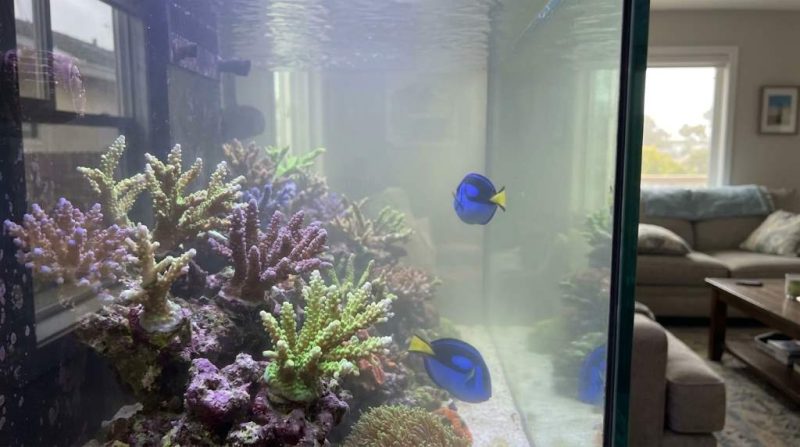
Milky reef water usually comes from bacterial blooms, excess nutrients, disturbed substrate, or filtration issues. The fastest solution is testing water parameters, improving mechanical filtration, reducing organic waste, and performing controlled water changes. Most reef tanks regain clarity within days when the root cause is identified correctly.
Cloudy reef aquariums frustrate many hobbyists because visibility drops and coral health can suffer. Studies suggest that unstable nutrient levels contribute to a significant portion of water clarity problems in marine aquariums. If you want to clear cloudy aquarium water fast, understanding the source of the haze matters more than applying random treatments. Therefore, a systematic approach delivers faster and safer results.
Understand Why Reef Water Turns Milky
Milky water differs from green water or floating debris. Instead, it usually appears as a white or gray haze throughout the aquarium.
Several factors can trigger this condition in reef systems. Consequently, identifying the exact cause helps prevent unnecessary treatments.
- Bacterial bloom from excess organic waste
- Overfeeding fish and corals
- Recently added sand or disturbed substrate
- Protein skimmer performance issues
- Improper filtration flow
- Chemical imbalances
- Dead organisms hidden in rockwork
Many reef keepers also overlook circulation equipment performance. Similar principles discussed in pick right pump guides highlight how proper flow supports cleaner and healthier water conditions.
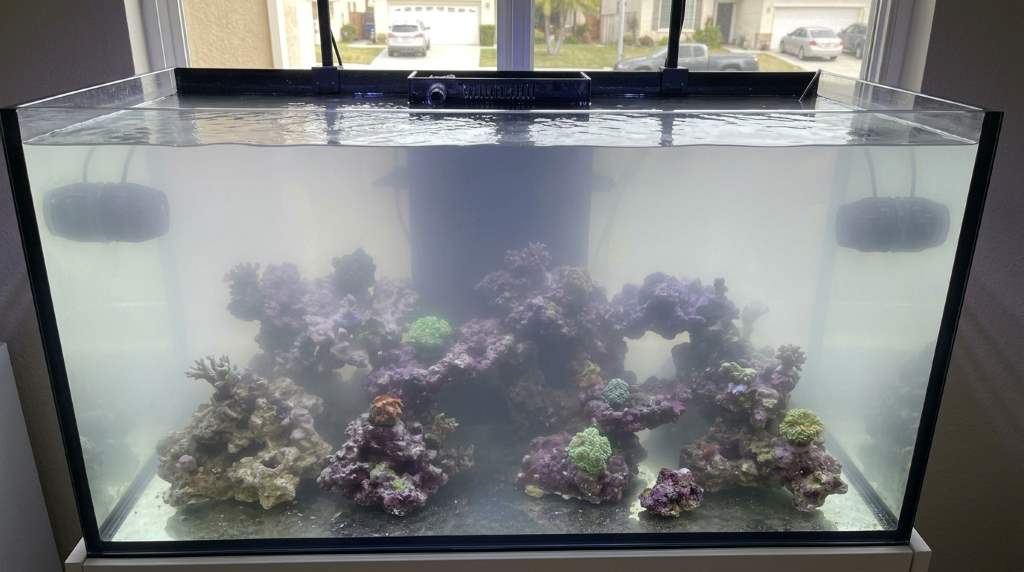
Test Water Parameters Before Taking Action
Testing should always come before treatment. Otherwise, you may address symptoms while ignoring the actual problem.
Start by measuring ammonia, nitrite, nitrate, phosphate, pH, alkalinity, and salinity. Furthermore, compare results with your previous maintenance records.
Key Values to Check
- Ammonia: 0 ppm
- Nitrite: 0 ppm
- Nitrate: Stable and controlled
- Phosphate: Low but measurable
- Salinity: Consistent range
- pH: Stable daily readings
If ammonia appears suddenly, investigate immediately. In many cases, a hidden livestock loss causes rapid bacterial growth.
Inspect the Filtration System Carefully
Filtration problems often create persistent cloudy conditions. Therefore, examine every component before making major adjustments.
Check filter socks, mechanical media, protein skimmers, and return pumps. Additionally, confirm that water moves efficiently through each stage.
Dirty substrate can also contribute to suspended particles. Learning how to clean aquarium gravel safely helps reduce debris without disrupting beneficial bacteria.
Signs of Filtration Problems
- Reduced water flow
- Overflowing filter socks
- Skimmer producing little foam
- Accumulated detritus in sump areas
- Visible debris circulating continuously
Replace clogged mechanical media promptly. However, avoid replacing all biological media simultaneously.
Manage Bacterial Blooms the Right Way
Bacterial blooms remain one of the most common causes of milky reef water. These blooms occur when bacteria multiply rapidly after nutrient increases.
The water often looks cloudy overnight. Nevertheless, fish may continue acting normally during early stages.
Steps to Reduce a Bacterial Bloom
- Reduce feeding temporarily
- Increase surface agitation
- Improve protein skimming
- Remove excess organic debris
- Perform moderate water changes
- Monitor oxygen levels closely
Do not add multiple chemicals at once. Instead, allow the system time to stabilize naturally.
Extra aeration helps because bacteria consume oxygen aggressively. Consequently, maintaining strong gas exchange protects livestock.
Perform Safe Water Changes
Water changes help dilute nutrients and suspended contaminants. However, excessive changes can stress sensitive corals.
A moderate approach usually works best. Therefore, many experienced reef keepers prefer smaller scheduled changes.
Recommended Process
- Prepare matching salinity water
- Match temperature carefully
- Siphon visible detritus
- Replace water gradually
- Monitor livestock afterward
Consistency matters more than volume. As a result, regular maintenance often prevents recurring cloudiness.
Improve Water Flow Throughout the Aquarium
Dead spots allow waste to accumulate unnoticed. Eventually, trapped organics break down and fuel bacterial growth.
Evaluate circulation patterns from multiple angles. Then adjust pumps to keep particles suspended until filtration removes them.
Benefits of Better Flow
- Reduces waste buildup
- Improves oxygen distribution
- Supports coral health
- Enhances filtration efficiency
- Prevents stagnant zones
Strong flow does not mean chaotic flow. Instead, aim for balanced circulation throughout the aquarium.
Use Mechanical Filtration for Faster Clarity
Mechanical filtration captures suspended particles effectively. Therefore, it often provides the quickest visible improvement.
Filter socks, fine filter pads, and roller filters can remove floating debris. Moreover, these tools reduce stress on other filtration stages.
Replace or clean mechanical media frequently during cloudy events. Otherwise, trapped material may begin decomposing inside the filter.
Check for Overfeeding and Nutrient Buildup
Excess food remains a major contributor to reef water problems. Even small daily overfeeding can create substantial nutrient accumulation.
Observe feeding habits carefully for several days. Then adjust portions based on actual consumption.
Common Feeding Mistakes
- Adding food multiple times unnecessarily
- Leaving frozen food unrinsed
- Target feeding excessively
- Ignoring uneaten particles
- Using oversized portions
Controlled feeding improves both water quality and equipment performance. Consequently, many tanks clear without additional intervention.
Consider UV Sterilization for Persistent Cloudiness
UV sterilizers can help when bacterial blooms continue despite corrective actions. They work by reducing free floating microorganisms.
Although UV systems offer benefits, they should support good maintenance practices. Therefore, never rely on UV as the only solution.
Choose a properly sized unit for your system volume. Furthermore, maintain recommended flow rates for maximum effectiveness.
Prevent Future Milky Water Problems
Long term prevention requires consistency rather than occasional corrections. Small habits often produce the biggest improvements.
Create a maintenance schedule and follow it carefully. As a result, problems become easier to detect before they escalate.
- Test water regularly
- Clean filtration equipment consistently
- Avoid sudden stocking increases
- Feed appropriate amounts
- Monitor circulation patterns
- Inspect equipment monthly
- Remove waste promptly
Healthy reef systems remain stable because owners respond early. Therefore, observation becomes one of the most valuable maintenance tools.
Conclusion
Fixing milky reef water in San Diego requires identifying the cause rather than treating the appearance alone. Testing parameters, improving filtration, reducing nutrient sources, and maintaining strong circulation typically restore clarity efficiently.
Take action methodically and monitor changes daily. With consistent maintenance and careful observation, your reef aquarium can remain clear, stable, and visually impressive year round.
Frequently Asked Questions
How long does milky reef water take to clear?
Most cases improve within a few days after correcting the underlying cause.
Can a bacterial bloom harm reef fish?
Yes, severe blooms can reduce oxygen levels and stress aquarium inhabitants.
Should I perform a massive water change?
No, moderate and controlled water changes are usually safer for reef systems.
Will a protein skimmer help cloudy reef water?
Yes, an efficient skimmer removes organic compounds that contribute to cloudiness.
Can overfeeding cause milky water?
Yes, excess food increases nutrients and can trigger bacterial blooms.
