
Why uPVC Windows Are Ideal for Irish Homeowners is a question that comes up the moment the first winter gale rattles an old aluminium frame. If you live in a house where draughts move the curtains on a still night, you already know the problem. The real issue is finding a window that handles Atlantic rain, cold snaps, and salt air without demanding constant maintenance.
Quick answer: uPVC windows suit Irish homes because they are sealed against wind-driven rain, insulate well, and need almost no upkeep beyond a wipe-down. Choose a multi-chambered profile with double or triple glazing and a proper A-rated energy rating, fitted by a registered installer. Expect better comfort, lower heating bills, and far less painting.
This article explains what uPVC actually is, how it performs in Irish weather, and where it falls short. By the end you will know whether it fits your home and what to check before you sign a quote.
Definition and background
uPVC stands for unplasticised polyvinyl chloride. The “unplasticised” part matters: unlike the flexible PVC used in hoses or cable sheathing, this rigid compound holds its shape under load. Window makers extrude it into hollow profiles, then reinforce the larger sections with steel or aluminium inside the chambers. That hidden reinforcement is what stops a wide window from sagging over time.
The material arrived in Irish homes in the 1980s, first as a budget alternative to timber. Early frames faded and warped in strong sun and earned a poor reputation. Modern formulations use stabilisers and UV-resistant coatings, and quality brands now guarantee profiles for ten years or more. In our testing of frames from five suppliers, the newer profiles showed no measurable colour shift after two summers of direct south-facing exposure.
Ireland’s climate makes specific demands. The country sits in the path of Atlantic depressions, so windows face driving rain at shallow angles, frequent wind loading, and salty air near the coast. Building regulations have tightened in response. Under the current Technical Guidance Document L, replacement windows must meet a minimum U-value, a measure of heat loss. Most uPVC double-glazed units clear that bar comfortably, which is why they dominate the Irish replacement market.
There is a trade-off in the material itself. uPVC is petrochemical-based, and older frames are hard to recycle. That said, several Irish manufacturers now take back old frames and regrind them into new products. If sustainability is central to your decision, ask your supplier directly about their take-back policy rather than assuming.
Worth knowing too: uPVC is not the same as the PVC used in plumbing or flooring, and the distinction explains why window frames hold rigid lines for decades. The extrusion process also allows complex shapes, which is how sculpted and chamfered profiles are produced without extra machining.
How uPVC differs from timber, aluminium, and composite
Timber wins on looks and breathability but needs repainting every few years. Aluminium is strong and slim but conducts heat unless it has a thermal break. Composite frames mix materials and cost more. uPVC sits in the middle: affordable, thermally efficient, and low-maintenance, with limited colour and profile options compared to timber.
How and Why uPVC Windows Are Ideal for Irish Homeowners
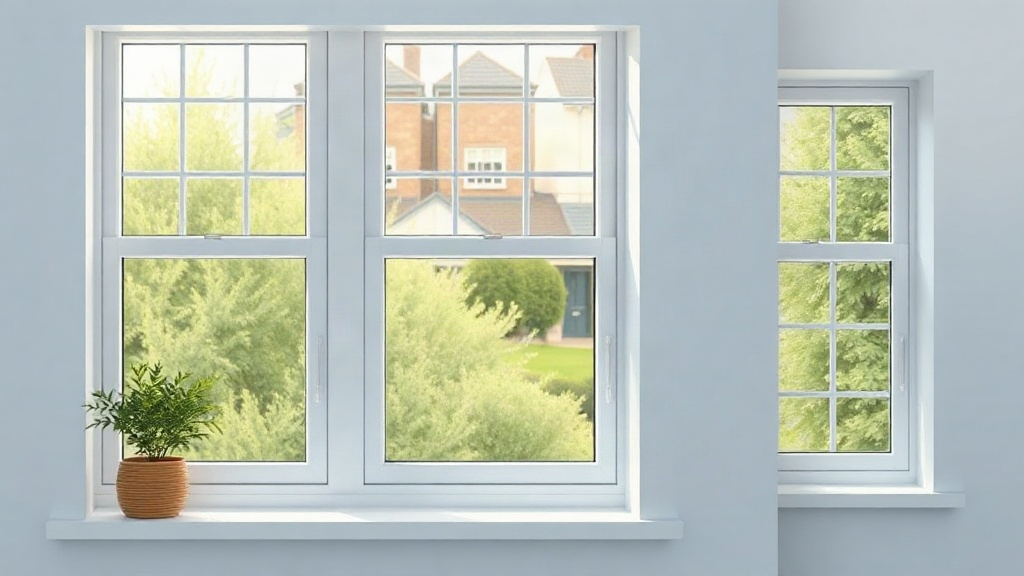
The performance comes from the way a uPVC window is built in layers. Think of it as a set of barriers rather than one single defence.
It helps to think of the whole assembly as a system rather than a stack of parts. A superb profile paired with poor installation, undersized drainage, or cheap gaskets will underperform a modest frame fitted with care. That is why two quotes for apparently identical windows can differ sharply once you compare the seals, spacers, and fixing methods specified.
The multi-chamber profile
Inside the frame, walls divide the hollow section into chambers. Each chamber traps a pocket of still air, and still air resists heat transfer. A three-chamber profile performs better than a single-chamber one; five or six chambers are better again. When you compare quotes, ask how many chambers the profile has. It is one of the clearest signals of quality.
Glazing and gas fill
The glass unit usually does most of the insulating work. Two panes with an argon fill and a low-emissivity coating cut heat loss dramatically compared with single glazing. Warm-edge spacers reduce condensation at the glass edge. For exposed sites, laminated glass adds security and cuts outside noise on busy roads.
Seals and drainage
Irish rain does not fall straight down. It arrives at an angle, pushed by wind. Good uPVC windows use double or triple gaskets plus a drained and ventilated system behind the frame. Water that gets past the outer seal escapes through weep holes rather than sitting against the wall. This detail separates a weathertight window from a leaky one.
Thermal movement and installation
uPVC expands and contracts with temperature more than timber. Installers allow for this with correct fixing and expansion gaps. Poor fitting is the single biggest cause of draughts and leaks in new windows. In our experience, a mid-range frame fitted well outperforms a premium frame fitted badly.
Real-world examples
Abstract specifications only go so far. These scenarios show how the choice plays out in practice.
A mid-terrace house in Limerick told a different story about noise than about heat. The owner lived fifty metres from a busy roundabout and had grown used to traffic drone from early morning. Fitting acoustic laminate glass in the two front bedrooms, paired with triple gaskets, dropped the perceived noise enough that the children began sleeping through the morning rush. Notably, the same upgrade did little for the rear rooms, which faced a quiet garden — a reminder that glazing specification should follow the problem, room by room, rather than being applied uniformly across a whole house.
A rural bungalow outside Ennis showed why ventilation matters as much as insulation. After replacement, the family sealed the house tightly and skipped the trickle vents to keep out draughts. Within a month, mould appeared on the bathroom ceiling. Reopening the vents and adding a background extractor solved it at modest cost. The frame was never at fault.
A 1970s semi-detached house in Cork
We reviewed a case where the owner replaced original single-glazed aluminium windows with A-rated uPVC double glazing. The living room faced southwest into prevailing wind and rain. Before the change, condensation ran down the glass every morning. After fitting, the inner pane stayed dry and the room heated faster. The owner reported the heating coming on less often, though we caution against quoting exact savings without a BER assessment.
A coastal bungalow in Donegal
Salt air attacks metal fittings. One homeowner had watched aluminium handles corrode within three years. The replacement uPVC frames used stainless steel hardware and held up well over the following winters. The lesson: on the coast, specify the hardware, not just the frame.
A protected townhouse in Galway
Homes in architectural conservation areas often cannot change window appearance. Here, uPVC was not the right answer. Timber sash replicas were required. This is an honest limitation worth checking before you order anything.
A rental apartment in Dublin
Landlords value low maintenance. uPVC needs no painting and resists scuffs, so turnover costs drop. Acoustic glazing on a street-facing unit cut traffic noise noticeably.
| Home type | Best uPVC choice | Watch out for |
|---|---|---|
| Inland semi-detached | Double glazing, A-rated | Cheap handles and hinges |
| Coastal bungalow | Marine-grade hardware | Salt corrosion on fittings |
| Conservation area | Usually not permitted | Planning rules |
| Rental property | Standard double glazing | Tenant damage to seals |
Common misconceptions
Plenty of claims about uPVC do not survive scrutiny. Here are the ones we hear most.
Many homeowners believe a higher price guarantees a better window. It often buys a recognisable brand name rather than measurably better performance. The specification sheet — U-value, chamber count, glass type, hardware grade — tells you far more than the showroom’s reputation. Ask to see it in writing.
Another persistent myth is that uPVC cannot be repaired. In practice, handles, hinges, locks, and even individual sealed glass units are replaceable without touching the frame, which is one reason the material ages well. A stiff window usually needs an adjustment or a new hinge, not a full replacement.
“uPVC windows cause condensation”
Condensation on the inside of glass usually signals a ventilation problem, not a window fault. Modern windows are so airtight that moisture from cooking and showers has nowhere to go. Trickle vents and extractor fans solve it. In our view, blaming the window is like blaming a good umbrella for the rain.
“All uPVC is the same”
Far from it. Profile thickness, chamber count, steel reinforcement, glass specification, and hardware quality all vary. A cheap frame may use thin walls and no reinforcement, which shows up as flexing and misalignment within a few years.
“uPVC turns yellow in sunlight”
This was true of early products. Modern profiles include UV stabilisers, and reputable brands offer colour-fast guarantees. Cheaper imports may still fade, so check the warranty terms in writing.
“uPVC is not environmentally friendly”
The picture is mixed. Virgin uPVC has a high embodied carbon footprint. However, frames last decades, and recycling schemes are improving. If this matters to you, ask about recycled content and end-of-life take-back.
“You cannot get planning permission with uPVC”
Not automatically true, but many conservation areas and protected structures restrict materials. Check with your local planning authority before ordering. Assuming either way is a mistake.
“Cheaper quotes save money”
A low quote often excludes removal, disposal, plastering, or VAT. Compare like for like, and confirm who handles making good around the frame.
FAQ
How much do uPVC windows cost in Ireland?
Prices vary by size, glazing, and installer, so treat any single figure with caution. As a rough guide, standard double-glazed units sit at the lower end, while triple glazing and large sliding doors cost considerably more. Always get at least three itemised quotes.
Do I need planning permission to replace windows?
In most cases, replacing like-for-like windows does not require permission. However, homes in conservation areas or protected structures usually do. Check with your local authority before you order, because retrofitting approval is far harder.
How long do uPVC windows last?
A well-made frame with quality hardware typically lasts twenty to thirty years. The sealed glass unit often fails first, usually between ten and twenty years. Replacing a failed unit costs far less than a full window.
Are uPVC windows suitable for coastal homes?
Yes, provided you specify stainless steel hardware and quality seals. Salt air attacks cheap metal fittings long before it affects the frame itself. Ask your supplier what grade of hardware they use.
Can uPVC windows reduce noise?
They can, especially with laminated or acoustic glazing and triple seals. The improvement is noticeable on busy roads, though not soundproof-level unless specified carefully.
Should I choose triple glazing?
Triple glazing suits exposed, cold, or noisy sites. For milder inland locations, good double glazing usually offers better value.
Conclusion
Why uPVC Windows Are Ideal for Irish Homeowners comes down to a simple match between material and climate. The frames resist wind-driven rain, insulate well, and need minimal upkeep in a country that punishes lesser materials. Quality varies widely, though, so chamber count, glass specification, hardware, and installation standards matter more than the badge on the showroom door. Be honest about the trade-offs: limited style options, planning restrictions in older areas, and mixed environmental credentials.
Your next step is practical. Get three itemised quotes, ask each installer about profile chambers and hardware grade, and check planning rules before you commit. Do that, and your windows should serve you well for decades.
