
Key Takeaways
- A neutral color base makes nearly every piece easy to mix and match.
- Classic staples outlast trends and offer better long-term value.
- Limiting your palette to a few colors multiplies your outfit options.
- Accent colors and prints add personality without sacrificing flexibility.
- Fit and fabric quality matter as much as color or style choice.
A versatile wardrobe feels effortless, even on busy mornings. However, building one takes more thought than simply buying more clothes. The right colors, staples, and combinations create endless outfit options. This guide breaks down simple ways to reach that goal. You will build a wardrobe that works harder for you.
Why Versatility Beats a Large Wardrobe
Many people assume more clothing means more outfit options. However, a smaller, thoughtfully chosen wardrobe often performs better in practice.
According to a capsule wardrobe guide from On Sutton Place, this approach focuses on minimizing the quantity of items while keeping only pieces you truly love and wear regularly. The goal is a wardrobe that works for you, reducing both clutter and daily stress.
Fewer choices actually simplify your daily routine. A Style School guide captures this benefit clearly. It notes that a core wardrobe means fewer pieces but more outfits, since you are constantly layering and combining familiar items in new ways. This structure removes decision fatigue from your morning routine.
The lifestyle benefits extend beyond simple convenience too. On Sutton Place’s guide adds that a smaller wardrobe is easier to manage, which can lead to a more organized living space and mindset overall. Less clutter in your closet often mirrors less mental clutter during your day. This same mindset can extend to your home, where home improvement tips that will transform your living room can inspire simple changes that make your space feel more functional.
This approach also encourages more mindful purchasing habits. Style School frames this shift positively, noting that investing in quality over quantity supports more thoughtful, mindful consumption. Therefore, versatility is not just a styling technique. It reflects a broader approach to how you shop, dress, and organize the spaces around you.
Building Your Wardrobe Around Neutral Colors
Color choice determines how easily your clothes mix together. Neutral colors form the foundation that makes versatility possible.
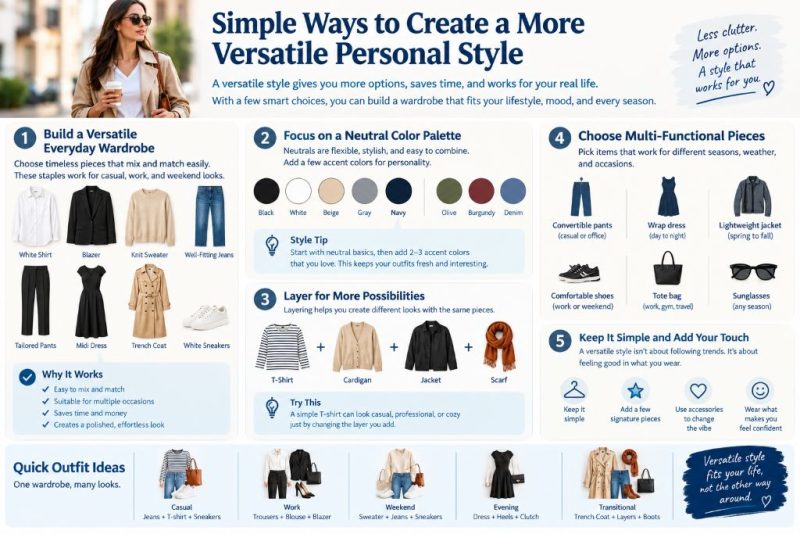
A capsule wardrobe guide defines this foundation clearly. Neutrals like black, white, gray, beige, and navy blue form the base of a versatile wardrobe, providing a backdrop for statement pieces and accent colors. These shades rarely clash with anything else in your closet.
The practical benefits of this approach are significant. The same guide explains that neutral colors provide a clean, minimalist canvas for other pieces, create balance when paired with bolder colors, and stretch your wardrobe by extending the usefulness of each item you own.
A wardrobe guide from OGL Move explains why this mixing works so reliably. Neutral colors do not compete strongly with each other, which allows a white top to work equally well with black trousers, camel pants, a gray skirt, or dark denim. This flexibility makes a small wardrobe feel far larger than its actual item count.
Consider building your palette using this simple structure.
- One base neutral color, such as black, white, or navy
- Two supporting neutral shades that pair easily with the base
- One or two soft accent colors reflecting your personal taste
- Denim in a versatile, medium wash as an additional neutral
- Metal tones in accessories that complement your chosen palette
Choosing a Color Palette That Suits You
Beyond general neutrals, your best colors depend on your own coloring and preferences. A tailored palette improves how each piece looks on you specifically.
A capsule wardrobe guide offers useful starting guidance based on skin tone. Warm skin tones tend to look best in earthy shades like olive green, terracotta, and golden brown. Cool skin tones often suit cooler shades like blue, pink, and purple more naturally.
Neutral skin tones enjoy more flexibility than the other two categories. The same source notes that neutral skin tones can pull off a wide range of colors, though soft, muted hues often work particularly well. Therefore, this group has the most freedom when selecting accent shades.
Personal preference should still guide your final decisions, regardless of skin tone guidance. The guide encourages experimenting with different color combinations and paying attention to how each one makes you feel. Confidence in your color choices often matters as much as any technical matching rule.
Emotional response to color deserves consideration too. The same source notes that calm, soothing colors like blue and green can promote relaxation, while bold, vibrant colors like red and orange stimulate energy and excitement. Therefore, think about the mood you want your outfits to reflect, not just how they look.
Investing in Classic, Timeless Staples
Certain wardrobe pieces stay useful for years rather than fading with a passing trend. Prioritizing these staples improves long-term versatility.
On Sutton Place’s capsule wardrobe guide advises choosing classic items with timeless appeal that mix and match across every season. It frames these choices as investments in your personal style, noting that classic pieces outlive passing trends and provide better value over time.
A stylist tip roundup from Petite Dressing lists specific examples worth prioritizing. It recommends having a white shirt, black pants, and a tailored blazer as core pieces that will never go out of style, staying relevant even many years later.
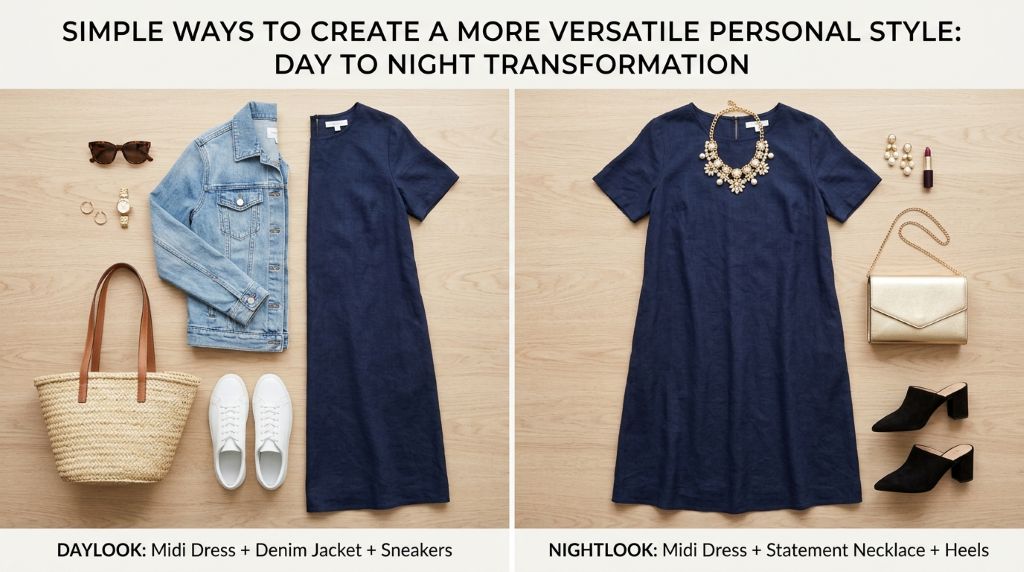
Trend items still have a place within this approach, just not as core pieces. On Sutton Place suggests adding trendy elements through accessories rather than your main garments. This strategy lets you experiment with current styles without compromising your wardrobe’s overall longevity.
Follow this approach when evaluating a potential new purchase.
- Ask whether the piece pairs with at least three other items you own.
- Consider whether the style will still feel relevant in several years.
- Check that the color fits within your established palette.
- Confirm the fabric and construction quality justify the investment.
- Picture at least two different occasions where you would wear it.
Adding Personality Without Losing Flexibility
A fully neutral wardrobe can start to feel flat or impersonal. However, adding character does not require sacrificing versatility.
A colorful capsule wardrobe guide from My Green Closet suggests one creative solution. Choosing prints that combine the existing colors already in your wardrobe can tie separate pieces together beautifully. For example, a printed jacket combining blue and yellow makes an outfit built around those two colors feel more intentional.
Planning around a defined palette before shopping helps maintain this same cohesion. The same guide recommends designing your capsule around a specific color palette from the start, which maximizes how many pieces will work well together later. Pinterest and similar platforms can help you develop this palette visually before buying anything.
Accent colors deserve careful selection rather than random inclusion. A wardrobe guide from SewGuide advises choosing accent shades specifically based on what flatters your complexion. This consideration ensures that even your boldest pieces still feel intentional and complementary.
Texture and silhouette offer another path to personality beyond color alone. The OGL Move guide notes that texture, fabric quality, neckline, and silhouette all help neutral outfits avoid feeling flat or boring. Therefore, variety in these details can add visual interest even within a limited color scheme.
Choosing Pieces That Work Across Occasions
Versatility also depends on how well individual pieces adapt to different settings. Certain categories offer more cross-context value than others.
A stylist tip list from Petite Dressing recommends prioritizing comfortable, easy-to-layer pieces alongside functional items suited to multiple occasions. It specifically highlights having a reliable little black dress and quality denim as anchor pieces within a versatile collection.
Button-down shirts represent another highly adaptable category worth prioritizing. A wardrobe guide from Sunstar notes that neutral-colored button-down shirts elevate an outfit effortlessly while matching nearly every other staple piece in your closet. This single item type can transition between casual and semi-formal settings easily.
Footwear deserves the same versatility-focused thinking as clothing itself. Petite Dressing’s guide recommends choosing neutral shoes specifically for this reason, since they pair reliably with a wider range of outfit colors than bold or trend-driven footwear choices.
Consider these categories when building out cross-occasion flexibility.
- A tailored blazer that dresses up casual pieces instantly
- Well-fitted slacks that work for both office and casual settings
- A quality white button-down for layering or standalone wear
- Neutral flats or low heels suited to walking and standing alike
- A structured bag that transitions from daytime to evening use
Prioritizing Fit and Fabric Quality
Color and styling choices matter less if a garment does not fit or feel right. These practical factors deserve equal attention in your selection process.
Petite Dressing’s stylist tips emphasize this practical foundation directly. It recommends ensuring a tailored fit and choosing fabrics that are easy to maintain alongside investing in top-quality basics. These factors affect how often you actually reach for a piece, regardless of how versatile its color might be.
Comfort plays a similarly practical role in long-term wardrobe success. The same source suggests opting for comfortable pieces and comfortable denim specifically, recognizing that discomfort discourages regular wear even from an otherwise perfect, versatile item.
Quality fabric choices also affect how well pieces mix across different combinations. Investing in slightly higher-quality basics often means the garment drapes and photographs better alongside other pieces in your wardrobe. Therefore, fit and fabric quality directly support the mixing and matching goal at the center of a versatile style.
Conclusion
Building a more versatile personal style comes down to a few consistent principles. Choose a neutral color foundation, invest in classic staples, and add personality through prints, accents, and texture rather than random new colors. Prioritize pieces that work across multiple occasions, and never overlook fit and fabric quality. These choices multiply your outfit options without multiplying your closet size.
A versatile wardrobe rewards you every single morning with less stress and more options. Start by reviewing your current closet against these principles this week. Choose your core neutral palette today, and build outward from there with confidence.
Frequently Asked Questions
What are the best neutral colors for a versatile wardrobe?
Black, white, gray, navy, and beige work well. These shades mix easily with nearly everything else.
How many accent colors should I include in my wardrobe?
Most guides recommend one to three accent colors that complement your neutral base and skin tone.
Do trendy pieces have any place in a versatile wardrobe?
Yes, but add them through accessories rather than core garments. This keeps your main pieces timeless.
Why does fit matter as much as color in styling?
A poor fit discourages regular wear, even from a perfectly versatile, well-colored piece.
Can I add color without losing wardrobe versatility?
Yes, choose prints combining your existing wardrobe colors or select accent shades that flatter your complexion.
