
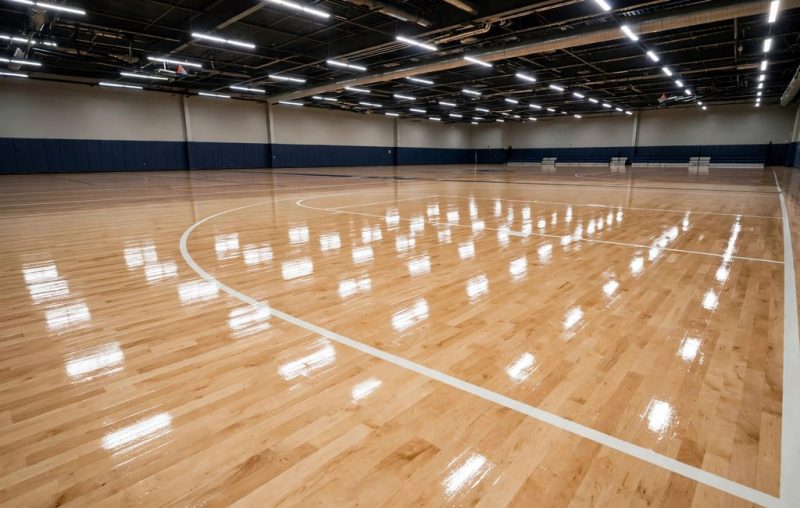
Every school, rec center and private gym eventually faces the same uncomfortable question: is this floor worth saving? The court lines are faded, the finish looks cloudy under the lights, and a few boards feel different underfoot. Before you sign a quote for a brand-new floor, it helps to know that a well-built maple floor is designed to be refinished several times over its life. Replacement is sometimes the right call, but it is far less common than most facility managers assume.
This guide walks you through how hardwood gym floor refinishing works, the warning signs that point toward replacement, and a simple way to decide with confidence.
What Hardwood Gym Floor Refinishing Actually Involves
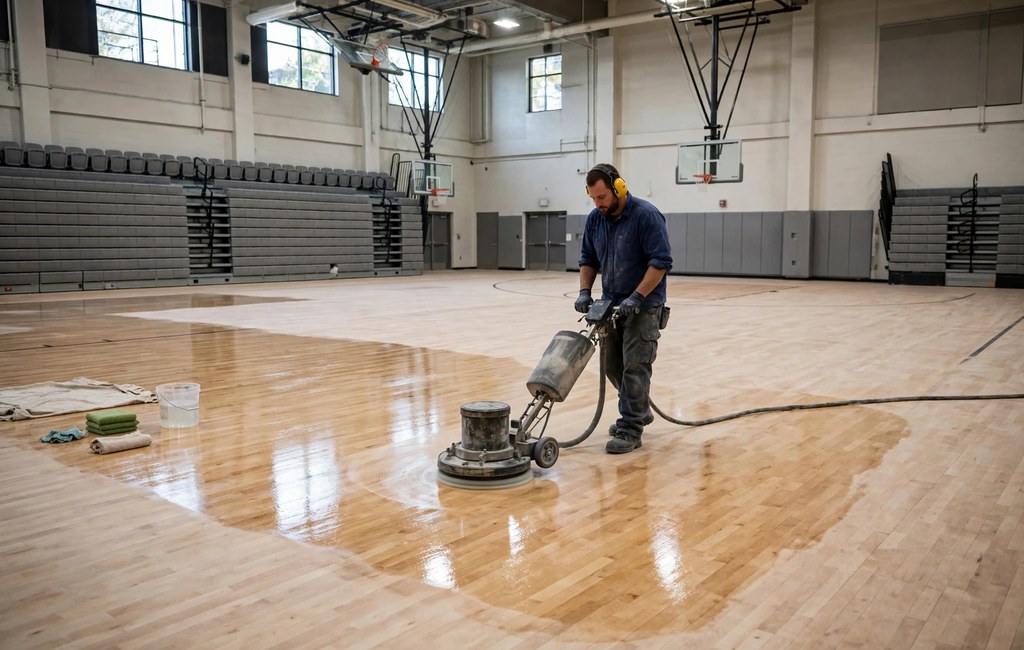
Refinishing is not a single task. It is a spectrum, and understanding the levels helps you budget correctly.
Screen and recoat. The lightest option. A contractor buffs the existing finish with an abrasive screen to scuff the surface, cleans it thoroughly, and applies a fresh coat of finish. This restores shine and protection when the wood itself is in good shape. Many facilities schedule this on a regular maintenance cycle so they never need heavier work.
Full sand and refinish. When the finish is worn through, stained or peeling, the floor is sanded down to bare wood, which removes the old finish and the old court lines along with it. The crew then applies a sealer, repaints lines and logos, and builds up several coats of finish. This is what most people mean by gym floor refinishing.
Repair plus refinish. Damaged boards are cut out and replaced, small areas of the subfloor are corrected, and the whole floor is then sanded and finished so the repairs blend in.
Because a full sand removes a thin layer of wood, every floor has a finite number of sandings. Solid maple strip flooring typically has a usable wear layer thick enough for multiple full refinishes, which is exactly why a gym floor can last for decades. Your original installation records, or a contractor’s inspection, will tell you how much wood remains above the tongue.
Signs Your Gym Floor Can Be Refinished
If you recognize the following, refinishing is almost certainly the smarter and cheaper path.
- Dull, scratched or hazy finish. Surface wear is cosmetic and fixable.
- Faded or outdated court lines. Lines are painted under the finish, so a sand and refinish gives you a clean slate to redesign your layout, add pickleball or volleyball lines, or update school colors.
- Minor dents and scuffs. Normal athletic wear rarely goes deep enough to matter once the floor is sanded.
- Small gaps between boards in dry seasons. Seasonal movement is normal in wood. As long as the gaps close back up when humidity returns, the floor is behaving as designed.
- A few isolated damaged boards. Spot repairs are routine.
A good rule of thumb: if the problems live in the finish or the top surface of the wood, you are looking at refinishing.
Signs It May Be Time to Replace Your Gym Floor
Some problems go deeper than any sander can reach. Watch for these red flags.
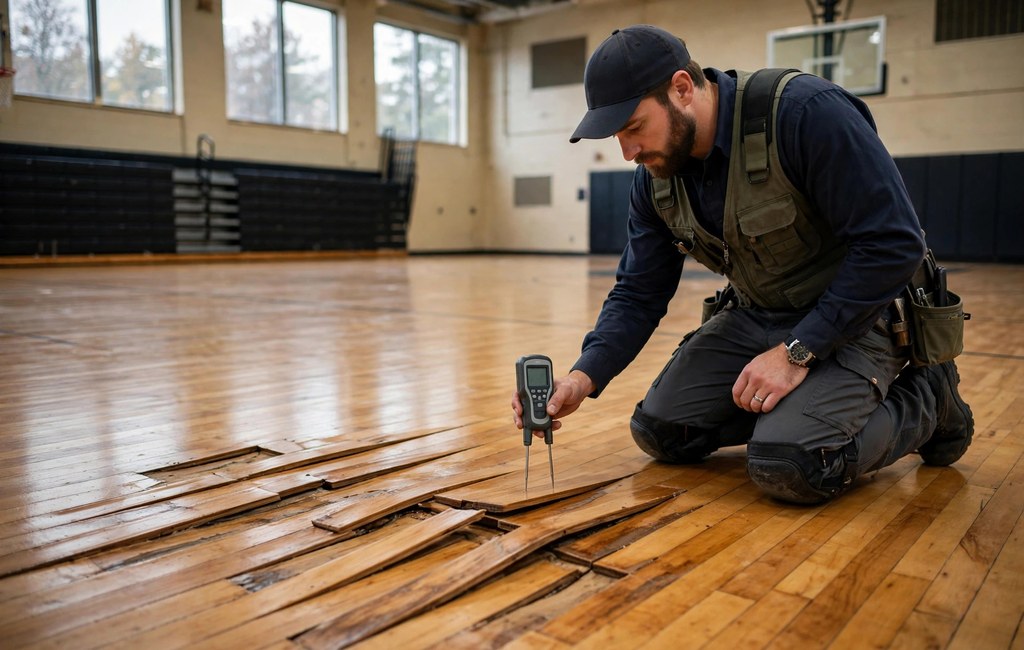
Widespread cupping or crowning. Cupping means board edges rise higher than the centers. Mild cupping that follows a moisture event may flatten out once the floor dries. Severe, persistent cupping across large areas suggests ongoing moisture trouble that sanding will not solve.
Buckling. When boards lift away from the subfloor, the floor has lost its anchoring or has absorbed major moisture. Large buckled areas usually mean the system underneath has failed.
Dead spots and dull sound. If the floor feels deadened, loses its bounce, or thuds where it used to ring, the sleepers, pads or subfloor beneath may have deteriorated. That is a safety and performance issue, not a finish issue.
Worn-down wear layer. If previous sandings have reached the tongue, there is not enough wood left to sand safely. A contractor can confirm this by checking board thickness at a floor edge or removed board.
Mold, rot or pest damage. Organic damage in the wood or the subfloor requires removal.
Repeated failure after refinishing. If a freshly finished floor keeps cracking, peeling or cupping, the cause is almost always underneath or in the building environment.
Refinish vs. Replace: A Quick Comparison
| Factor | Refinish | Replace |
|---|---|---|
| Typical condition | Surface wear, faded lines, light scratches | Structural damage, severe moisture, thin wear layer |
| Downtime | Usually days to about a week or two | Often weeks, sometimes longer |
| Cost | Lower, often a fraction of replacement | Highest, includes demolition and disposal |
| Disruption | Minimal, floor stays in place | Significant, includes subfloor work |
| Longevity gained | Years of added life | Fresh start for decades |
Exact prices vary by region, floor size and system type, so request itemized quotes rather than relying on a per-square-foot guess you find online.
The Hidden Factor: Moisture and the Subfloor
Nearly every serious gym floor failure traces back to moisture. Wood is hygroscopic, so it expands when humidity rises and shrinks when air is dry. Leaks, a flooded locker room, a poorly vented crawl space or a building that is not climate controlled over the summer can all push a floor past its limits.
Before deciding anything, ask your contractor to measure moisture content in the wood and, where possible, check the conditions beneath the floor. If the source of moisture is fixed, a floor that looks bad today may recover well. If the source remains, even a brand-new floor will suffer the same fate.
The subfloor system matters too. Many athletic floors sit on a resilient system of pads or sleepers that provide shock absorption. Compressed or broken components change how the court plays and can raise injury risk, so an inspection should include a walk-through listening and feeling for soft or dead zones.
How to Make the Decision: A Simple Checklist
- Get a professional assessment. Ask for a moisture reading, a board thickness check and a subfloor evaluation.
- Identify the root cause. Is the problem surface wear, or is something structural or environmental behind it?
- Count the previous refinishes. Your maintenance records show how much wood is left.
- Compare total lifecycle cost. A cheaper short-term fix that fails in three years costs more than a proper repair.
- Consider how you use the space. A school gym that hosts daily classes and weekend tournaments needs a different plan than a private home gym.
- Plan the timeline around your calendar. Summer breaks and off-seasons make downtime painless.
Extending the Life of a Refinished Floor
Once your floor is restored, a few habits protect the investment.
- Use dust mops daily and avoid wet mopping or steam cleaning.
- Only allow clean, non-marking athletic shoes on the court.
- Keep indoor humidity within the range your floor manufacturer recommends.
- Place protective covers under bleachers, equipment and event setups.
- Schedule a screen and recoat before the finish wears through so you never need a full sanding sooner than necessary.
Frequently Asked Questions
How often should a hardwood gym floor be refinished?
It depends on traffic and maintenance. Many facilities perform a screen and recoat on a regular schedule, with a full sand and refinish needed far less often. Your finish manufacturer and floor installer can recommend an interval for your situation.
How many times can a maple gym floor be sanded?
Solid maple floors usually allow several full sandings across their lifetime, but the exact number depends on the thickness of the wear layer and how aggressively previous crews sanded. A contractor can measure what remains.
Can I just repaint the court lines without refinishing the whole floor?
Lines are painted beneath the top coats of finish, so changing them properly means sanding at least the affected area and recoating. Painting over a finished surface tends to peel and can affect traction.
Is a refinished floor safe to play on right away?
Not immediately. Finish needs time to cure. Follow the contractor’s guidance on when light use and full use can resume.
Does refinishing fix cupped boards?
Mild cupping caused by a past moisture event can often be corrected once the floor stabilizes and is sanded flat. Severe or ongoing cupping points to a moisture source that must be solved first.
Ready to Make the Call?
The cheapest floor is the one you decide on with facts. Book a professional gym floor assessment, ask for a written report covering moisture, thickness and subfloor condition, and compare a refinish quote with a replacement quote side by side. That one conversation can save you thousands and keep your court game-ready for years.
