
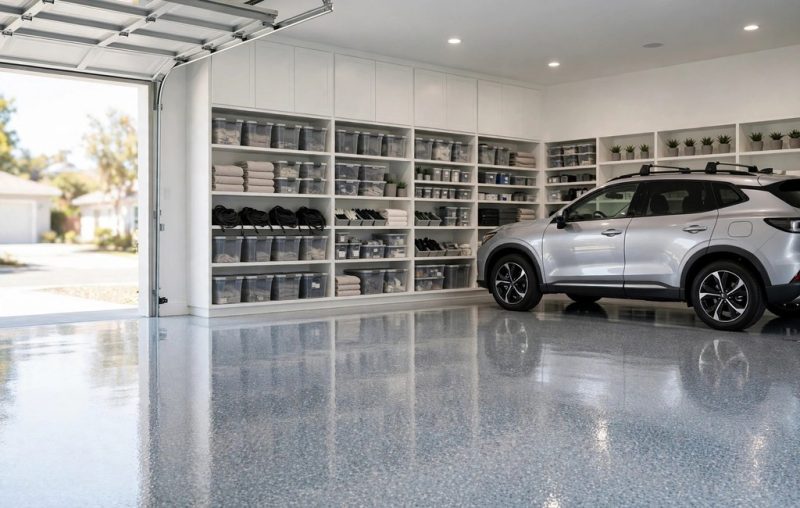
A decade ago, epoxy was mostly something you saw in warehouses and auto shops. Today it is showing up in garages, basements, laundry rooms, mudrooms and even kitchens and living spaces. Homeowners are tired of stained, dusty, cracked concrete, and they want a surface that looks sharp, cleans in minutes and holds up to real life. Residential epoxy floors answer all three.
But popularity is not the same as a perfect fit. Here is why so many homeowners are making the switch, what the coating really is, and what to know before you commit.
What Is Epoxy Flooring?
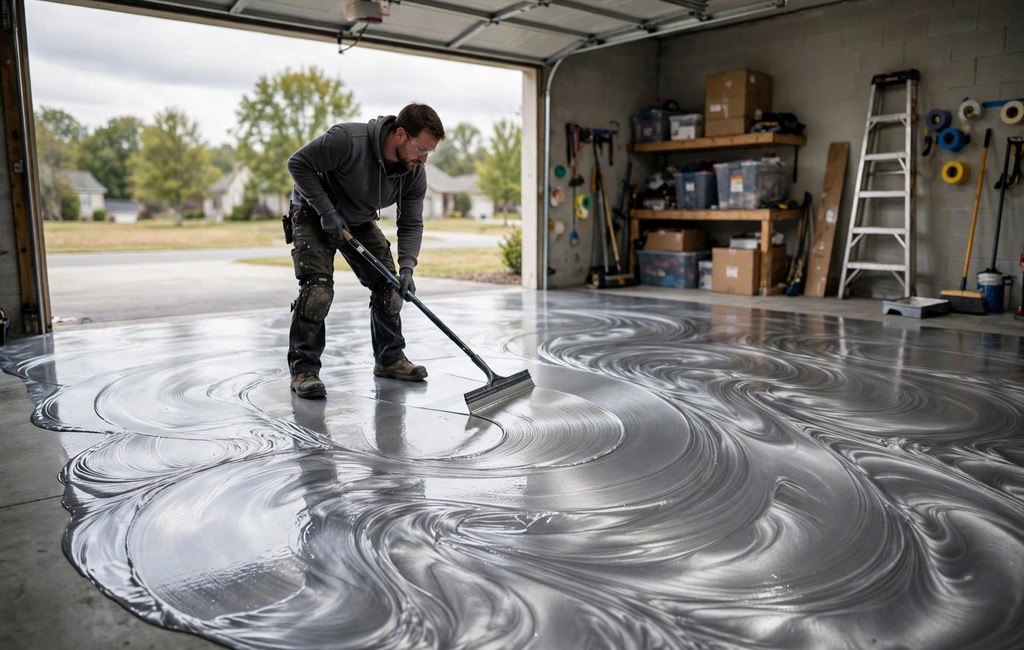
Epoxy is a two-part system. A resin and a hardener are mixed, applied to a prepared concrete surface and left to cure into a hard, bonded coating. Unlike paint, which sits on top of concrete, a properly installed epoxy system chemically bonds to the slab and forms a continuous, seamless layer.
Most residential systems include several steps: surface preparation, a primer or base coat, an optional decorative layer such as color flakes or metallic pigments, and a protective topcoat. The topcoat is often a urethane or polyaspartic product that adds scratch resistance, UV stability and gloss control.
The Top Reasons Homeowners Choose Epoxy
1. A tough, durable surface. Epoxy resists abrasion, hot tires, dropped tools and everyday foot traffic far better than bare concrete or ordinary paint. In a garage, that means no more hot-tire pickup peeling the coating away.
2. Easy cleaning. Concrete is porous, so it absorbs oil, grease, pet accidents and spilled drinks. A sealed epoxy surface is non-porous. Most messes wipe up with a mop or a squeegee, and dust no longer sheds from the slab.
3. Seamless and hygienic. Because the floor has no grout lines, it leaves fewer places for dirt and moisture to hide. That makes it appealing for laundry rooms, pet areas and basements.
4. Style options. Gone are the days of battleship gray. Today’s choices include solid colors, decorative flake blends, quartz broadcast, stone-like finishes and metallic epoxy, which creates marbled, flowing patterns that look custom-designed. Homeowners are using these to make garages feel like showrooms and basements feel like finished living spaces.
5. Brighter spaces. A glossy light-colored floor reflects light, so garages and basements look larger and need less artificial lighting.
6. Added value and curb appeal. A clean, polished garage floor is a visible upgrade that buyers notice during showings, even if it is hard to put an exact number on the return.
7. Long-term value. Epoxy often costs more upfront than paint but can outlast repeated repainting and the constant cleaning of bare concrete. Over time, many homeowners find the lifecycle cost competitive.
Where Residential Epoxy Floors Work Best
- Garages. The most popular location, thanks to oil resistance and tire-pickup resistance.
- Basements. Great for finished or semi-finished spaces, provided moisture is properly managed.
- Laundry rooms and utility rooms. Water-resistant and easy to wipe down.
- Home gyms. Durable under equipment, though pairing with rubber mats is smart for heavy weights.
- Workshops and hobby rooms. Handles spills, tools and chemicals well.
- Patios and porches. Only with exterior-rated, UV-stable systems, usually a polyaspartic topcoat, since standard epoxy can yellow in sunlight.
Epoxy vs. Other Residential Flooring
| Flooring | Strengths | Weaknesses |
|---|---|---|
| Epoxy | Seamless, durable, wide style range | Needs proper prep, can be slippery when wet without additive |
| Bare or painted concrete | Cheapest upfront | Stains, dusts, peels |
| Tile | Classic look, good water resistance | Grout lines, cracks if slab moves |
| Vinyl or LVP | Comfortable, affordable | Can dent or trap moisture below |
| Carpet | Soft and warm | Absorbs stains and moisture, poor in garages and basements |
What to Know Before You Install
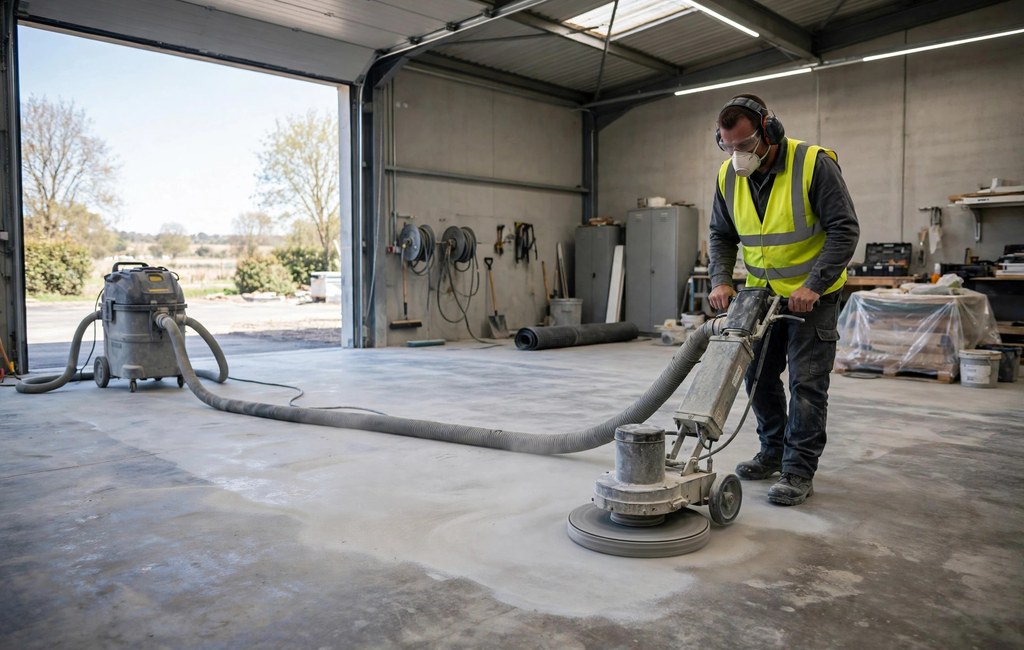
Epoxy is only as good as its preparation. These are the details that separate a floor that lasts from one that peels in a year.
Surface preparation is everything. Professionals typically use diamond grinding or shot blasting to open the concrete’s pores and remove sealers, laitance and contaminants. Acid etching, common in DIY kits, often gives weaker and less consistent results than mechanical prep.
Test for moisture. Concrete can pass water vapor from the ground up. Excess moisture can cause bubbling and delamination. Professionals use moisture tests on the slab and may add a moisture-mitigating primer when readings are high.
Repair cracks and spalls first. Fill and level them before coating so they do not telegraph through or grow.
Mind slip resistance. A glossy epoxy surface can be slick when wet. Adding fine aggregate or a slip-resistant additive in the topcoat helps, particularly in garages, entryways and anywhere wet feet or shoes are common.
Respect cure times. Epoxy needs time to harden. Light foot traffic may be possible within a day or so, but full vehicle traffic usually requires a longer wait, and times vary by product and temperature. Faster-curing polyaspartic systems shorten this window.
Ventilate during installation. Epoxy products give off fumes while curing, so plan for ventilation and keep children and pets out of the area.
DIY Kit or Professional Install?
Hardware-store kits can work for small, low-demand areas with clean, sound, dry concrete and a careful installer. The tradeoff is thinner coatings, less aggressive surface preparation and fewer color options. Professional installers bring commercial-grade grinding equipment, thicker multi-coat systems and experience reading a slab, which usually translates to better adhesion and longer service life. If your slab is old, oil-stained, cracked or prone to moisture, hiring a pro is often the better investment.
Keeping an Epoxy Floor Looking Great
Maintenance is simple. Sweep or dust mop regularly, mop with a neutral pH cleaner, wipe up spills promptly and place mats at entrances to trap grit. Avoid harsh abrasive pads and acidic cleaners that can dull the surface. Felt pads under furniture and care when dragging heavy objects will prevent scratches.
Frequently Asked Questions
How long do residential epoxy floors last?
Longevity depends on preparation, product quality and use. A well-installed system in a typical home can serve for many years, while thin DIY coatings or poorly prepped slabs may fail much sooner.
Is epoxy flooring slippery?
Glossy epoxy can be slick when wet, but adding anti-slip aggregate or a textured topcoat greatly improves traction.
Can I put epoxy over an old painted or sealed floor?
Only after the old coating is mechanically removed or abraded. Epoxy does not bond reliably over loose paint or sealers.
Will hot tires damage an epoxy garage floor?
Quality, well-bonded epoxy and polyaspartic systems are designed to resist hot-tire pickup. Poorly prepared floors or low-grade coatings are the ones that lift.
Does epoxy yellow over time?
Some epoxies yellow with UV exposure, especially near garage doors and windows. A UV-stable topcoat such as polyaspartic or aliphatic urethane helps prevent it.
Can epoxy go in a basement?
Yes, if moisture is tested and addressed first. Skipping that step is the most common cause of basement coating failure.
Ready to Upgrade Your Floors?
If your concrete is stained, dusty or just plain tired, now is the time to explore your options. Request quotes from two or three local epoxy installers, ask to see completed residential projects and confirm exactly how they prepare the slab. A few smart questions today will give you a floor you will love for years.
