
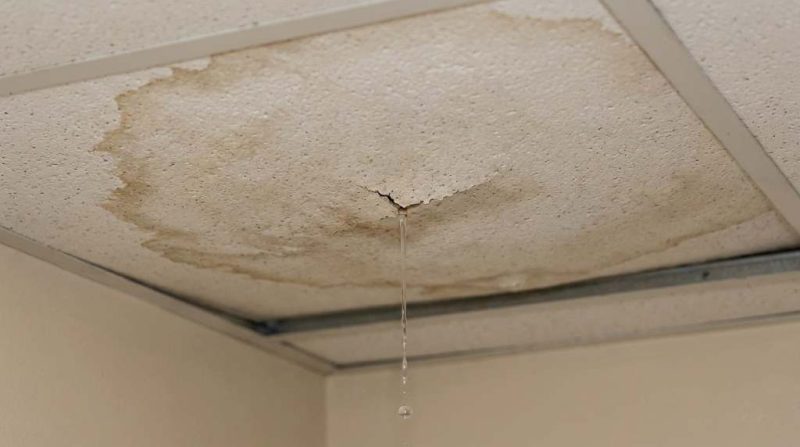
To fix a sudden ceiling leak in Tampa, first stop the water source and protect the room below. Then identify the leak path, make a temporary repair, and arrange professional roof or plumbing work. Tampa receives roughly 50 inches of rain annually, while hurricane season runs from June through November. Therefore, even a small ceiling stain deserves prompt attention. Proper roof maintenance, including elastomeric mobile home roof coating, can also reduce certain roof-related moisture problems.
Key Takeaways Before You Touch the Ceiling
- Stop the source first: Shut off nearby plumbing fixtures or contain incoming roof water immediately.
- Protect people and property: Move furniture and avoid electrical fixtures near wet ceiling areas.
- Find the entry point: Water often travels along framing before appearing inside your room.
- Use temporary repairs carefully: Tarps and containers can limit damage until permanent repairs begin.
- Watch for hidden moisture: Wet insulation, drywall, and framing can create longer-term problems.
- Call specialists when necessary: Roofing contractors, plumbers, and restoration professionals handle different causes.
Stop a Ceiling Leak Before Damage Spreads
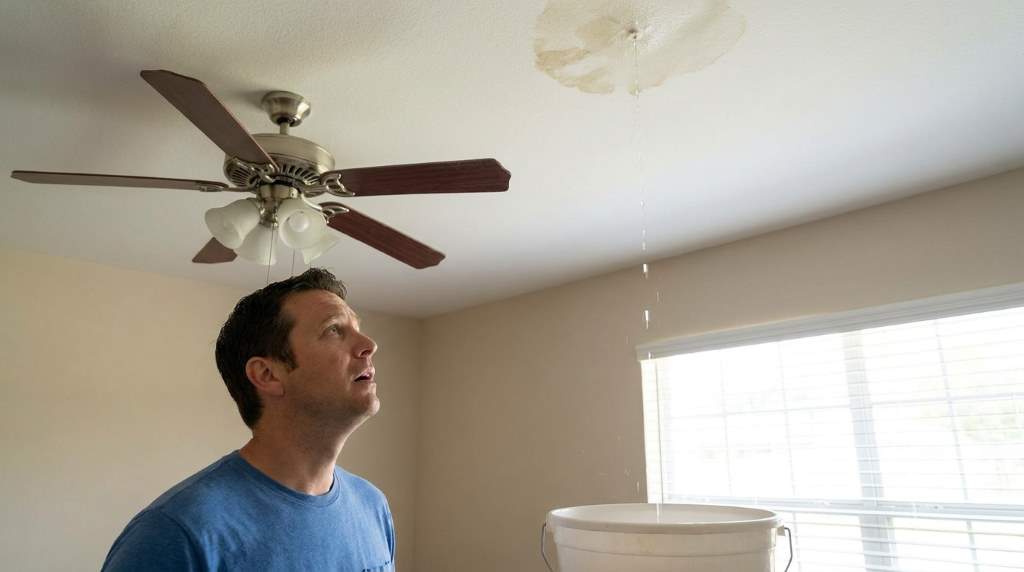
A sudden ceiling leak needs immediate containment, even when the dripping looks minor. First, place buckets beneath active drips and move valuables away from the affected area.
Next, inspect nearby lights, ceiling fans, outlets, and electrical devices without touching wet components. If water approaches electrical equipment, switch off the affected circuit from a safe location.
However, never enter standing water near electrical equipment because hidden electrical hazards can remain invisible. Instead, contact a qualified electrician when electrical components become wet or damaged.
If plumbing fixtures sit directly above the ceiling stain, stop using those fixtures immediately. Then check accessible supply lines, drains, toilets, tubs, and air-conditioning components for obvious leaks.
For roof-related leaks, place a container under the drip and avoid climbing onto a wet roof. Tampa’s frequent storms can make roof surfaces extremely slippery and dangerous.
Meanwhile, inspect the attic only when you can enter safely and conditions remain dry. Look for wet insulation, dark wood, active dripping, damaged sheathing, or visible daylight.
Do not puncture a bulging ceiling unless a qualified professional directs you. A water-filled ceiling can release suddenly and spread contaminated water across the room.
Trace Where the Tampa Ceiling Leak Actually Starts
The visible stain rarely marks the precise location where water entered the building. Water can travel along rafters, pipes, insulation, drywall joints, and other concealed surfaces.
Therefore, trace the moisture path rather than repairing the first visible stain. Roof leaks commonly enter around penetrations, flashing, valleys, vents, skylights, and damaged shingles.
For homes with older roofing, algae growth can complicate surface inspection and moisture management. You can also review zinc versus copper granules when evaluating algae prevention strategies.
Check These Common Roof Entry Points
- Roof penetrations: Inspect vents, pipes, chimneys, and other openings for deteriorated seals.
- Flashing: Look for lifted, corroded, cracked, or displaced flashing around roof transitions.
- Shingles: Check for missing, curled, cracked, or visibly damaged roofing materials.
- Roof valleys: Examine valleys for accumulated debris, damaged materials, and poor drainage.
- Gutters: Remove leaves and debris that prevent water from flowing toward downspouts.
- HVAC equipment: Check condensate lines, drain pans, and nearby ductwork for moisture.
Additionally, inspect the ceiling after rainfall and compare the stain with the roof’s position. A leak that appears only during storms strongly suggests an exterior moisture source.
Yet recurring moisture without rainfall can indicate plumbing or HVAC problems instead. Track when the leak appears because timing provides valuable diagnostic information.
Handle Temporary Roof Protection Safely
Once you identify a likely roof source, temporary protection can reduce additional water intrusion. However, temporary measures should never replace a permanent repair.
A properly installed tarp can cover damaged roofing until a contractor arrives. Secure the tarp beyond the damaged area, but avoid climbing onto unstable or saturated roofing.
Roof geometry also matters when water moves between connected sections. If your property contains additions, review guidance about tying a gable roof to understand vulnerable transition areas.
When You Should Skip DIY Roof Repairs
Skip roof work when the roof remains wet, steep, damaged, or difficult to access safely. Also avoid DIY repairs after severe storms when structural damage may exist beneath the surface.
Professional roofers can assess flashing, decking, underlayment, penetrations, drainage, and storm damage more safely. They can also determine whether your roof needs repair or partial replacement.
Meanwhile, document the damage with photographs before cleanup removes visible evidence. Record the date, weather conditions, affected rooms, and approximate duration of the leak.
Dry the Ceiling and Prevent Hidden Moisture
Stopping the leak does not immediately solve the problem because building materials can retain substantial moisture. Drywall, insulation, wood framing, and flooring can remain damp after visible dripping stops.
Start by increasing safe airflow around the affected room and removing wet materials when appropriate. Use fans or dehumidifiers only when electrical conditions remain safe.
Do not simply paint over a water stain because trapped moisture can continue damaging the ceiling. Instead, allow the area to dry completely before replacing damaged drywall or applying primer.
A professional moisture assessment becomes valuable when insulation or framing remains wet. For major roof work, understanding moisture barrier roof replacement can clarify how underlayment supports long-term protection.
Signs the Ceiling Needs More Than Cosmetic Repair
- Persistent dampness: The ceiling remains cool, soft, or visibly wet after several days.
- Soft drywall: The material bends, sags, crumbles, or develops expanding damage.
- Musty odors: Persistent odors can indicate moisture trapped inside concealed building materials.
- Discoloration: Brown, yellow, or spreading stains can indicate continuing moisture intrusion.
- Peeling surfaces: Bubbling paint or separating texture can indicate underlying moisture.
- Wet insulation: Saturated insulation can hold moisture and reduce its intended performance.
Furthermore, Tampa’s humid climate can slow drying compared with drier regions. Prompt extraction and controlled drying therefore become especially important after significant water intrusion.
Know When a Plumber or Roofer Should Respond
The correct professional depends primarily on the leak’s source rather than its appearance. A roofer handles exterior roof failures, while a plumber handles water supply and drainage failures.
Air-conditioning leaks require HVAC attention when condensate systems or drain pans cause ceiling moisture. Restoration specialists can help when widespread saturation affects drywall, insulation, flooring, or structural materials.
Choose the Right Professional Based on the Evidence
- Roofer: Call when rainfall triggers leakage or roof components show visible damage.
- Plumber: Call when leakage continues without rain and follows plumbing usage.
- HVAC technician: Call when moisture appears around air-conditioning equipment or condensate lines.
- Electrician: Call when water reaches wiring, fixtures, outlets, or electrical equipment.
- Restoration specialist: Call when extensive materials become saturated or drying becomes difficult.
Ask contractors to identify the underlying source before recommending cosmetic ceiling repairs. A trustworthy professional should explain the observed evidence and proposed repair clearly.
Also, request photographs of damaged roof components when exterior work becomes necessary. Clear documentation helps you understand whether the proposed repair addresses the actual entry point.
Repair the Ceiling After the Leak Stops
Once the moisture source disappears, inspect the ceiling carefully before beginning cosmetic restoration. Small stains may require cleaning and sealing, while saturated drywall often requires replacement.
Remove compromised drywall when it loses structural integrity or remains contaminated after drying. Replace wet insulation when it cannot dry completely or no longer performs properly.
Next, allow framing and surrounding materials to reach an adequately dry condition. Then install replacement drywall, tape the joints, apply suitable primer, and repaint the repaired surface.
Never treat recurring stains as ordinary painting problems. A returning stain usually signals unresolved moisture somewhere above or around the affected ceiling.
Prevent the Next Sudden Ceiling Leak
Prevention begins with routine inspections rather than waiting for visible interior damage. Examine roofing, flashing, gutters, downspouts, seals, and attic areas regularly.
Before Tampa’s stormier months, clear debris from gutters and verify that downspouts discharge water away from the foundation. Also trim branches that could strike roofing during strong winds.
After major storms, inspect accessible areas for missing roofing materials and damaged flashing. Schedule professional inspections when you notice unusual roof movement, exposed decking, or repeated interior stains.
Keep plumbing maintenance equally important because not every ceiling leak comes from rainfall. Check aging supply connections, drain assemblies, water heaters, and bathroom plumbing for early warning signs.
What to Do During a Tampa Storm
During severe weather, prioritize personal safety instead of attempting emergency roof repairs. Stay indoors when strong winds, lightning, or flooding create hazardous conditions outside.
Instead, contain interior water and protect belongings from additional damage. Place containers beneath drips and move furniture away from affected areas when conditions remain safe.
After the storm passes, photograph roof and ceiling damage before temporary cleanup changes the evidence. Then arrange a professional inspection if leakage continues or structural damage appears.
When a Ceiling Leak Becomes an Emergency
Some ceiling leaks require immediate professional intervention because they can threaten structural or electrical safety. Rapidly expanding stains, sagging ceilings, and heavy water flow deserve urgent attention.
Evacuate the affected room when the ceiling visibly bows, cracks, or begins separating. Keep everyone away until a qualified professional confirms that the area remains safe.
Electrical involvement also raises the urgency significantly because water can create dangerous shock and fire conditions. Contact appropriate emergency professionals rather than attempting repairs yourself.
Conclusion: Fix the Source, Not Just the Stain
A sudden ceiling leak requires containment, source identification, drying, and permanent repair in that order. Acting quickly can limit damage, protect your belongings, and reduce the chance of prolonged moisture problems.
Therefore, do not settle for painting over a ceiling stain without finding its cause. If the source remains uncertain, contact a qualified Tampa roofing, plumbing, HVAC, electrical, or restoration professional.
Start by documenting the damage and checking when the leak appears. Then arrange the right inspection so you can repair the underlying problem instead of repeating temporary fixes.
FAQs
What should I do first when my ceiling suddenly leaks?
Contain the water, protect belongings, avoid electrical hazards, and identify whether plumbing or roofing caused the leak.
Can I repair a leaking ceiling myself?
You can handle basic water containment, but professionals should address roof, plumbing, electrical, and structural problems.
Why does my ceiling leak only when it rains?
A rain-triggered leak usually points toward roofing, flashing, drainage, or another exterior water-entry problem.
Should I replace drywall after a ceiling leak?
Replace drywall when it remains saturated, structurally compromised, contaminated, or unable to dry properly.
How can I prevent ceiling leaks in Tampa?
Inspect roofing, flashing, gutters, plumbing, and HVAC systems regularly, especially before severe weather periods.
