
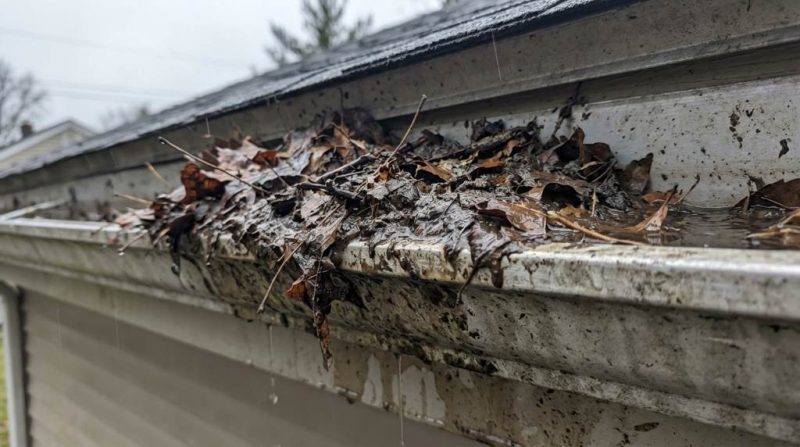
To stop gutter backups in Seattle, WA, clean gutters regularly, clear downspouts, correct poor slope, and improve water discharge. Seattle averages about 39.34 inches of precipitation yearly and receives measurable precipitation on roughly 156 days. Therefore, reliable drainage matters, especially when heavy storms arrive. Even commercial flat roof drainage solutions follow the same principle: move water away before it accumulates.
Key Takeaways
- Clean Seattle gutters at least twice each year.
- Inspect downspouts before fall storms and winter rainfall.
- Fix sagging gutters because poor slope traps water and debris.
- Extend downspouts away from foundations and vulnerable landscaping.
- Use gutter guards that match your roof and surrounding trees.
- Call a professional when backups persist after basic cleaning.
Why Seattle Homes Experience Gutter Backups
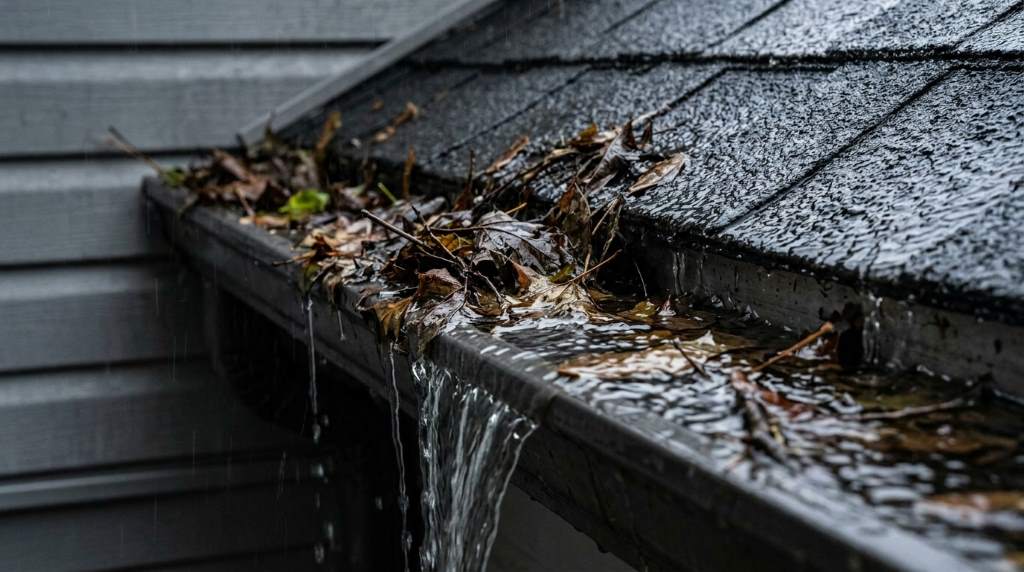
Seattle weather creates a demanding environment for residential gutter systems. Rain arrives frequently, while leaves, needles, moss, and roof debris enter gutters throughout the year. Consequently, even a small blockage can become a serious restriction during a strong storm.
Tree-covered neighborhoods face an even greater maintenance burden. Evergreen needles can collect inside corners, while broad leaves can form dense mats across gutter outlets. Therefore, homeowners should inspect gutters more often when mature trees surround the roof.
Seattle also contains properties with steep lots and complicated drainage patterns. Water from a roof can overwhelm one outlet when installers use inadequate downspout capacity. Moreover, poorly directed discharge can push water toward foundations instead of safely moving it away.
The city identifies clogged drains, inadequate drainage capacity, and intense rainfall among causes of urban flooding. That distinction matters because a gutter backup can involve both private drainage components and nearby public drainage infrastructure.
Start With a Complete Gutter and Downspout Inspection
Begin with the roofline before removing any debris. Look for standing water, sagging sections, separated joints, rust, loose hangers, and damaged outlet openings. Then inspect every downspout connection for visible gaps or crushed sections.
Next, check whether water can travel continuously toward each outlet. A gutter that looks clean can still retain water when its slope has changed. Therefore, inspect the system during or immediately after rainfall when possible.
Also examine areas where gutters meet valleys and roof transitions. These locations often receive concentrated runoff during storms. If debris repeatedly collects there, the system may need additional outlets or better debris control.
For homeowners planning broader moisture protection, understanding everyday waterproofing costs can also help prioritize related drainage improvements. However, gutter maintenance should remain the first step.
Use a Simple Inspection Checklist
- Check every gutter section for sagging.
- Inspect seams and end caps for leaks.
- Confirm each outlet remains free from debris.
- Look for loose or missing gutter hangers.
- Inspect downspouts for dents, bends, and separations.
- Watch where discharged water travels during rainfall.
Clean Gutters Before Seattle’s Wet Season
Cleaning removes the most common physical cause of gutter backups. Seattle Public Utilities recommends cleaning gutters and downspouts at least twice yearly. However, homes beneath heavy tree cover may need additional cleanings.
Start by removing large leaves and accumulated organic material. Then flush the gutter with controlled water flow toward the downspout outlet. If water pools inside the gutter, investigate the slope before considering the job complete.
Next, flush each downspout separately. A clear gutter cannot drain properly when the vertical outlet contains compacted debris. Therefore, test every downspout until water exits freely and consistently.
Homeowners should avoid climbing unstable ladders during wet conditions. Instead, use proper ladder safety equipment or hire a professional when roof access creates unnecessary risk.
How Often Should You Clean Seattle Gutters?
Clean most Seattle gutters twice yearly, with additional inspections during heavy leaf fall. Ideally, schedule one cleaning before autumn rainfall and another after winter debris accumulation. Homes surrounded by large trees should receive more frequent inspections.
Watch the roof after storms as well. Overflowing corners, waterfall-like discharge, and visible gutter pooling signal possible restrictions. Address these signs before repeated storms turn minor problems into structural damage.
Clear and Improve Downspout Flow
Downspouts carry collected roof water away from the gutter system. Consequently, their condition directly affects whether gutters remain functional during heavy rainfall. A partially blocked downspout can create backup pressure throughout the entire gutter run.
Disconnect the lower section when practical and inspect the opening. Then flush the upper section with water while watching the discharge point. If water exits slowly, use appropriate cleaning equipment or request professional service.
Also inspect underground connections when downspouts disappear below grade. Hidden blockages can redirect water toward foundations, crawl spaces, patios, or retaining walls. Professional video inspection can reveal underground restrictions without unnecessary excavation.
Seattle guidance recommends directing downspout flow at least five feet from foundations. Ten feet provides better separation when site conditions allow. Furthermore, discharge should not flow toward neighboring properties or unstable slopes.
Improve the Final Discharge Point
- Use a suitable downspout extension where needed.
- Keep discharge away from foundation walls.
- Avoid directing water toward steep slopes.
- Prevent concentrated flow across walkways.
- Use approved discharge locations for site-specific drainage systems.
Correct Gutter Slope and Eliminate Low Spots
A gutter needs consistent slope so gravity can move water toward its outlets. Sagging sections create miniature reservoirs that collect sediment and organic debris. Eventually, those deposits restrict flow and trigger repeated backups.
Inspect the gutter line from several positions on the ground. Look for sections that appear lower than surrounding runs. During rainfall, confirm that water reaches the outlet without lingering in isolated pockets.
Loose hangers often cause gradual changes in gutter alignment. Therefore, replacing damaged hangers can restore drainage without replacing the entire system. However, severely distorted gutters may require professional replacement.
Roof geometry also affects gutter performance. Valleys can deliver concentrated runoff into relatively small gutter sections. When overflow repeatedly occurs below a valley, consider additional capacity or a redesigned collection point.
Homeowners researching how hard roofing work can better understand why roof access requires caution. Gutter repairs still involve elevated work and should match your safety capabilities.
Choose Gutter Guards for Seattle’s Debris Load
Gutter guards can reduce debris accumulation, but they cannot eliminate maintenance. Different guard designs perform differently with pine needles, leaves, moss, and fine roof particles. Therefore, choose a system according to your roof type and surrounding vegetation.
Mesh guards can block many small particles while allowing water to pass through. However, fine debris can accumulate on the surface and restrict flow over time. Regular inspection remains necessary even after installation.
Large-opening screens may shed bigger leaves effectively. Yet smaller needles can pass through and collect inside the gutter. Consequently, homes surrounded by evergreens may need a finer filtration approach.
Do not select guards solely because an advertisement promises maintenance-free operation. No gutter system can ignore Seattle’s rainfall, tree debris, and roof sediment indefinitely. Instead, select guards that reduce cleaning frequency without removing inspection from your maintenance routine.
When Gutter Guards Make Sense
- Your roof sits beneath mature trees.
- Needles repeatedly clog downspout openings.
- You cannot safely clean elevated gutters.
- Your existing gutters remain structurally sound.
- You want to reduce routine debris accumulation.
Manage Roof Runoff Before It Reaches the Gutters
Gutters only manage water after runoff reaches their channels. Therefore, roof conditions can influence gutter performance more than many homeowners realize. Damaged flashing, poorly directed valley flow, and roof debris can concentrate water unexpectedly.
Keep roof valleys clear of leaves and organic buildup. Also inspect areas where moss or debris slows runoff. When roof water reaches gutters unevenly, localized overflow can occur even when the gutters remain relatively clean.
Regular roof inspections also reveal problems that can mimic gutter failures. Water stains beneath eaves may indicate overflowing gutters, damaged flashing, or roof drainage defects. Consequently, diagnose the complete water path rather than replacing gutters immediately.
For specialized roof drainage concerns, coordinate gutter work with qualified roofing professionals. This approach prevents one contractor from correcting a symptom while another underlying defect continues producing runoff problems.
Protect the Foundation From Repeated Gutter Overflow
Gutter backups become more serious when overflow reaches foundation walls repeatedly. Saturated soil can increase moisture exposure around basements, crawl spaces, and slab edges. Therefore, solving the gutter problem also requires controlling where discharged water travels.
Inspect soil around each downspout after substantial rainfall. Look for erosion channels, standing water, muddy areas, or recurring wet spots. These patterns can reveal poor discharge direction even when gutters function correctly.
Consider grading improvements when water repeatedly collects beside the structure. However, grading should preserve neighboring property drainage and comply with local requirements. Never redirect concentrated runoff toward another home or an unstable slope.
For additional waterproofing planning, homeowners can compare best shower waterproofing systems as a separate moisture-control topic. Exterior drainage remains the priority when gutter overflow threatens the foundation.
Know When a Gutter Backup Needs Professional Help
Some backups require more than cleaning. Persistent overflow after debris removal can indicate incorrect gutter sizing, damaged outlets, underground restrictions, poor roof drainage, or inadequate discharge capacity. Therefore, repeated failures deserve a complete diagnostic inspection.
Call a professional when gutters remain full despite clear downspouts. Also seek help when water enters crawl spaces, reaches foundation walls, or creates repeated erosion. These symptoms suggest that the drainage system needs more comprehensive correction.
Professional inspection can also help when underground pipes carry downspout water. Technicians can locate blockages and damaged sections using appropriate diagnostic equipment. As a result, homeowners can avoid unnecessary excavation and repeated temporary repairs.
Safety also determines when professional service makes sense. Steep roofs, multi-story homes, slippery surfaces, and unstable ladders create significant fall risks. Never trade a minor maintenance task for a preventable injury.
Warning Signs You Should Not Ignore
- Water pours over the gutter edge during normal rain.
- One gutter section repeatedly holds standing water.
- Downspouts discharge weakly after cleaning.
- Water repeatedly reaches foundation walls.
- Gutters pull away from the roofline.
- Basement or crawl-space moisture follows storms.
- Overflow continues after installing gutter guards.
A Practical Seattle Gutter Maintenance Schedule
A predictable schedule prevents many emergency repairs. Start with a spring inspection after winter storms and debris accumulation. Then inspect again before autumn rainfall and heavy leaf drop.
During autumn, monitor gutters after major wind events. Leaves can accumulate rapidly when nearby trees lose foliage. Therefore, a quick inspection after storms can prevent a larger blockage later.
Before winter, test every downspout and verify its discharge path. Confirm that extensions remain connected and that outlets stay clear. Finally, inspect foundation areas for signs of concentrated runoff.
After major storms, check the system from ground level. Look for overflow, detached sections, new erosion, and standing water. Early detection usually costs less than repairing damage caused by repeated moisture exposure.
How to Stop Gutter Backups Long Term
The most reliable strategy combines cleaning, inspection, correct slope, adequate outlets, and controlled discharge. No single product can replace a properly functioning drainage path. Therefore, treat gutters as one connected system rather than isolated components.
First, remove debris before it forms compacted blockages. Next, verify gutter alignment and downspout capacity. Then, confirm that discharged water travels safely away from the structure.
Afterward, monitor the system during real rainfall. Actual storm performance reveals problems that dry inspections cannot always identify. Consequently, rainfall becomes a useful diagnostic tool for homeowners.
Finally, document recurring problem areas. Record which gutter sections overflow, when failures occur, and how long water remains. This information helps contractors identify patterns and recommend targeted improvements.
Conclusion
Stopping gutter backups in Seattle, WA requires more than occasional leaf removal. Clean gutters, clear downspouts, correct sagging sections, manage roof runoff, and direct water safely away from your foundation. These steps create a drainage system that performs better during Seattle’s frequent rainfall.
If your gutters still overflow after cleaning, do not keep repeating the same temporary fix. Schedule a professional drainage inspection to identify capacity, slope, underground, or discharge problems. Taking action before the next major storm can protect your roof, siding, foundation, and landscaping.
FAQs
How often should Seattle gutters be cleaned?
Most homes should clean gutters at least twice yearly, while heavily wooded properties may need more frequent service.
Why do my gutters overflow when they look clean?
Clean gutters can still overflow because of poor slope, inadequate capacity, blocked outlets, or restricted downspouts.
Should downspouts extend away from my foundation?
Yes, Seattle recommends directing downspout water at least five feet from foundations, with ten feet preferred.
Do gutter guards prevent backups completely?
No, gutter guards reduce debris accumulation but still require periodic inspection and cleaning.
When should I call a gutter professional?
Call a professional when backups persist, underground drainage fails, gutters sag severely, or water threatens your foundation.
