
Rust can destroy your tools, car, and equipment faster than you think. However, controlling garage humidity is your best defense against this silent destroyer. Many homeowners overlook their garage environment until damage appears. Therefore, understanding humidity control becomes essential for protecting your valuable belongings.
Understanding Garage Humidity Problems
Garages face unique humidity challenges compared to other parts of your home. Additionally, these spaces often lack proper climate control systems. Most garages experience humidity levels between 50% and 80%, which creates perfect conditions for rust formation.
Metal items begin rusting when humidity exceeds 50%. Moreover, temperature fluctuations make the problem worse. Your garage acts like a bridge between outdoor and indoor environments. Consequently, moisture from rain, snow, or humid air enters easily through doors and cracks.
Condensation forms when warm, moist air meets cold surfaces. This process happens frequently in garages during seasonal changes. Furthermore, activities like parking wet cars or storing damp items increase moisture levels significantly.
Identifying High Humidity Signs
Recognizing humidity problems early prevents extensive damage. Several warning signs indicate your garage has moisture issues.
Visible water droplets on walls or ceilings signal excessive humidity. Additionally, musty odors suggest mold growth, which thrives in damp conditions. You might notice rust spots appearing on metal tools, equipment, or your vehicle’s undercarriage.
Peeling paint or wallboard damage also indicates moisture problems. Furthermore, wooden items may warp or swell when humidity stays too high. These signs require immediate attention to prevent further deterioration.
Measuring Garage Humidity Levels
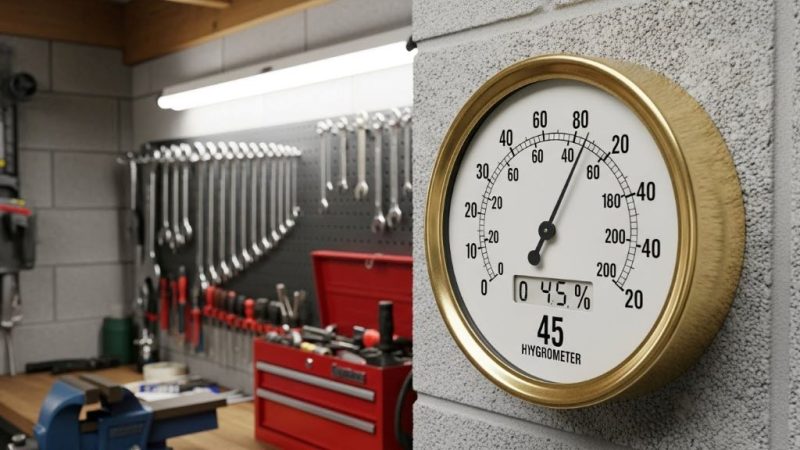
You cannot control what you do not measure. Therefore, investing in a reliable hygrometer becomes your first step. These devices cost between ten and fifty dollars and provide accurate humidity readings.
Place your hygrometer in a central location away from direct sunlight. Check readings at different times throughout the day. Additionally, monitor changes across seasons to understand your garage’s humidity patterns.
The ideal humidity range for preventing rust sits between 30% and 50%. However, achieving this level requires consistent effort and proper equipment. Regular monitoring helps you adjust your control methods effectively.
Improving Garage Ventilation
Proper airflow naturally reduces humidity levels. Ventilation allows moist air to escape while bringing in drier air. Therefore, improving your garage’s ventilation system should be a priority.
Install exhaust fans near the ceiling where warm, humid air accumulates. Additionally, consider adding intake vents near the floor for better air circulation. Cross-ventilation works best when you position vents on opposite walls.
Opening your garage door periodically helps, especially on dry days. However, avoid this during rainy or humid weather. Furthermore, window installation provides natural ventilation options without security concerns when properly secured.
Using Dehumidifiers Effectively
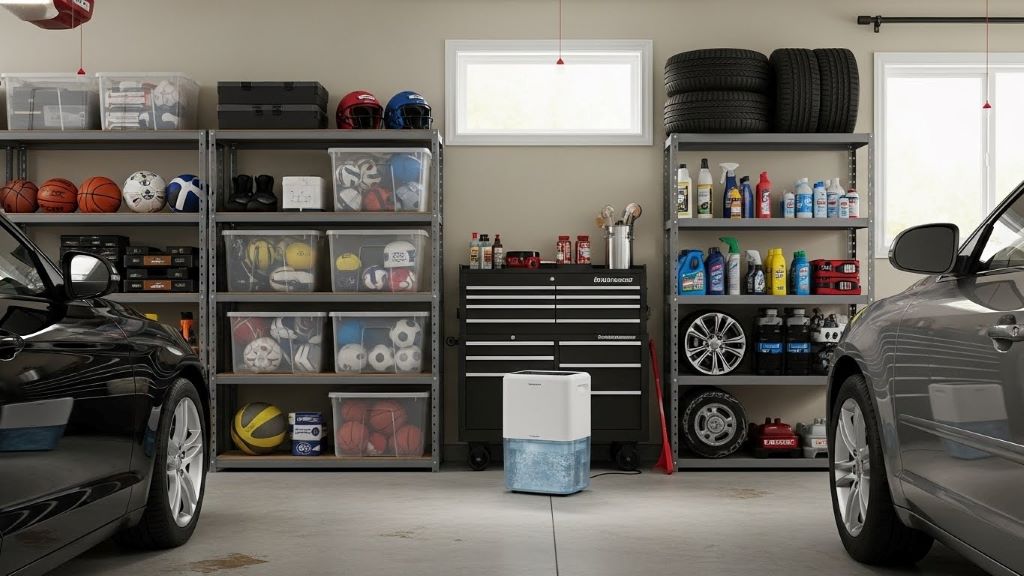
Dehumidifiers actively remove moisture from the air. These devices work exceptionally well in enclosed garage spaces. Moreover, they provide consistent humidity control regardless of weather conditions.
Choose a dehumidifier sized appropriately for your garage’s square footage. A typical two-car garage needs a unit with at least 50-pint capacity. Additionally, look for models with auto-restart features and continuous drainage options.
Place your dehumidifier centrally for optimal performance. Empty the collection bucket regularly or connect it to a drain. Furthermore, clean the filter monthly to maintain efficiency. According to Family Handyman’s guide on garage moisture control, running a dehumidifier during humid months significantly reduces rust formation.
Sealing Garage Gaps and Cracks
Air leaks allow humid outdoor air to enter your garage constantly. Therefore, sealing these openings creates a more controlled environment. Start by inspecting your garage door’s weather stripping.
Replace worn or damaged weather stripping around doors and windows. Additionally, apply caulk to cracks in walls, foundations, and around utility penetrations. These simple fixes dramatically reduce moisture infiltration.
Check the seal between your garage door sections. Furthermore, ensure the bottom seal makes complete contact with the floor. These improvements also enhance energy efficiency and reduce pest entry.
Installing Vapor Barriers
Vapor barriers prevent moisture from passing through walls and floors. Consequently, they protect against humidity coming from outside or below your garage. This solution works particularly well in areas with high groundwater or frequent rain.
Apply vapor barrier paint to concrete walls and floors. Additionally, consider installing plastic sheeting behind drywall in new construction. These barriers stop moisture before it enters your garage’s air space.
Epoxy floor coatings serve double duty as vapor barriers and protective surfaces. Moreover, they make cleaning easier and improve your garage’s appearance. Choose products specifically designed for moisture control.
Controlling Temperature Fluctuations
Temperature changes cause condensation when warm air meets cold surfaces. Therefore, maintaining stable temperatures helps control humidity. Insulating your garage reduces these temperature swings significantly.
Add insulation to walls, ceilings, and garage doors. Additionally, consider heating your garage during cold months. A stable temperature above dew point prevents condensation formation.
Avoid dramatic temperature changes when possible. Furthermore, park warm, wet cars in well-ventilated areas until they dry. These practices minimize moisture introduction into your garage environment.
Choosing Rust-Preventive Storage Methods
How you store items affects their susceptibility to rust. Therefore, proper storage methods complement humidity control efforts. Elevate metal items off the floor using shelves or pallets.
Store tools in closed cabinets or tool chests when possible. Additionally, apply protective coatings like oil or wax to metal surfaces. These barriers provide extra protection even in humid conditions.
Use desiccant packets in toolboxes and storage containers. Moreover, avoid storing items against exterior walls where condensation occurs most. This Old House’s comprehensive article on preventing rust emphasizes that proper storage combined with humidity control provides the best protection.
Maintaining Your Vehicle
Your car brings significant moisture into the garage, especially during winter. Therefore, vehicle maintenance becomes part of humidity control. Park with adequate space around the vehicle for air circulation.
Remove snow and ice before parking inside. Additionally, let your car dry before closing the garage door. Use floor mats to catch water and remove them regularly for drying.
Apply rust-preventive treatments to your vehicle’s undercarriage. Furthermore, wash your car regularly to remove salt and corrosive materials. These practices protect your vehicle while reducing garage moisture.
Regular Maintenance and Monitoring
Humidity control requires ongoing attention and maintenance. Therefore, establish a regular inspection and maintenance schedule. Check your dehumidifier monthly and clean filters as needed.
Inspect weather stripping and seals seasonally. Additionally, monitor humidity levels weekly using your hygrometer. Address problems immediately rather than waiting for visible damage.
Keep your garage organized to promote air circulation. Moreover, avoid storing excessive materials that block airflow. A well-maintained garage stays drier and protects your belongings better.
Conclusion
Controlling garage humidity protects your investments from costly rust damage. By measuring humidity levels, improving ventilation, using dehumidifiers, and sealing gaps, you create an environment where rust cannot thrive. Additionally, proper storage methods and regular maintenance ensure long-term protection. Therefore, implementing these strategies now saves money and preserves your valuable tools, equipment, and vehicles for years to come. Start with simple improvements and gradually build a comprehensive humidity control system that works for your specific garage conditions.
Frequently Asked Questions
What humidity level prevents rust in garages?
Maintain humidity between 30% and 50% to prevent rust formation. Metal begins corroding when humidity consistently exceeds 50%, so monitoring with a hygrometer helps you stay within the safe range.
How much does a garage dehumidifier cost to run?
A typical 50-pint dehumidifier costs approximately fifteen to thirty dollars monthly to operate. However, actual costs vary based on your local electricity rates, garage size, and how often the unit runs.
Can I prevent rust without a dehumidifier?
Yes, improving ventilation, sealing air leaks, and using desiccants can control humidity without a dehumidifier. However, dehumidifiers provide the most reliable and consistent moisture control, especially in humid climates.
Does heating my garage reduce humidity?
Heating raises air temperature, which increases its moisture-holding capacity and reduces relative humidity. However, without proper ventilation or moisture removal, heating alone may not solve humidity problems effectively.
How often should I check garage humidity levels?
Check humidity levels at least weekly, especially during seasonal changes. Additionally, monitor more frequently after rain, snow, or when you notice condensation or musty odors developing.
Related Topics:
How to Fix a Hole in the Exhaust: The Ultimate Guide
How to Store a Lawn Mower in the Garage: A Complete Guide
