
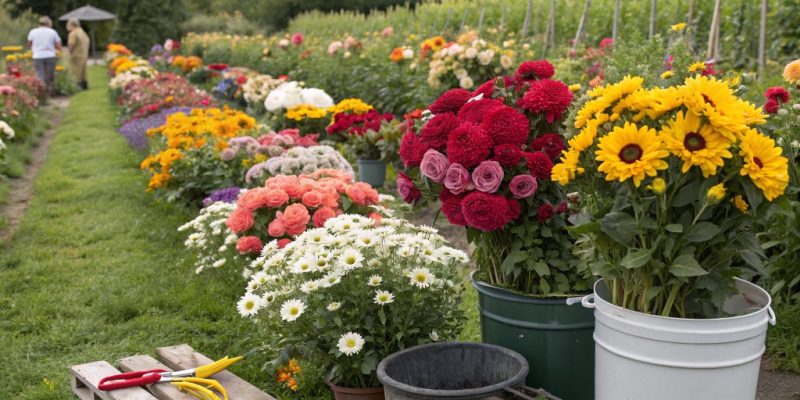
Home-grown flowers smell amazing. Moreover, they make an excellent decoration or gift. Therefore, if you take up gardening as a hobby, obviously you’ll have a very rewarding activity at your hands. What’s even better is that all your hard work will help the environment immensely.
Below, we’ve gathered some of the best advice on helping you select the most suitable flowers and gardening techniques. With them, you’ll have no trouble creating a lush garden filled with stunning blooms.
Let’s begin!
Choose the Right Flowers
Picking the right flowers makes bouquets look amazing and last longer. Go for ones that are lovely, easy to grow, and stay fresh. Sunflowers, zinnias, and dahlias are favourites because of their unique colours and shapes.
Sunflowers love sunny, dry spots, zinnias thrive in hot weather and resist pests, and dahlias prefer rich, sunny soil.
Try adding seasonal flowers to your garden for variety and to save money. Tulips and daffodils are great for spring, cosmos and marigolds for summer, and chrysanthemums for autumn.
Choosing flowers that suit your local climate and soil is key to a thriving garden. Cooler areas suit peonies, while warmer areas can grow vibrant tropicals like hibiscus. For a bouquet, various shapes and colours will do the trick quite nicely.
Pairing tall gladioli with round hydrangeas creates balance and flair. This variety not only grabs attention but also makes each bouquet unique, reflecting your style. Your flower choices add beauty and longevity while keeping things on the interesting side.
Soil Preparation and Fertilisation
Firstly, check the soil’s acidic nature. This is the top thing you must do if you want a healthy cut flower garden. Most blooms flourish in slightly acidic to neutral soil conditions. This means a pH range of 6 to 7.
Next, every gardener knows to use lime to help decrease the acidity of the soil. Vice versa, if you want to increase it, just add a bit of sulfur.
Lastly, you may also add organic matter such as compost or well-ripened manure. This will boost the soil’s fertility and conserve moisture. It will also help with proper drainage and ensure proper root growth and healthy blooming.
In contrast, a moderate-release fertilisation technique gives your precious plants a consistent supply of nutrients over time, removing the need for frequent feeding.
Select a fertiliser specifically designed for your flowers, as phosphorus sustains blooms, while nitrogen encourages leaf growth. By considering the unique requirements of each flower, you can develop pretty displays filled with vibrant blooms.
Planting Techniques
It all begins with the way you decide to plant your flowers. The two options are either planting seeds right there in your garden or simply starting them indoors.
Planting directly works for tough plants and usually happens after the frost. It’s quick, easy, and lets seeds grow naturally.
Starting seeds inside is great for delicate plants, giving them strong roots before facing the weather. This helps flowers needing more time or those sensitive to sudden weather changes.
The way you space your plants is quite important for them to thrive. Spacing helps them receive their needed dose of sunlight and avoid diseases.
Following seed packet instructions for spacing and depth is a good idea. Typically, plant seeds about two to three times their size deep in the soil. Lightly covering them helps them sprout and protects them from birds and wind.
Labelling your seeds or plants is smart. It helps you remember which flowers are which and how to care for them, keeping things tidy.
It also shows how each flower does, so you know what to plant next time. Good planting techniques can make your garden thrive with every bloom looking its best.
Watering and Maintenance
Keeping your flower garden happy and healthy takes some watering know-how. Set up a routine. Give your plants a good soak once or twice a week so the water sinks about 6 inches deep.
This helps roots grow strong, but you should always check the weather, though. If it’s really hot, water more. If it’s been raining a lot, cut back.
Watch for signs that something’s off. Too much water and leaves can turn yellow and the soil gets squishy. However, without enough water, they’ll wilt. Finding that sweet spot is key.
Mulch can really help, too. Spread 2-3 inches of straw or bark chips to hold in moisture and keep weeds away.
Also, snip off dead flowers to encourage more blooms and trim to keep things tidy and healthy. With some care and the right amount of water, your flower garden will thrive.
Harvesting Flowers
Timing is crucial. It has a direct impact on your flowers’ longevity. Normally, it’s best to trim your plants in the morning. Alternatively, it’s also possible in the afternoon, but the temperature has to be tranquil. This is so in order to foster their flourishing.
Firstly, get razor-sharp pruning tools. They’ll make cuts which won’t damage your plants and also prevent the accumulation of bacteria.
Next, cut the stems at an angle, always. This will help them absorb much more water. If this step is too difficult, you can ask a professional gardener for help.
Lastly, remove the leaves that will make contact with the water. This will prevent bacterial growth and the onset of root rot. Also, handle the stems with care and renew the water frequently.
Creating Beautiful Arrangements
To craft outstanding flower arrangements, commence with a clean vase and refresh the water to keep the flowers hydrated. For an absolutely stunning display, combine different hues and shapes together.
Let your inner artist shine! Start to pair striking flowers with softer ones, such as vibrant red roses and delicate pink lilies, to create an attractive contrast. Ensure that each flower receives sufficient upward space to stand out prominently.
Think outside the box a little with a touch of foliage and fillers, offering the perfect volume to the arrangement and tactility. Ferns and baby’s breath are ideal options.
Feel free to experiment with symmetrical formats for a timeless appearance or asymmetrical designs to create a lively, modern influence.
Allow your artistic vision to take centre stage. Each arrangement provides an opportunity to showcase your unique personality and design principle behind the art of flower arrangement.
Through skilful manipulation of colour, height, and texture, you can carefully curate a bouquet that displays memorable individuality.
Conclusion
Developing your own allotment of flowers is a commendable and economical pursuit. It offers the opportunity to create picturesque decorations. Over time, your garden will flourish.
Timing is key when harvesting your flowers to achieve a visually pleasing arrangement.
Your simple garden compositions can produce captivating masterpieces with a little persistence and originality. Treat it as your personal art project and relish every step!
