
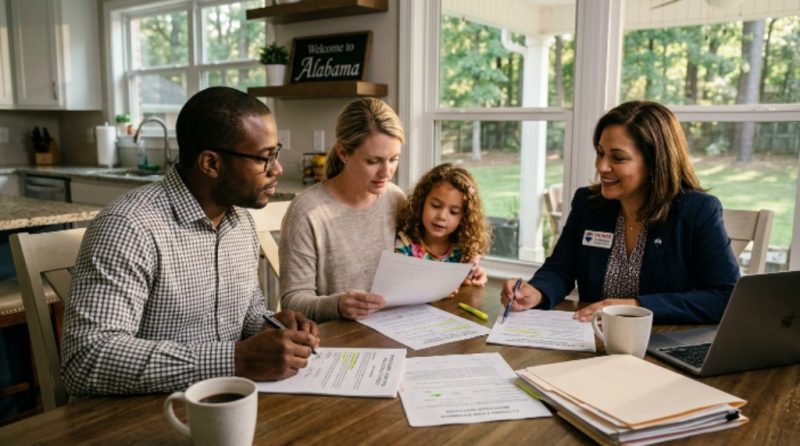
Buying a home represents one of the most exciting milestones in your adult life. Additionally, securing real estate in the Heart of Dixie offers fantastic economic opportunities for smart buyers today. According to official data from the United States Census Bureau, Alabama maintains a strong homeownership rate of over 71 percent, which highlights high confidence in the local housing market.
Furthermore, navigating the modern real estate landscape requires clear preparation, strategic planning, and local knowledge. Consequently, this complete guide breaks down how to buy a house in Alabama step by step so you can achieve homeownership with total confidence.
Step 1: Evaluate Your Financial Health and Credit Score
Before you browse local real estate listings, you must review your overall financial condition carefully. First, pull your free annual credit reports from all three major credit bureaus to check for errors or unpaid accounts. Mortgage lenders examine your credit history closely because your score dictates your borrowing options and interest rates. Generally, a credit score above 620 opens doors for conventional financing, while scores around 580 allow access to government-backed loans. Consequently, paying off existing consumer debt will rapidly boost your credit score and lower your debt-to-income ratio. In addition, maintaining a debt ratio below 36 percent signals to lenders that you manage monthly obligations responsibly. Ultimately, establishing strong financial health sets a solid foundation for your entire journey.
Step 2: Establish a Realistic Budget and Savings Plan
Once you understand your credit profile, you need to calculate exactly how much money you can spend each month on housing expenses. For instance, smart buyers calculate not only the principal and mortgage interest but also property taxes, homeowner insurance, and local association fees. Furthermore, saving for initial upfront payments requires dedicated discipline over time. Although putting down 20 percent eliminates private mortgage insurance, many modern loan programs allow initial payments as low as 3 percent. Meanwhile, you must save additional funds to cover mandatory closing costs, which typically range between 2 and 5 percent of the total loan amount. Therefore, building a dedicated emergency fund alongside your savings account protects your finances after you complete the transaction.
Step 3: Secure Mortgage Preapproval from a Qualified Lender
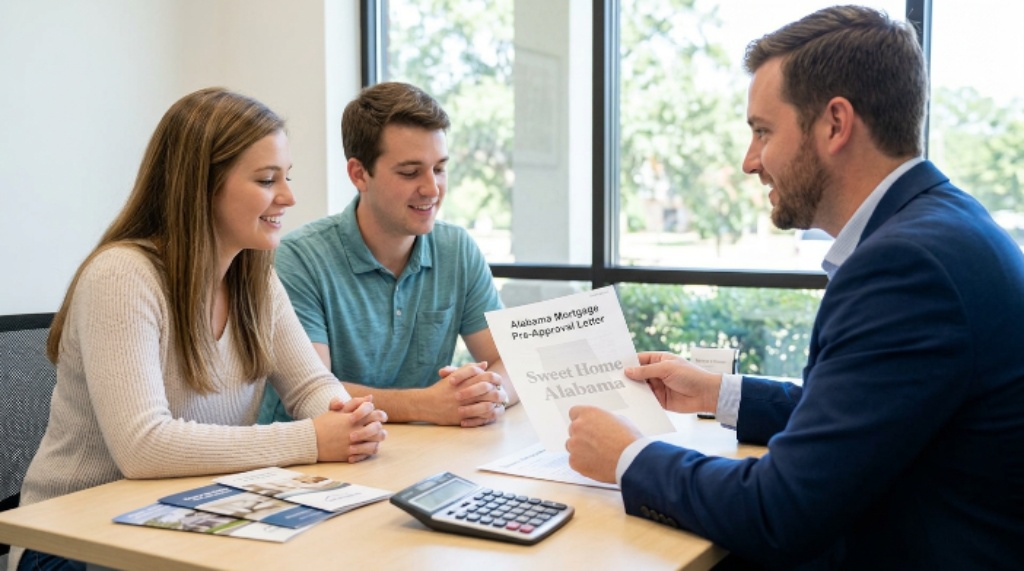
After establishing your savings goals, you should shop around for competitive mortgage lenders across Alabama. Subsequently, gathering your financial documents such as tax returns, recent pay stubs, and bank statements speeds up the mortgage preapproval process. Getting a formal preapproval letter proves to real estate sellers that you possess verified financial backing. In fact, Alabama housing programs through the Alabama Housing Finance Authority offer specialized assistance like the FirstStep and Step Up options for qualified buyers. Furthermore, exploring various mortgage products such as fixed-rate conventional loans, FHA loans, VA loans, and USDA rural grants helps you find the perfect fit. Consequently, securing your preapproval letter gives you a clear spending boundary and strong bargaining power in competitive markets like Huntsville or Birmingham.
Step 4: Partner with an Experienced Alabama Real Estate Agent
Next, choosing the right licensed real estate agent simplifies your search and protects your legal interests throughout the transaction. Specifically, an agent with deep local expertise understands neighborhood trends, school districts, and market conditions in specific communities. Additionally, buyer agents represent your interests without charging you direct out-of-pocket fees because sellers typically cover real estate commission structures. Furthermore, your real estate agent will help you draft legally binding contracts and negotiate favorable terms with sellers. Meanwhile, working with a skilled professional prevents common buyer mistakes and saves you valuable time during negotiations. Above all, partnering with a trusted professional gives you peace of mind from property tours to the final handshake.
Step 5: Search for the Right Neighborhood and Property
With your agent by your side, you can start touring candidate homes that fit your lifestyle needs and budget constraints. For example, consider proximity to your workplace, neighborhood safety, local amenities, and long-term property appreciation rates. Moreover, explore different cities across the state, ranging from bustling tech hubs like Huntsville to charming coastal areas along Baldwin County. During physical property viewings, focus on essential structural elements like the roof condition, HVAC system age, and overall foundation stability. In addition, avoid getting distracted by cosmetic details like wall paint or light fixtures that you can easily update later. Consequently, taking structured notes and photography during tours helps you compare multiple properties objectively.
Step 6: Make a Strategic Purchase Offer
When you find the ideal property, your real estate agent will help you construct a strong, competitive offer based on recent sales data in the neighborhood. Additionally, your written offer will detail key transaction terms, including proposed purchase amounts, earnest money deposits, and requested contingencies. Earnest money shows the seller that you act in good faith, typically representing 1 to 2 percent of the agreed property value. Furthermore, including necessary contingencies protects your deposit if home inspections reveal major defects or if mortgage financing falls through. Subsequently, the seller may accept your initial offer, reject the contract outright, or present a counteroffer regarding terms. Therefore, staying flexible during contract negotiations helps you reach an agreement without overextending your financial limits.
Step 7: Schedule a Comprehensive Home Inspection and Appraisal
Once the seller accepts your offer, you must immediately hire a licensed Alabama home inspector to examine the property thoroughly. Specifically, an independent inspector checks critical structural systems, electrical wiring, plumbing setups, and potential pest infestations. In addition, review the detailed inspection report with your agent to identify any major safety issues that require seller repairs or financial credits. Meanwhile, your mortgage lender will order an independent appraisal to verify that the home meets its determined market valuation. Furthermore, if the appraisal value matches or exceeds your offer amount, your loan processing continues smoothly toward final approval. Consequently, passing both the home inspection and appraisal stages protects you from purchasing an overvalued or structurally damaged property.
Step 8: Finalize Your Loan and Complete the Closing Process
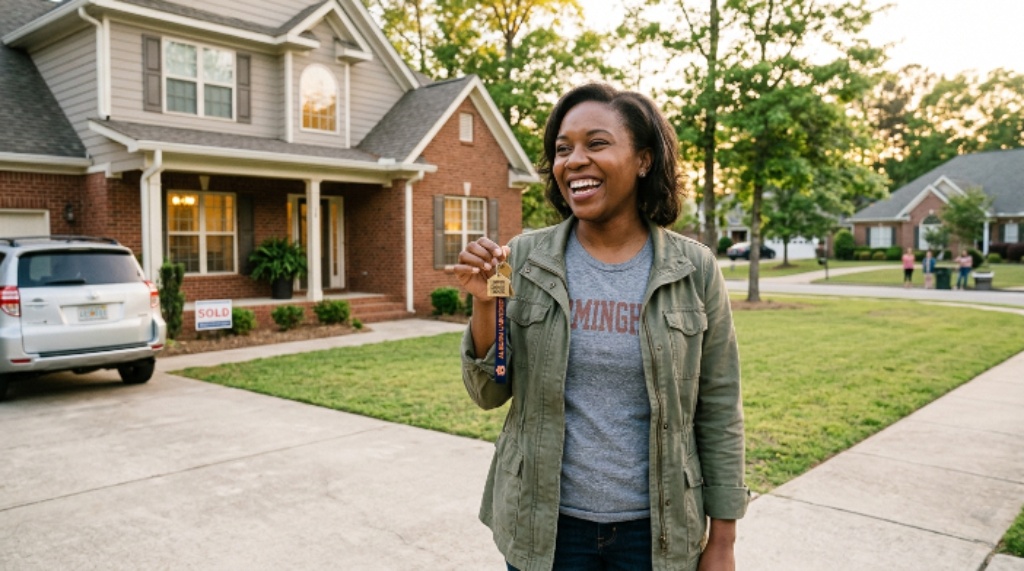
In the final weeks before closing, your mortgage lender clears your file through underwriting to grant final loan approval. During this waiting period, you should secure comprehensive homeowner insurance policies, which lenders require before releasing mortgage funds. Furthermore, conduct a final walkthrough of the property twenty-four hours before closing to confirm that requested repairs are complete and the home remains in good condition. Subsequently, you will attend the formal settlement meeting, which often takes place at a local title company or legal office. At the closing table, you will sign necessary loan documents, pay your remaining down payment and closing costs via wire transfer, and collect your new house keys. Ultimately, executing this final step turns you into a proud Alabama homeowner.
Conclusion
Navigating the Alabama housing market becomes a smooth and rewarding experience when you follow a structured, informed plan. By strengthening your credit, establishing a clear budget, and securing mortgage preapproval, you position yourself as a strong buyer from day one. Furthermore, collaborating with top real estate agents and conducting rigorous home inspections ensures that your investment remains safe and profitable over time. Now that you understand how to buy a house in Alabama step by step, you possess the tools to turn your homeownership dream into reality. Start reviewing your credit profile today, connect with local mortgage professionals, and take your first confident step toward owning a home in Alabama.
Frequently Asked Questions
How long does the home buying process take in Alabama?
Generally, the complete home buying journey takes anywhere from 30 to 60 days once you have an accepted purchase contract. However, initial financial preparation and home searching can add several months to your overall timeline. Furthermore, securing mortgage preapproval early in the process accelerates underwriting and speeds up final closing procedures significantly.
What credit score do buyers need for an Alabama home loan?
Most conventional mortgage lenders require a minimum credit score of 620 for loan approval. Meanwhile, government-backed options such as FHA loans allow scores as low as 580 for buyers making standard initial payments. In addition, higher credit scores grant access to better interest rates, which lowers your monthly mortgage payment over time.
Can first-time buyers get financial assistance in Alabama?
Yes, first-time home buyers in Alabama can access several state programs administered by the Alabama Housing Finance Authority. For instance, popular options like the FirstStep Mortgage and Step Up programs provide valuable down payment assistance and competitive fixed interest rates. Additionally, completing a certified homebuyer education course qualifies eligible buyers for special grants and loan perks.
Are property taxes high in Alabama compared to other states?
Alabama boasts some of the lowest property tax rates in the entire United States, making homeownership exceptionally affordable. Furthermore, low property taxes reduce your total monthly housing payment when lenders calculate your escrow obligations. Consequently, this tax advantage allows buyers to allocate more money toward mortgage principal and personal savings goals.
Do buyers need a real estate attorney for closing in Alabama?
While Alabama state law does not strictly require an attorney to close every real estate deal, hiring legal counsel remains common practice. Furthermore, title companies and closing attorneys ensure clear property titles, prepare legal transfer documents, and safely manage escrow funds. Therefore, having a legal expert review your purchase contract adds extra security to your real estate transaction.
