
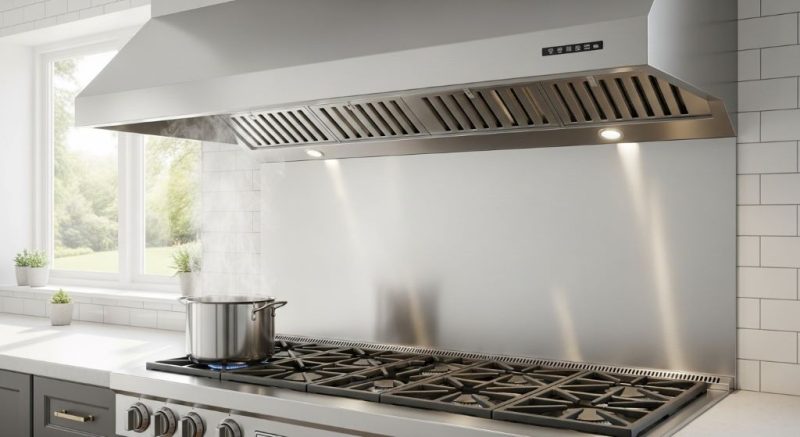
Choosing a range hood for your kitchen involves more than picking an attractive design. The size of your range hood directly affects how well it removes smoke, steam, and cooking odors from your space. Getting this decision right means enjoying a cleaner, fresher kitchen while cooking.
Many homeowners underestimate the importance of proper range hood sizing. A unit that’s too small won’t capture all the cooking byproducts, leaving your kitchen smoky and greasy. Conversely, an oversized hood might look awkward and consume unnecessary energy. This kitchen appliance guide will help you understand exactly what size range hood your cooking space needs.
Understanding the factors that determine the right size ensures you’ll make a confident purchase. From measuring your cooktop to considering your cooking habits, each element plays a role in finding the perfect match. Let’s explore everything you need to know about selecting the ideal range hood dimensions.
Why Range Hood Size Matters
The effectiveness of your range hood depends largely on its size relative to your cooking surface. A properly sized hood creates a capture zone that contains rising smoke and steam before it spreads throughout your kitchen.
When cooking, hot air naturally rises in a plume that expands as it moves upward. If your range hood isn’t wide enough to encompass this expanding plume, smoke and grease will escape around the edges. This means your walls, cabinets, and ceiling accumulate grime despite having ventilation.
Beyond cleanliness, proper sizing affects air quality in your home. Cooking releases moisture, grease particles, and potentially harmful gases. An appropriately sized range hood removes these contaminants efficiently, creating a healthier environment for your family.
Energy efficiency also depends on correct sizing. An undersized unit must run longer and work harder to clear the air. Meanwhile, an oversized hood might require more powerful motors that consume extra electricity without providing additional benefits.
Measuring Your Cooktop
The first step in determining range hood size involves measuring your existing cooktop or the space where you’ll install one. This measurement forms the foundation of all other calculations.
Use a tape measure to find the width of your cooktop from one edge to the other. Standard cooktops come in common widths: 30 inches, 36 inches, and 48 inches. However, some models fall between these standard sizes, so measure precisely rather than assuming.
Record the depth of your cooktop as well. While width is the primary concern, depth matters when you’re selecting certain hood styles, particularly island hoods that hang from the ceiling.
Consider the space above and around your cooktop. Measure the distance from the cooking surface to the ceiling or the bottom of overhead cabinets. This vertical space determines what hood styles will fit and where you can mount them.
Note any obstacles near the cooking area. Windows, cabinet ends, or architectural features might limit your hood options. Taking comprehensive measurements now prevents costly mistakes later.
The Basic Sizing Rule
A fundamental principle guides range hood sizing: your hood should be at least as wide as your cooktop, preferably wider. This basic rule ensures adequate coverage of the cooking surface.
Most experts recommend adding three to six inches to your cooktop width. For example, if you have a 30-inch cooktop, look for a range hood that’s 33 to 36 inches wide. This extra width compensates for the expanding plume of cooking byproducts as they rise.
Wall-mounted hoods can follow this minimum sizing guideline because the wall behind the cooktop helps contain the rising air. The wall acts as a barrier that directs cooking fumes toward the hood opening.
Island hoods require more generous sizing because cooking byproducts can disperse in all directions without a wall to contain them. For island installations, add six to twelve inches to your cooktop width. A 36-inch cooktop in an island configuration should have a hood measuring at least 42 to 48 inches wide.
Professional-style ranges or high-BTU cooktops generate more heat and cooking byproducts. These powerful appliances need even more coverage. Consider adding twelve inches or more to ensure adequate capture.
Understanding CFM Requirements
CFM, or cubic feet per minute, measures how much air your range hood moves. While this relates to the motor power rather than physical size, understanding CFM helps you choose ventilation tips that ensure your hood works effectively.
Calculate the minimum CFM needed based on your cooktop’s BTU output. For gas ranges, divide the total BTU by 100. A cooktop with 40,000 BTU needs at least 400 CFM. Electric cooktops typically require 100 CFM for every 10 inches of cooktop width.
Ductwork affects CFM requirements significantly. Longer duct runs, multiple turns, or narrow ducts create resistance that reduces airflow. Add 25 to 50 CFM for each elbow in your ductwork and for every 10 feet of duct length beyond the first five feet.
Higher ceilings in your kitchen mean the range hood must pull cooking byproducts through more space. For ceilings above 9 feet, increase your CFM requirements by 10 percent for each additional foot of height.
Your cooking style influences CFM needs as well. If you frequently use high-heat cooking methods like stir-frying or searing, opt for higher CFM ratings. Light cooking requires less ventilation power.
Different Hood Styles and Their Sizing Considerations
Range hoods come in several styles, each with unique sizing requirements and installation considerations. Understanding these differences helps you choose the right type for your kitchen layout.
Under-cabinet hoods mount beneath overhead cabinets and are the most common style. These units work well in kitchens with standard cabinet layouts. Size them to match cabinet widths when possible, typically 30 or 36 inches. The cabinet above helps direct air toward the hood opening.
Wall-mounted hoods, also called chimney hoods, attach directly to the wall and extend upward to the ceiling. These make a strong visual statement and offer more design flexibility. They can be slightly narrower than island hoods because the wall provides containment.
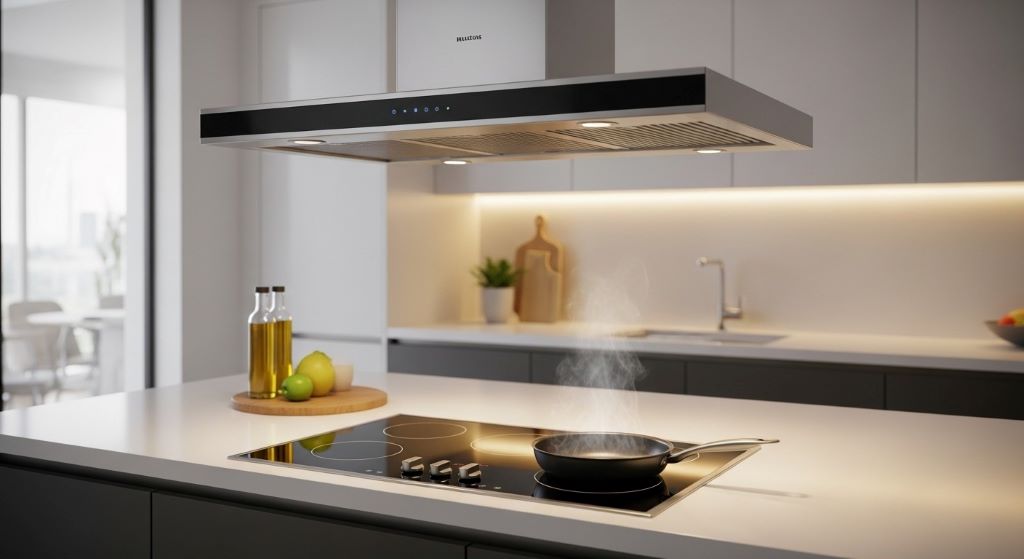
Island hoods suspend from the ceiling over cooktops installed in kitchen islands. Without wall backing, these require the most generous sizing. They must create a sufficient capture zone from all sides. Expect to invest in larger dimensions and higher CFM ratings for island installations.
Downdraft ventilation systems rise from behind or beside the cooktop when in use. These require different sizing logic because they pull air downward and sideways. Match the width to your cooktop and ensure adequate depth to capture rising steam effectively.
Insert or liner hoods fit into custom cabinetry or decorative surrounds. Size these based on the manufacturer’s specifications for the liner, then build your custom housing around it. The visible housing can be larger for aesthetic purposes.
Height and Mounting Considerations
The distance between your cooktop and range hood affects performance just as much as width does. Proper mounting height ensures efficient capture while providing adequate workspace.
For wall-mounted hoods above gas cooktops, install the bottom of the hood 24 to 30 inches above the cooking surface. Electric cooktops allow for slightly lower mounting, typically 20 to 24 inches, because they generate less heat.
Island hoods need slightly lower mounting because cooking byproducts disperse more readily without wall containment. Install island hoods 28 to 36 inches above gas cooktops and 24 to 30 inches above electric surfaces.
Lower mounting heights improve capture efficiency because the hood intercepts cooking byproducts sooner. However, mounting too low creates a cramped workspace and presents a head-bumping hazard. Balance efficiency with comfort and safety.
Ceiling height limits your options for certain hood styles. Chimney hoods need adequate vertical space to extend from the hood body to the ceiling. Measure carefully and check manufacturer specifications before purchasing.
Consider sightlines when determining mounting height. You should be able to see into pots and pans on back burners without the hood obstructing your view. This practical consideration affects your comfort while cooking.
Accounting for Your Cooking Style
Your cooking habits significantly influence what size range hood you need. Honest assessment of how you use your kitchen helps you avoid overbuying or undersizing your ventilation.
Frequent high-heat cooking generates more smoke and grease. If you regularly sear meats, use a wok, or cook with lots of oil, invest in a larger hood with higher CFM ratings. These cooking methods produce substantial byproducts that need strong capture.
Home cooks who primarily steam, simmer, or use the oven more than the cooktop can use the minimum sizing guidelines. Light cooking produces less smoke and steam, requiring less aggressive ventilation.
Families that cook multiple meals daily benefit from larger hoods. Even moderate cooking becomes significant when you’re using the cooktop several hours each day. The cumulative effect requires better ventilation than occasional use.
Consider the types of food you prepare. Cuisines that involve heavy spices, deep frying, or strong-smelling ingredients demand better ventilation. Asian stir-frying, Indian curries, or fried fish all create odors and smoke that need powerful capture.
Entertaining habits matter too. Cooking large meals for guests means using multiple burners simultaneously, which generates more heat and cooking byproducts than everyday meals. A larger hood handles these peak demands better.
Ductwork and Ventilation Path Planning
The path your ductwork takes from the hood to the outside affects what size and power you need. Planning this route before buying a hood ensures you get adequate performance.
Measure the distance from your proposed hood location to the nearest exterior wall or roof penetration. Shorter runs require less powerful motors. Long, complicated duct runs need more CFM to compensate for resistance.
Count the turns your ductwork will make. Each 90-degree elbow reduces airflow efficiency. If your layout requires multiple turns, increase your hood size and CFM rating to maintain adequate ventilation.
Duct diameter impacts performance significantly. Larger ducts move air more efficiently with less resistance. Most range hoods work best with 6-inch or larger round ducts or equivalent rectangular ducts.
Consider whether you’ll use rigid metal ducts or flexible ducts. Rigid ducts provide better airflow with less resistance. Flexible ducts are easier to install in tight spaces but reduce efficiency.
Some installations require recirculating hoods that filter air and return it to the kitchen rather than venting outside. These need larger hoods and more powerful motors because they must pull air through filters rather than simply exhausting it outdoors.
Budget Considerations and Value
Range hood prices vary widely based on size, features, and quality. Understanding how sizing affects cost helps you balance performance needs with budget constraints.
Larger hoods generally cost more than smaller ones from the same manufacturer. The increased materials and potentially more powerful motors drive up prices. However, the cost difference between standard sizes is often modest.
Premium features like multiple fan speeds, LED lighting, or quiet operation add cost regardless of size. Decide which features matter most to you, then select the appropriate size within your chosen quality tier.
Installation costs increase with size and complexity. Larger island hoods require more extensive ceiling reinforcement and longer duct runs. Wall-mounted hoods of standard sizes typically have lower installation costs.
Consider long-term value rather than just initial cost. A properly sized hood that works efficiently costs less to operate and maintains a cleaner kitchen, reducing cleaning time and maintenance expenses.
Energy-efficient motors cost more upfront but save money on electricity bills over the hood’s lifetime. Many newer models include sensors that adjust fan speed automatically, optimizing both performance and efficiency.
Common Sizing Mistakes to Avoid
Many homeowners make preventable errors when sizing range hoods. Learning from these common mistakes helps you get it right the first time.
Choosing a hood based solely on appearance is a frequent error. A beautiful hood that’s too small won’t perform adequately. Always verify that attractive options meet your sizing requirements before falling in love with a design.
Forgetting to account for installation type leads to problems. Wall-mounted and island hoods need different sizing approaches. Buying a wall-mount-sized hood for an island installation results in poor performance.
Ignoring CFM ratings while focusing only on physical dimensions creates issues. A hood can be the right size but lack adequate motor power to move enough air. Both dimensions and CFM must match your needs.
Failing to measure ductwork possibilities limits your options unnecessarily. Some homeowners assume they can’t vent to the outside when a reasonable path exists. Conversely, others plan exterior venting without checking if it’s feasible in their home.
Underestimating future needs causes regret later. If you might upgrade to a larger range or change your cooking habits, consider sizing up now. Replacing a range hood is expensive and disruptive.
Professional vs. DIY Installation Considerations
Installation requirements affect your overall range hood investment and influence what sizes work best for your situation. Understanding these factors helps you plan appropriately.
Professional installation ensures proper mounting, electrical connections, and ductwork. Complex installations, particularly island hoods or those requiring new ductwork, benefit from professional expertise. The cost varies based on hood size and installation complexity.
DIY installation is feasible for mechanically inclined homeowners with straightforward wall-mounted hoods replacing existing units. Smaller, lighter hoods are easier to handle alone. Larger hoods often require two people for safe installation.
Electrical requirements vary by hood size and features. Most range hoods need dedicated circuits. Verify your electrical panel can accommodate the new circuit or if you need an upgrade.
Structural considerations become more significant with larger, heavier hoods. Island hoods require substantial ceiling support. Wall-mounted hoods need secure mounting to studs that can bear the weight.
Permit requirements depend on your location and the scope of work. New ductwork or electrical circuits typically require permits. Check local codes before starting your project to avoid compliance issues.
Matching Your Hood to Kitchen Design
While performance is paramount, your range hood should complement your kitchen’s aesthetic. Fortunately, you can find hoods in every size that match various design styles.
Modern kitchens often feature sleek, minimalist hoods. These designs work in any size but look particularly striking in larger formats that make a bold statement. Stainless steel finishes dominate this category.
Traditional kitchens pair well with decorative hoods that might include wood surrounds or ornamental details. These can accommodate any necessary size while maintaining the classic appearance.
Professional-style kitchens naturally accommodate larger hoods that match commercial-grade ranges. The substantial size complements the powerful cooking equipment and creates a cohesive look.
Small kitchens benefit from under-cabinet hoods that maximize space efficiency. These compact designs provide necessary ventilation without overwhelming the room visually.
Color options have expanded beyond stainless steel. Black stainless, white, custom colors, and even glass canopies allow you to match your hood to your kitchen’s color scheme regardless of size.
Testing and Adjusting After Installation
Once installed, your range hood needs proper testing and possible adjustment to ensure optimal performance. This final step confirms you’ve chosen the right size.
Run the hood at different speed settings while cooking. It should capture smoke and steam effectively without being excessively loud. If smoke escapes around the edges, the hood might be too small or mounted too high.
Check for adequate lighting of your cooking surface. Most hoods include lights, and the hood size affects how well these illuminate your cooktop. You should see all burners clearly.
Listen for unusual noises that might indicate ductwork problems. Rattling or whistling sounds suggest air turbulence, possibly from improperly sized or installed ducts.
Verify that controls are easy to reach and operate. The hood size and mounting height should allow you to adjust settings comfortably while cooking.
Monitor your kitchen’s air quality over the first few weeks. If you notice lingering odors or grease accumulating on surfaces near the cooktop, your hood might be undersized or need higher CFM settings.
Conclusion
Selecting the right size range hood requires careful consideration of multiple factors. Your cooktop dimensions provide the starting point, but cooking style, installation type, and ductwork all influence the final decision. Following the basic rule of exceeding your cooktop width by at least three inches ensures adequate coverage.
Remember that wall-mounted and island installations need different sizing approaches. Island hoods require more generous dimensions because they lack wall backing to contain cooking byproducts. Additionally, matching physical size with appropriate CFM ratings ensures your hood moves enough air to keep your kitchen fresh.
Take accurate measurements before shopping and consider your current and future cooking needs. Investing in a properly sized range hood improves your kitchen’s air quality, reduces cleaning maintenance, and enhances your cooking experience. The time spent choosing the right size pays dividends in satisfaction and performance for years to come.
Frequently Asked Questions
What happens if my range hood is too small for my cooktop?
A range hood that’s too small cannot capture all the smoke, steam, and grease produced during cooking. These byproducts will escape around the edges and spread throughout your kitchen, leaving residue on walls, cabinets, and other surfaces. You’ll also experience lingering cooking odors and potentially reduced air quality in your home.
Can I use a 30-inch hood on a 36-inch cooktop?
While physically possible, using a 30-inch hood on a 36-inch cooktop is not recommended. The hood won’t provide adequate coverage, allowing cooking byproducts to escape. If budget constraints prevent buying a properly sized hood immediately, plan to upgrade as soon as possible to protect your kitchen and maintain good air quality.
Do I need a bigger range hood for a gas cooktop than an electric one?
Yes, gas cooktops generally require slightly larger hoods or higher CFM ratings than electric cooktops of the same size. Gas cooking produces combustion byproducts in addition to cooking steam and smoke. These additional contaminants need more powerful ventilation. However, high-BTU electric cooktops can generate as much heat as gas and require similar ventilation capacity.
How do I know if my range hood has enough CFM for its size?
Calculate the minimum CFM by dividing your gas cooktop’s total BTU output by 100, or allow 100 CFM per 10 inches of width for electric cooktops. Add extra CFM for long duct runs, multiple elbows, or high ceilings. Compare this number to the hood’s rated CFM. Choose a hood that meets or exceeds your calculated requirement.
Should I oversize my range hood for better performance?
Moderate oversizing improves performance, particularly for island installations or powerful cooktops. Adding three to six inches beyond your cooktop width for wall-mounted hoods or six to twelve inches for island hoods optimizes capture efficiency. However, excessive oversizing doesn’t improve performance proportionally and costs more without providing significant additional benefits.
Related Topics:
how to remove rust from bakeware
Comparing Gas vs. Electric Stoves: Which is Better for Your Home?
