
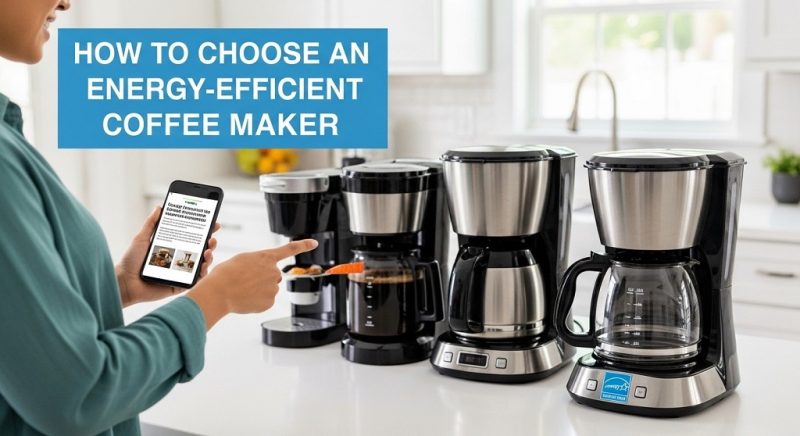
An energy-efficient coffee maker uses less electricity to brew and maintain temperature, reduces standby power consumption, and often includes automatic shut-off and programmable settings to limit waste.
Your coffee maker runs almost every day. For many households, it is one of the most frequently used small kitchen appliances. According to data from the U.S. Energy Information Administration (EIA), small kitchen appliances account for a measurable portion of residential electricity consumption. While one brew cycle may not seem significant, daily usage adds up over a year.
The problem is simple. Many traditional machines continue drawing power long after brewing. Heating plates stay on. Digital displays remain lit. Standby mode consumes electricity even when you are not brewing. That is wasted energy.
The solution? A low power coffee machine designed with efficiency in mind. Choosing eco-friendly appliances is no longer about trends. It is about measurable savings, lower electricity bills, and reduced environmental impact.
This guide explains how to evaluate wattage, features, certifications, and brewing styles so you can choose a coffee maker that saves power without sacrificing performance.
How Much Electricity Does a Coffee Maker Use?
Short answer: Most coffee makers use between 600 and 1,200 watts during brewing, but standby and warming functions can significantly increase annual energy consumption.
Let us break it down.
Average Wattage by Type
- Drip coffee makers: 800–1,200 watts
- Single-serve pod machines: 900–1,500 watts
- Espresso machines: 1,000–1,500 watts
- Thermal carafe models: 700–1,000 watts
High wattage does not automatically mean inefficient. Wattage reflects how quickly water heats. The real issue is duration and idle power.
Case studies from home energy audits show that drip machines with warming plates left on for two hours can consume nearly double the energy of a thermal carafe model that shuts off automatically after brewing.
If you brew once daily and leave a 1,000-watt warming plate on for one hour, you may use approximately 0.1 kWh per day. Over a year, that equals about 36.5 kWh. Multiply that by average electricity rates and the cost becomes noticeable.
The takeaway: focus on total usage patterns, not just peak wattage.
What Features Make a Coffee Maker Energy Efficient?
Short answer: Look for automatic shut-off, thermal carafes, programmable timers, low standby power, and ENERGY STAR certification.
1. Automatic Shut-Off
This is essential. Machines with auto shut-off typically power down within 30–120 minutes. Some advanced models allow custom shut-off times. This prevents wasted heating energy.
2. Thermal Carafe Instead of Warming Plate
A glass carafe with a heating plate continuously consumes electricity. A double-walled stainless steel thermal carafe retains heat without active power. Independent product tests show thermal models can reduce post-brew energy consumption by up to 50% compared to warming plate models.
3. Programmable Brewing
Programmable timers reduce repeated reheating. Brew once. Turn off. No need to reheat water multiple times.
4. Low Standby Power Mode
Digital displays can draw 1–5 watts continuously. That equals 8–40 kWh annually if never unplugged. Choose models with energy-saving display modes.
5. ENERGY STAR Certification
ENERGY STAR certified appliances meet efficiency standards verified by independent testing. Not all coffee makers carry the label, but when available, it signals verified performance.
These features transform a standard appliance into a low power coffee machine.
Is a Single-Serve or Drip Coffee Maker More Energy Efficient?
Short answer: Single-serve machines can be more efficient for one cup, but drip machines with thermal carafes are more efficient for multiple servings.
This depends on usage habits.
Single-Serve Machines
- Heat water quickly
- Brew only what you need
- No warming plate energy waste
However, they often use higher peak wattage and may have standby energy consumption if left plugged in continuously.
Drip Coffee Makers
- Efficient for brewing 4–12 cups at once
- Thermal carafe models minimize heat loss
- Lower energy per cup when brewing in batches
If you drink one cup daily, a single-serve system may reduce waste. If multiple people drink coffee in your home, a thermal drip model is typically more energy efficient per serving.
Does Brew Speed Affect Energy Efficiency?
Short answer: Faster brew time can reduce total energy consumption, but only if standby heating is limited.
A machine that heats water quickly (higher wattage) may finish brewing in 4–6 minutes. A lower wattage unit may take 10–12 minutes. Total energy use equals wattage multiplied by time.
Example comparison:
| Machine | Wattage | Brew Time | Total Energy (Approx.) |
|---|---|---|---|
| Model A | 1,200W | 5 min | 0.1 kWh |
| Model B | 800W | 10 min | 0.13 kWh |
In this simplified example, the higher wattage model actually uses less total energy per brew cycle.
Efficiency is about overall consumption, not just wattage.
How Do Eco-Friendly Appliances Reduce Environmental Impact?
Short answer: Eco-friendly appliances reduce electricity use, lower carbon emissions, and minimize material waste through durable design.
Electricity production contributes to greenhouse gas emissions. Reducing consumption lowers environmental impact. Even small changes matter when scaled across millions of households.
Additional environmental considerations:
- Reusable filters reduce paper waste
- Long-lasting components reduce landfill waste
- Pod recycling programs reduce plastic waste
- BPA-free materials reduce chemical exposure
Choosing eco-friendly appliances is not just about power savings. It includes product lifespan and responsible manufacturing.
What Role Does Maintenance Play in Energy Efficiency?
Short answer: Regular cleaning improves heating efficiency and prevents excess energy use.
Mineral buildup from hard water reduces heating performance. When heating elements are coated with scale, they require more energy to reach brewing temperature.
Descaling every 1–3 months maintains efficiency. Studies from appliance maintenance reports indicate that heavily scaled machines can increase energy consumption by up to 10–15%.
Simple steps:
- Use filtered water
- Descale with vinegar or manufacturer-approved solution
- Clean reusable filters regularly
- Turn off and unplug when not in use
Efficiency depends on maintenance.
How Can You Calculate Annual Coffee Maker Energy Cost?
Short answer: Multiply wattage by hours used per day, divide by 1,000, then multiply by electricity rate.
Formula:
(Watts × Hours per Day ÷ 1,000) × 365 × Electricity Rate
Example:
- 1,000W machine
- Used 15 minutes daily (0.25 hours)
- Electricity rate $0.15/kWh
Calculation:
(1,000 × 0.25 ÷ 1,000) × 365 × 0.15 ≈ $13.69 per year
Add warming plate time and standby power, and the cost increases.
This simple calculation helps compare models objectively.
Are Manual Brewing Methods More Energy Efficient?
Short answer: Yes, manual methods like French press or pour-over typically use less electricity because they rely only on boiling water.
Manual methods require heating water separately, often with a kettle. Electric kettles are typically efficient, converting most electrical energy directly into heat.
Once water is boiled, no additional electricity is needed.
If your goal is maximum efficiency, manual brewing can outperform most automatic machines. However, convenience and consistency may influence your decision.
What Should You Look for Before Buying?
Short answer: Evaluate wattage, features, brewing capacity, standby consumption, certifications, and long-term durability.
Checklist Before Purchase:
- Does it have auto shut-off?
- Is there a thermal carafe?
- What is standby power rating?
- Is it ENERGY STAR certified?
- Are replacement parts available?
- Does it match your daily consumption?
A low power coffee machine should match your routine. Efficiency without practicality leads to dissatisfaction.
Conclusion: How Do You Choose the Right Energy-Efficient Coffee Maker?
Choosing an energy-efficient coffee maker is about understanding usage patterns, not marketing claims. High wattage does not automatically mean high consumption. Standby power matters. Heating plates matter. Maintenance matters.
A thermal carafe model with auto shut-off often delivers the best balance between efficiency and convenience. Single-serve machines work well for limited use. Manual brewing is the most energy-conscious option.
Eco-friendly appliances help reduce electricity costs and environmental impact over time. The savings may appear small monthly, but compound annually.
Before your next purchase, compare wattage, features, and standby consumption. Make a data-driven choice.
Ready to upgrade? Review your current machine’s energy use today. Compare it with efficient models. Small decisions in your kitchen can create measurable savings over years.
Frequently Asked Questions (FAQs)
1. What is the most energy-efficient type of coffee maker?
Thermal carafe drip machines and manual brewing methods are typically the most energy-efficient. They avoid continuous warming plate electricity use.
2. Does unplugging a coffee maker save energy?
Yes. Many machines draw standby power even when not brewing. Unplugging eliminates phantom load consumption.
3. Is a higher wattage coffee maker less efficient?
Not necessarily. Efficiency depends on total energy consumed, which includes wattage and brewing time.
4. Are pod coffee machines eco-friendly?
They can be energy-efficient for single servings, but environmental impact depends on pod disposal and recycling programs.
5. How often should I descale my coffee maker?
Every 1–3 months, depending on water hardness and usage frequency.
6. Does ENERGY STAR certification guarantee lower electricity bills?
It indicates verified efficiency standards, but actual savings depend on usage habits.
7. Can a coffee maker significantly impact my electricity bill?
Individually, impact is moderate. Combined with other eco-friendly appliances, cumulative savings become meaningful.
Related Topics: How to Pick the Right Pump for a Small Fountain Bowl
What Next: How a Black Garage Door Creates Timeless Exterior Appeal
