
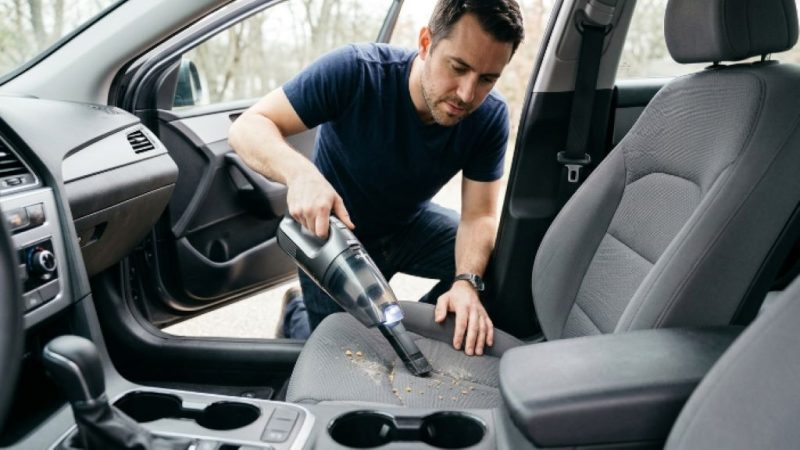
Crumbs on the couch. Pet hair in the car seat. Dust settling into every fabric fold. These are everyday messes that build up fast. A full-size vacuum is often too bulky to handle tight spaces properly. That is where a cordless option steps in. A reliable portable vacuum makes quick work of furniture and car interiors without the hassle of cords or heavy equipment.
However, not every cordless vacuum performs equally well. Some lose suction too quickly. Others include attachments that do not reach the spots you actually need. Choosing the right one takes a little knowledge. Therefore, this guide breaks down exactly what to look for so you can shop with confidence.
Why a Cordless Vacuum Is the Right Tool for Couches and Cars
Traditional upright vacuums are built for floors. They struggle around armrests, under seat cushions, and inside car door pockets. Their hoses are often short and stiff. Additionally, dragging a power cord from room to room or out to the driveway is simply inconvenient.
A cordless model solves these problems. It is lightweight and easy to maneuver. You can carry it from room to room without unplugging. For car cleaning, you take it outside without needing a nearby power outlet.
Furthermore, cordless vacuums have improved dramatically in recent years. Batteries last longer, suction is stronger, and the range of attachments now covers almost every crevice you can think of.
Key Features to Look for Before You Buy
Choosing the right cordless vacuum comes down to a handful of core features. Each one directly affects performance on upholstery and car interiors.
Suction Power and Settings
Suction power is typically measured in air watts. For soft surfaces like fabric seats and cushions, you need enough pull to lift embedded dirt and hair. However, a single fixed setting is limiting. Variable suction lets you use lower power on delicate fabric and higher power on stubborn debris. Look for a model with at least two suction modes.
Battery Life and Charging Time
Battery life determines how much you can clean in one session. For couch and car use, 20 to 30 minutes of runtime is usually enough. Additionally, consider the recharge time. Some models charge in two hours while others need five or six. A faster charge means less waiting. If the vacuum uses a removable battery, buying a spare lets you swap it out instantly.
Weight and Ergonomics
A heavy vacuum becomes tiring to hold, especially when reaching into the back seat of a car or working along an entire sofa. Aim for a model under two kilograms. Ergonomics matter too. A comfortable grip reduces wrist strain. Look for a handle positioned close to the vacuum’s center of balance.
Attachments and Nozzles
The right attachments transform a basic cordless vacuum into a powerful upholstery tool. For couches and car interiors, these nozzles are particularly useful:
- A crevice tool reaches tight corners, between cushions, and along seat seams.
- An upholstery brush lifts pet hair and surface debris from fabric without damaging fibers.
- A motorized mini brush head handles carpeted car mats and heavily soiled seats.
- A flexible hose extension helps you reach awkward angles without straining.
Always check which attachments are included versus which cost extra. A low base price can rise quickly once you add the tools you actually need.
Dustbin Capacity and Emptying Design
A small dustbin fills up fast, especially during car cleaning where crumbs and dirt are concentrated. Look for a bin that holds at least 0.4 liters. Furthermore, a one-touch hygienic release lets you empty the bin without touching the dirt directly. This small feature makes the process much more pleasant.
Filtration Quality
A good filter prevents fine dust and allergens from being expelled back into the air. HEPA filtration is the gold standard, capturing 99.97% of particles. This matters especially for allergy sufferers. Even without full HEPA certification, look for a washable multi-layer filter. Washable filters maintain suction performance and save money over time.
Handheld vs. Stick Cordless Vacuums: Which Works Better?
Cordless vacuums come in two main styles: handheld and stick. Both can clean couches and car seats well, but each has different strengths.
Handheld models are compact and easy to store. They work well for quick spot cleaning. You can hold them in one hand while lifting cushions with the other. However, they usually have smaller dustbins and shorter runtimes.
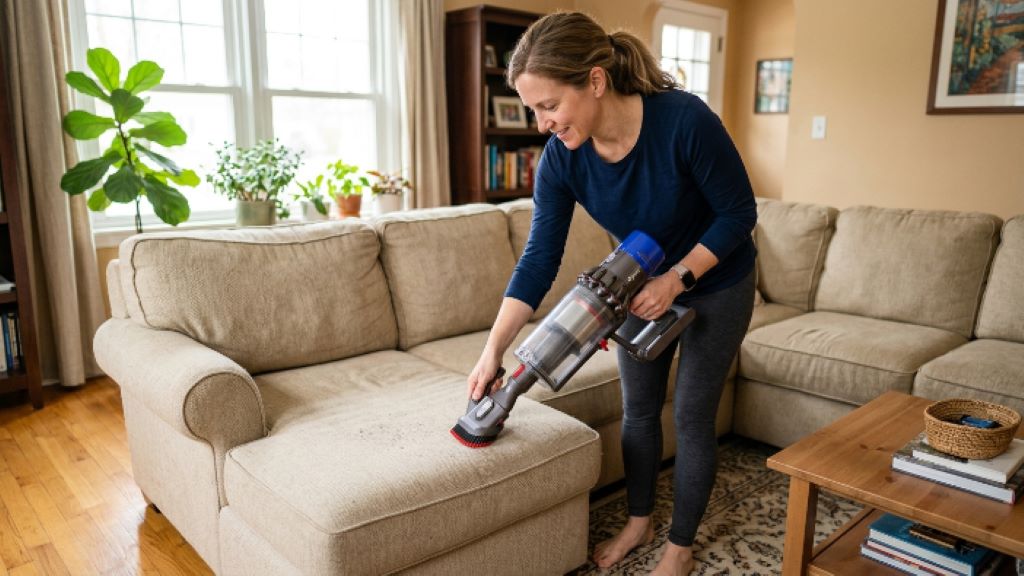
Stick vacuums are better for larger surfaces like full sofas. Many convert into handheld mode by detaching the main body from the floor head. This 2-in-1 design gives you the flexibility of both formats. Therefore, if you want one vacuum that handles furniture and cars equally well, a convertible stick vacuum is usually the smarter choice.
Cleaning Techniques That Get Better Results
Even the best vacuum performs better with the right technique. A few simple habits will improve your results every time you clean.
Start with the crevice tool before switching to a wider nozzle. This loosens debris from seams and edges first. Then the upholstery brush can clean the open surface more thoroughly.
On fabric sofas, use slow, overlapping strokes. This gives the suction enough time to pull particles from deep within the fibers. Rushing produces noticeably worse results.
For car seats, remove and shake floor mats outside before vacuuming them. Then work from front to back, finishing with the dashboard and door pockets. This top-to-bottom approach prevents re-dirtying areas you have already cleaned.
Additionally, clean your filter regularly. A clogged filter reduces suction and forces the motor to work harder, which drains the battery faster than normal.
How Much Should You Spend?
Cordless vacuums range widely in price. Entry-level models start around $30 to $50. Mid-range options fall between $80 and $150. Premium brands like Dyson can cost $200 or more.
For couch and car cleaning, the mid-range sweet spot of $80 to $120 usually delivers strong suction, decent runtime, and a solid attachment set. However, pet owners may want to budget $130 to $180. Pet hair requires stronger suction and a motorized brush head, which are features more common in higher-priced models.
Brands Worth Considering
Several brands consistently earn strong reviews for cordless upholstery vacuums. Dyson leads in suction technology and durability but carries a premium price. Black+Decker offers reliable handheld models popular for car use. Bissell provides solid mid-range options with good filtration. Shark makes convertible stick vacuums that perform well across multiple surfaces.
Additionally, brands like Tineco and Hoover have gained a strong following with competitive pricing and capable performance. Always compare verified reviews and actual specifications before deciding.
Conclusion
Choosing the right cordless vacuum for your couch and car does not have to be difficult. Focus on suction power, battery life, weight, and the attachments included. Match the vacuum style to your needs. A convertible stick vacuum works for most households, while a compact handheld suits quick car touch-ups.
Do not overlook filtration quality and dustbin size either. These details shape your daily cleaning experience more than you might expect. A well-chosen portable vacuum truly makes easy cleaning a reality rather than just a product promise.
Therefore, take time to compare models in your budget. Read real user reviews and focus on performance data over marketing language. The right vacuum is out there, and this guide has given you everything you need to find it.
Frequently Asked Questions
1. How long should a cordless vacuum battery last for car cleaning?
For most car interiors, 15 to 20 minutes of runtime is enough for a thorough session. Most mid-range cordless vacuums offer 20 to 40 minutes on standard power. If you own a larger vehicle or plan to clean multiple cars in one go, look for a model with at least 30 minutes of runtime or a removable battery option.
2. Can a cordless vacuum handle pet hair on fabric sofas?
Yes, but model selection matters. For pet hair on fabric, you need a motorized brush attachment and strong suction power. Basic handheld models with only a crevice tool will underperform. Look for vacuums marketed as pet-friendly, as these include the right tools and more capable motors.
3. Is a handheld vacuum powerful enough for deep couch cleaning?
A handheld vacuum handles surface debris and light spot cleaning well. However, for deep-cleaning embedded dirt or pet hair from thick upholstery, a stick vacuum with a motorized head performs better. If you only need occasional maintenance cleaning, a handheld model is usually sufficient.
4. How do I clean and maintain a cordless vacuum filter?
Most washable filters can be rinsed under cold running water. Tap the filter gently first to remove loose debris, then rinse until the water runs clear. Allow it to air dry completely for at least 24 hours before reinserting. Never use hot water or a dryer, as heat damages the filter material and reduces its effectiveness.
5. Can I use the same cordless vacuum for both my car and my home?
Yes. A convertible cordless stick vacuum with a detachable handheld body works perfectly for both. Use the full stick configuration for furniture at home and detach the handheld unit for car interiors. This approach saves money and storage space while delivering strong performance in both environments.
Related Topics:
Troubleshooting Push Pull Valve with Low Water Pressure
How to Remove Hard Water Stains from Faucets and Showerheads: A Step-by-Step Guide
