

Waking up with a stiff, aching shoulder is a miserable way to start the day. You toss and turn all night, trying to find a comfortable position, only to wake up feeling worse than when you went to bed. If this sounds familiar, your pillow might be the culprit. The wrong pillow misaligns your spine, putting pressure on the nerves and muscles in your shoulder. The solution lies in cervical pillows for shoulder pain relief, but with so many options on the market, finding the right one can feel overwhelming. This guide cuts through the noise, showing you exactly what to look for and how to choose a pillow that supports your neck and relieves your shoulder pain for good.
What Is a Cervical Pillow and How Does It Relieve Shoulder Pain?
A cervical pillow is a specialized support device designed to maintain the natural inward curve of your neck (the cervical lordosis) while you sleep. Unlike standard fluffy pillows that let your head sink, cervical pillows cradle your head and neck, keeping your spine in a neutral, straight line from your neck down to your lower back. This alignment prevents the twisting and bending that often leads to shoulder impingement and nerve compression.
Understanding the Connection Between Neck Alignment and Shoulder Pain
Your neck and shoulders are biomechanically linked through a complex network of muscles, tendons, and nerves. When your neck is forced into an awkward angle all night — like bending forward onto a too-thick pillow or twisting to the side on a too-flat one — the nerves exiting your cervical spine (specifically the C5-C8 nerve roots) can become pinched or irritated. This irritation often refers pain directly into your shoulder blade and down your arm. A cervical pillow prevents this by keeping your neck in a neutral position, allowing those nerves to remain free from compression.
Key Features That Differentiate Cervical Pillows from Standard Pillows
Standard pillows are typically uniform in shape and made from fiberfill or cheap foam. Cervical pillows are engineered with distinct features: a contoured depression for the head, a raised roll or ramp to fill the gap between your neck and mattress, and often a higher loft on one side than the other. They are usually made from memory foam, latex, or specialized polyurethane foams that offer pressure relief without collapsing completely.
How the Shape of the Pillow Directly Targets Shoulder Tension
The most common cervical pillow designs include butterfly shapes, flat ramp pillows, and roll-support pillows. The “butterfly” shape, for example, has a central dip for the head and two raised wings that support the neck curve. When you lie back, this design gently stretches the upper trapezius and levator scapulae muscles, which are the primary muscles involved in chronic shoulder tension. By supporting this area, the pillow reduces the nightly strain that builds up into morning stiffness.
Why Does Your Current Pillow Automatically Worsen Shoulder Pain?
Most traditional pillows are too thick, too thin, or too soft to properly support the cervical spine. As a result, they force your head into a position that increases pressure on the shoulder joints and surrounding muscles. Understanding why your current pillow fails is the first step toward understanding why a cervical pillow is the solution.
The Problem with Pillow Loft and Support Density
“Loft” refers to the height of the pillow when laid flat. If your pillow loft is too high, your neck is bent upwards, which closes the space between vertebrae and pinches the nerves. If the loft is too low, your neck drops downward, straining the shoulder ligaments. Most standard pillows lack the density to provide consistent support — they compress unevenly throughout the night, meaning the support you get at bedtime is gone by 2 a.m. Cervical pillows use high-density foams that maintain their shape regardless of how long you sleep.
How Sleeping Position Dictates Pillow Height Requirements
Your sleeping position is the most critical factor in pillow selection. Side sleepers need a higher loft (4–5 inches) to fill the space between the ear and the outer shoulder. Back sleepers need a lower loft (3–4 inches) to avoid pushing the head too far forward. Stomach sleepers typically need a very thin pillow or none at all, but this position is generally discouraged for shoulder health. A cervical pillow with adjustable loft layers allows you to customize the height to your precise needs, regardless of position.
The Hidden Role of Pillow Materials in Triggering Pressure Points
Memory foam is excellent for contouring but can retain heat and become hard in cold environments. Latex offers more bounce and breathability but can feel too firm for some. Polyester fill provides softness but offers zero structure or long-term support. The wrong material creates pressure points on the side of the shoulder or the trapezius, cutting off circulation and causing numbness or sharp pain. Cervical pillows use materials specifically engineered to distribute weight evenly and avoid these high-pressure zones.
Which Cervical Pillow Features Are Essential for Shoulder Pain Relief?
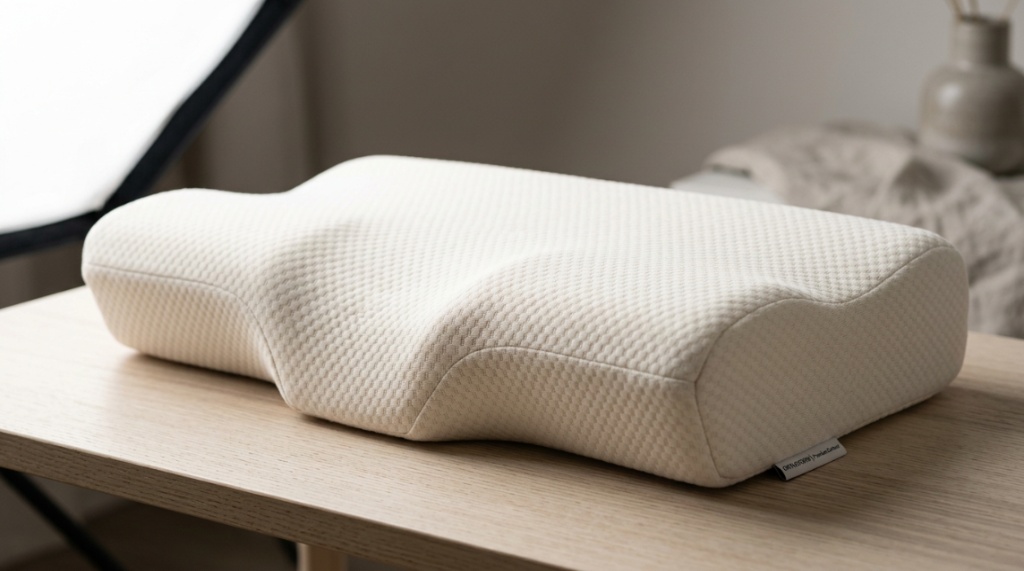
Not all cervical pillows are created equal. To effectively relieve shoulder pain, a pillow must have specific design and material characteristics. When shopping, focus on these non-negotiable features to ensure you get a product that supports your neck without sacrificing comfort.
Contoured Support and the Ideal Cervical Curve
The pillow must have a defined neck roll or elevated ramp that supports the curve of your spine, not just your head. Look for a pillow with a slight depression for the head that is deeper than the raised roll at the bottom edge. This is the “cervical curve” cutout. Without it, the pillow cannot maintain the natural lordosis, and your neck will fall into a flat position, shifting the strain back to your shoulders.
Temperature Regulation and Cooling Breathability
Shoulder pain often involves inflammation. Sleeping on a hot, sweaty pillow can aggravate this inflammation and prevent restorative sleep. Opt for pillows with cooling gel layers, ventilated foam, or breathable cotton or bamboo covers. Some high-end cervical pillows use phase-change materials that actively draw heat away from the skin, keeping your neck and shoulders relaxed and comfortable through the night.
Adjustable Loft and Fill for Personalized Comfort
Your body is unique, and your pillow should adapt to you, not the other way around. Pillows with a zippered cover that allows you to remove or add fill (such as shredded memory foam or adjustable latex layers) let you dial in the perfect loft and firmness. This is particularly important if you switch sleeping positions during the night. For example, you might want a higher loft for side sleeping and a lower one if you roll onto your back.
How to Choose the Right Cervical Pillow Based on Your Sleeping Position
Your sleeping position determines how your head, neck, and shoulders align with the rest of your body. Using the wrong pillow for your position is the most common reason for ongoing shoulder pain. Here is exactly what you need for each primary sleep style.
Best Cervical Pillow for Side Sleepers with Shoulder Pain
Side sleepers need the highest loft. The pillow must be thick enough to keep your head and neck in a straight line with your spine. Look for a firm, contoured pillow with a high neck roll (around 4 to 5 inches). The “shoulder cut-out” design, where the bottom edge of the pillow has a scooped notch, is ideal because it allows your shoulder to sit directly in the cut-out, preventing the pillow from pushing up into your neck. This reduces pressure on the shoulder joint itself.
Best Cervical Pillow for Back Sleepers with Shoulder Pain
Back sleepers require a medium loft (3 to 4 inches) with a pronounced cervical curve. The pillow should be firmer toward the bottom to support the natural curve and softer toward the top for the head to sink into slightly. A flat ramp design works very well for back sleepers because it provides consistent support from the upper back up to the base of the skull. Avoid thick, fluffy pillows that prop your head forward, as this increases shoulder tension.
Best Cervical Pillow for Stomach Sleepers with Shoulder Pain
Stomach sleeping is generally considered the worst position for neck and shoulder health because it forces your head to rotate to one side for extended periods. If you must sleep on your stomach, choose the flattest cervical pillow possible, ideally under 3 inches of loft. Look for a soft, flexible memory foam contour that provides minimal lift. Some stomach sleepers find relief using a cervical roll pillow that only supports the neck, leaving the head completely flat on the mattress.
How Do Memory Foam and Latex Compare for Cervical Support?
The material of the pillow directly affects how well it supports your neck and relieves shoulder pain. Two of the most common materials used in high-quality cervical pillows are memory foam and latex. Each has distinct advantages depending on your personal preferences and sleep style.
Memory Foam: Superior Contouring vs. Heat Retention
Memory foam excels at conforming exactly to the shape of your neck and head. This creates excellent pressure relief for sensitive shoulders. Traditional memory foam, however, is notorious for retaining heat. Modern advancements like gel-infused memory foam and open-cell constructions have largely solved this issue. If you choose memory foam, look for one with a breathable cover and cooling technology to prevent overheating.
Latex: Bounce Support and Durability
Natural latex provides a more responsive feel compared to memory foam. It pushes back against your neck and head rather than slowly absorbing them. This bouncier support can be better for people who tend to sleep hot, as latex naturally has an open-cell structure that allows for airflow. Latex pillows are also highly durable and retain their shape for years. The downside is that they can feel too firm for some, especially those with tender, inflamed shoulders.
Which Material Is Less Likely to Cause Shoulder Strain?
For immediate pressure relief, memory foam is often the better choice for shoulder pain because it conforms and distributes weight evenly. For long-term support and heat management, latex is often preferred. A hybrid pillow — one with a latex core and a memory foam comfort layer — offers the best of both worlds: the bounce of latex with the contouring of memory foam. This hybrid approach minimizes the risk of developing new pressure points on the shoulder blade.
What Are the Best Affordable Cervical Pillows Available Now?
You don’t need to spend hundreds of dollars to find relief from shoulder pain. Many budget-friendly options deliver excellent cervical support without compromising on quality. The key is knowing what to look for in the sub-$100 range. For a curated list of value-driven picks that hold up over time, check recommendations for cervical pillows for shoulder pain relief that combine proper contouring with durable materials.
What to Expect from a Quality Pillow Under $100
In the affordable range, you can expect pillows made from shredded memory foam, polyurethane foam, or gel-infused foam. They often come with removable and washable covers. The primary trade-off is that the foam may have a slightly lower density than premium brands, meaning it may lose some support after 1–2 years. However, many affordable models now feature dual-sided designs (one side for back sleepers, one for side sleepers) and adjustable fill levels, making them highly versatile for the price.
Features to Prioritize to Avoid Hidden Costs
When looking at budget options, prioritize pillows with a trial period (at least 30 days) and a warranty (at least 2 years). This protects you if the pillow degrades quickly. Also, look for “high-resilience” foam that rebounds quickly after compression. A pillow that stays depressed for too long after you push on it will not support your neck, leading to increased shoulder pain. Adjustability is a high-value feature at this price point because it allows you to customize the pillow without buying a new one.
How to Test a Cervical Pillow Before Committing
Even with all the research, a pillow that works for thousands of people might not work for you. Because shoulder pain is highly individual, you must test the pillow properly to ensure it delivers on its promises. Here is a step-by-step process to evaluate a cervical pillow at home.
The 10-Minute Supine Test
Lie on your back with the pillow for 10 minutes. Close your eyes and relax. Ask yourself: Does your head feel cradled or forced? Can you feel the pillow supporting the curve of your neck, or is there a gap between your neck and the pillow? If there is a gap, the pillow is too low or the neck roll is not pronounced enough. If your chin is being pushed toward your chest, the pillow is too high.
The 10-Minute Lateral (Side Sleep) Test
Roll onto your side, keeping your head squarely on the pillow. Have someone check your spine alignment. A straight line should run from your ear through your shoulder down to your hip. If your ear is tilted toward the bed, the pillow is too low. If your ear is tilted toward the ceiling, the pillow is too high. Proper alignment should feel effortless, with no sense of reaching or straining in the shoulder.
Morning Assessment: Pain vs. Alignment
After the first night, assess your shoulder pain in the morning. A good cervical pillow should not eliminate pain after one night, but it should not make it worse. If you wake up with a sharp, new pain in a different spot (like the top of your shoulder or the base of your neck), the pillow is likely the wrong firmness or height for your body. Give it 3–5 nights to adapt, as your muscles need time to relax into the new support posture.
Can a Cervical Pillow Replace Physical Therapy or Other Treatments?
While a cervical pillow is incredibly effective for managing mechanical shoulder pain caused by poor sleep posture, it is not a substitute for comprehensive medical care. It is a supporting tool, not a standalone cure. Understanding its role helps you set realistic expectations and combine it with other treatments for the best outcome.
When the Pillow Can Be the Primary Solution
If your shoulder pain is purely positional — you wake up stiff with no history of injury, arthritis, or disc problems — a cervical pillow can be your primary tool. Many people with mild to moderate “morning shoulder” find that switching to a cervical pillow resolves the issue within two weeks. In these cases, the pillow is correcting the root cause: nightly spinal misalignment.
When You Should Still See a Doctor or Physical Therapist
If you have underlying conditions such as cervical radiculopathy, herniated discs, frozen shoulder, or rotator cuff tears, a cervical pillow is a supportive measure but not a cure. You should continue any prescribed therapy or medical treatment. In fact, using the wrong cervical pillow with these conditions can aggravate symptoms. Always consult with your doctor or physical therapist before making a change if you have a diagnosed condition.
How to Care for Your Cervical Pillow to Extend Its Life
A high-quality cervical pillow is an investment in your health. Proper care ensures it maintains its supportive shape and continues to relieve your shoulder pain for years. Neglecting maintenance can lead to sagging, odor, and the growth of allergens that worsen inflammation.
Cleaning the Cover and Inner Foam
Always follow the manufacturer’s instructions. Most covers are removable and machine-washable on a gentle cycle (use cold water and mild detergent). The inner foam core should never be machine washed. Spot clean it with a damp cloth and mild soap, then air dry it thoroughly in a well-ventilated area, away from direct sunlight. Moisture trapped inside the foam can break down its structure and promote bacteria growth.
Fluffing and Rotating for Even Wear
Memory foam cervical pillows tend to develop a “dip” in the area where your head rests most. To prevent this, fluff the pillow by gently kneading it for 30 seconds each morning. Rotate the pillow head-to-toe every week to distribute wear. If your pillow has a dual-sided design, flip it from the back side to the side-sleeping side periodically to equalize pressure on the foam. Struggling to find comfort at night? Choosing the Best Cervical Pillows for Shoulder Pain can significantly reduce pressure points and improve your sleep quality.
Knowing When to Replace Your Pillow
Even the best cervical pillow degrades over time. A good rule of thumb is to replace it every 18 to 24 months for synthetic foams and every 3 to 5 years for natural latex. Signs it needs replacement include: visible sagging or indentations that do not bounce back, a persistent odor that does not fade with airing, or a return of your shoulder pain after previously being pain-free on the pillow. Listen to your body; it will tell you when the support is gone.
Frequently Asked Questions
How long does it take for a cervical pillow to help shoulder pain?
Most people notice a difference within 3 to 7 nights. The first night may feel unfamiliar, but by the end of the first week, shoulder stiffness upon waking should begin to decrease. Full relief from chronic tension may take up to two weeks as your muscles adapt to the new alignment.
Can a cervical pillow make shoulder pain worse?
Yes, if the pillow is the wrong height or firmness for your body type and sleeping position. A pillow that is too high can compress the shoulder joint, while one that is too low can stretch the shoulder ligaments. Always check your spine alignment on the pillow and return the pillow if it does not provide a neutral position.
Should I get a cervical pillow if I sleep on my stomach?
Stomach sleepers should opt for the flattest cervical pillow available (under 3 inches) or a simple cervical roll. Sleeping on a standard contoured cervical pillow while on your stomach can force your neck into an extreme extension, which can worsen shoulder and neck pain.
What is the difference between a cervical pillow and a memory foam pillow?
All cervical pillows are a type of shaped pillow, but not all memory foam pillows are cervical pillows. A memory foam pillow can be a standard rectangle. A cervical pillow has a specific ergonomic contour designed to support the natural curve of the cervical spine, which standard memory foam pillows lack.
Can I use a cervical pillow with a shoulder injury or rotator cuff tear?
Yes, but you should proceed with caution and ideally under the guidance of a healthcare professional. A properly chosen cervical pillow can reduce pressure on the shoulder joint and take tension off the rotator cuff. However, the wrong height can aggravate the injury. Start with a low-profile pillow and adjust as needed.
How do I clean my cervical pillow without ruining the memory foam?
Remove the cover and wash it separately in cold water. For the foam core, spot clean only with a damp cloth and a tiny amount of gentle soap. Never submerge the foam in water or put it in the washing machine. Air dry the foam in a warm, dry room for 24–48 hours before putting the cover back on.
Is a firmer cervical pillow better for shoulder pain?
Not always. Firmness needs to match your sleeping position and body weight. Side sleepers generally need firmer support, while back sleepers benefit from medium-firm support. A pillow that is too firm can create pressure points on the shoulder, while one that is too soft offers no structural support. The goal is “supportive comfort,” not maximal firmness.
