
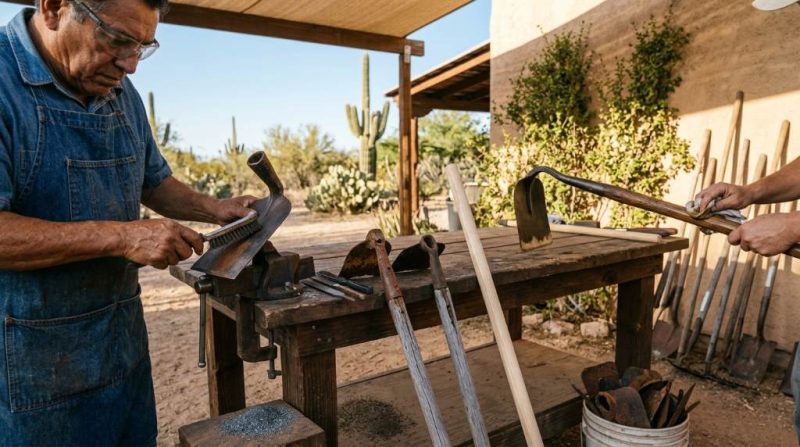
Tucson homeowners and desert gardeners often rely on durable hand tools to manage dry soil and stubborn weeds. According to the United States Department of Agriculture, Arizona receives less than 13 inches of rainfall annually, which makes tool maintenance extremely important in desert gardening. In addition, a survey by the National Gardening Association showed that more than 55% of home gardeners restore old tools instead of replacing them. Many local gardeners focus on traditional methods because they preserve tool strength and reduce waste. Experienced gardeners also believe that sharpening a gardening hoe correctly improves soil control and extends tool life significantly.
Why Traditional Garden Hoe Restoration Matters in Tucson
Tucson’s dry climate creates unique challenges for gardening tools throughout the year. Dust, heat, and rocky soil often wear down metal hoe blades quickly. Therefore, regular restoration keeps tools functional and safe for daily use. Many gardeners also prefer restoring vintage hoes because older steel often lasts longer than newer materials.
Traditional restoration methods remain popular because they use simple tools and affordable materials. Local gardeners often avoid electric grinders that may damage thin metal edges. Instead, they use hand files, natural oils, and sanding techniques for controlled restoration. As a result, restored hoes maintain their original strength and balanced shape.
Older gardening communities in Tucson still pass restoration knowledge between generations. Many families continue using the same hoe for decades with proper maintenance habits. Furthermore, traditional restoration supports sustainable gardening practices across Arizona neighborhoods. This approach reduces landfill waste while preserving dependable hand tools.
Common Types of Garden Hoes Found in Tucson
Several hoe styles remain popular among gardeners in Southern Arizona today. Each design serves different soil conditions and planting methods around Tucson landscapes. Therefore, restoration techniques may vary slightly depending on the hoe style. Understanding the tool type helps gardeners restore edges correctly.
Draw Hoes
Draw hoes feature a flat blade attached at a right angle to the handle. Tucson gardeners commonly use them for shaping soil and removing weeds in dry beds. Their broad blade often requires regular sharpening because rocky soil dulls edges quickly. Traditional filing methods work especially well for restoring these tools.
Stirrup Hoes
Stirrup hoes use a loop-shaped blade that cuts weeds with push-and-pull motions. Many desert gardeners prefer them because they disturb less soil during cultivation. However, their thin blade edges bend easily under pressure from hard ground. Careful hand straightening and filing help restore proper performance safely.
Warren Hoes
Warren hoes include a pointed triangular blade for creating irrigation furrows and seed rows. Tucson gardeners often use them in vegetable gardens during spring planting seasons. Since their tip experiences heavy wear, restoration usually focuses on reshaping the point carefully. Hand tools provide better precision during this process.
Essential Tools Used for Traditional Restoration
Most traditional restoration methods require only a few affordable hand tools and supplies. Gardeners in Tucson often keep these items in small outdoor workshops or sheds. Moreover, manual restoration tools provide better control than high-speed power equipment. This reduces accidental metal damage during repairs.
Common restoration supplies include:
- Metal hand files
- Wire brushes
- Sandpaper sheets
- Linseed oil
- Rust remover
- Steel wool
- Wooden wedges
- Clean cotton cloths
These simple materials support nearly every stage of traditional hoe restoration. Additionally, most supplies remain inexpensive and easy to find in local hardware stores. Tucson gardeners often prefer reusable tools because they support sustainable gardening practices. Proper storage also extends the lifespan of restoration equipment significantly.
Removing Rust From Old Garden Hoes
Rust removal represents one of the most important steps in traditional restoration methods. Tucson’s dry climate reduces moisture exposure, yet irrigation water can still cause rust buildup. Therefore, gardeners often inspect hoes carefully before every planting season. Early rust treatment prevents deeper corrosion problems later.
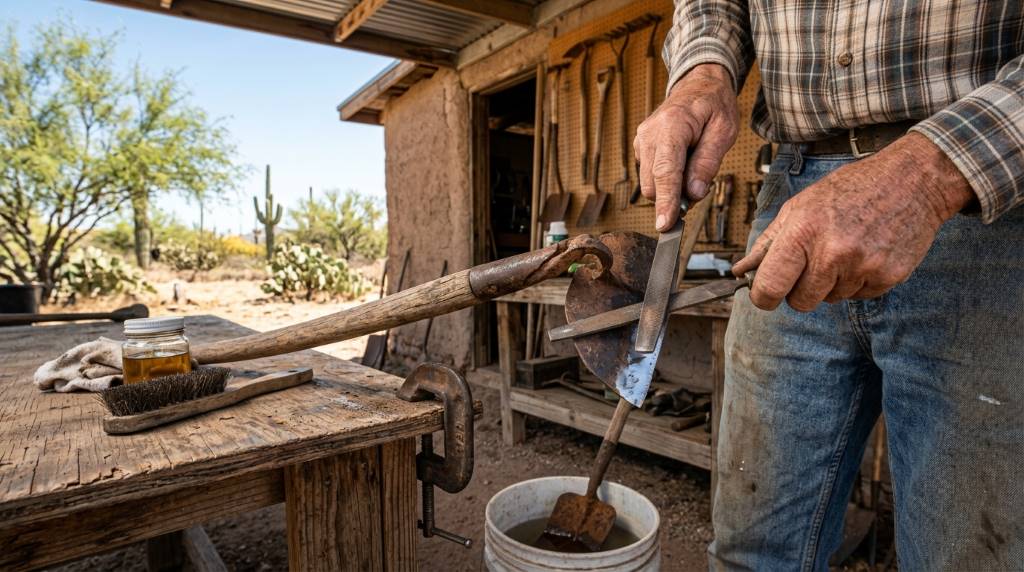
Many local gardeners begin by scrubbing the hoe with a wire brush thoroughly. This process removes loose rust and compacted desert soil from the metal surface. Afterward, they soak stubborn rust spots using vinegar or commercial rust removers. These solutions loosen oxidation without damaging healthy steel underneath.
Fine steel wool helps smooth remaining rough patches after rust treatment finishes completely. Gardeners usually wipe the blade clean using a dry cloth afterward. Furthermore, some apply a thin oil coating immediately to prevent future rust formation. This traditional habit protects the blade during Tucson’s seasonal temperature swings.
Traditional Blade Sharpening Techniques
Sharp hoe blades improve efficiency while reducing strain during garden work significantly. Tucson gardeners often sharpen tools several times during the growing season because rocky soil dulls edges rapidly. Therefore, traditional filing techniques remain widely respected among experienced gardeners. These methods protect blade shape better than aggressive grinding tools.
Gardeners usually secure the hoe firmly before sharpening begins for safety purposes. Then, they use a flat mill file while following the original blade angle carefully. Smooth, even strokes remove dull metal gradually without overheating the blade surface. This process also helps preserve the tool’s original balance.
Many Tucson gardeners prefer sharpening by hand because it offers greater control over edge thickness. Thin blades cut weeds more effectively in compact desert soil conditions. However, over-filing can weaken older metal blades significantly over time. Careful sharpening maintains both durability and cutting performance together.
Restoring Wooden Hoe Handles
Wooden handles often crack or dry out under Tucson’s intense desert heat exposure. Therefore, traditional restoration methods focus heavily on handle maintenance and preservation. Many gardeners prefer original hardwood handles because they feel stronger and more comfortable. Proper restoration also prevents splinters and unsafe tool use.
The restoration process usually begins with light sanding to remove rough areas completely. Gardeners often use medium-grit sandpaper followed by finer sanding sheets afterward. This method smooths the wood while preserving the natural handle shape effectively. Dust removal also helps oil treatments absorb more evenly later.
Linseed oil remains one of the most popular traditional wood treatments in Tucson today. Gardeners apply several thin coats using clean cloths over multiple days carefully. As the oil penetrates deeply, the handle becomes stronger and more resistant to cracking. This traditional technique extends handle life for many additional years.
Replacing Loose or Broken Handles
Some older garden hoes require complete handle replacement after years of heavy use. Fortunately, traditional restoration methods make this repair relatively simple and affordable. Tucson gardeners often buy replacement hardwood handles from local farm supply stores. Proper installation ensures safe and stable gardening performance afterward.
The damaged handle usually gets removed by loosening the old wooden wedge carefully. Gardeners then clean the metal socket thoroughly before fitting the new handle inside. A properly sized handle should fit tightly without excessive force during installation. Small adjustments improve balance and reduce wobbling during use.
Wooden wedges secure the handle firmly once the correct position feels stable. Many gardeners also soak the handle end briefly before installation for expansion support. Furthermore, some add protective oil treatments immediately after replacement finishes completely. This extra step improves durability in dry Arizona conditions.
Traditional Protective Coatings for Hoe Blades
Protective coatings help prevent rust and extend the lifespan of restored garden hoes significantly. Tucson gardeners often rely on natural oils because they remain affordable and easy to apply. Unlike synthetic sprays, traditional coatings usually contain fewer harsh chemicals. This makes them safer for home gardeners and vegetable plots.
Linseed oil and mineral oil remain common choices for metal blade protection locally. Gardeners spread a thin coating across the cleaned blade after each use carefully. This barrier blocks moisture exposure while reducing oxidation during storage periods. Consistent application produces better long-term protection results.
Some experienced gardeners also use beeswax mixtures for additional surface protection benefits. Wax coatings create a smooth finish that resists dirt buildup effectively during use. Moreover, natural coatings support environmentally friendly gardening practices around Tucson communities. Simple maintenance routines often preserve restored tools for decades successfully.
Seasonal Maintenance Tips for Tucson Gardeners
Tucson’s desert climate creates unique seasonal challenges for maintaining restored garden hoes properly. Summer heat can dry wooden handles rapidly while winter irrigation increases rust risks. Therefore, gardeners often adjust maintenance habits throughout the year carefully. Seasonal care reduces major restoration work later.
Helpful seasonal maintenance practices include:
- Clean blades after every gardening session
- Store tools in shaded dry areas
- Apply protective oil monthly
- Inspect handles for cracks regularly
- Remove rust spots immediately
- Avoid leaving tools on wet soil
These simple habits protect restored hoes from unnecessary wear and environmental damage. Additionally, regular inspections help gardeners identify small problems before they worsen significantly. Consistent maintenance also improves tool safety during heavy gardening tasks. Well-maintained hoes perform more efficiently in Tucson’s compact desert soil.
Benefits of Restoring Old Garden Hoes Instead of Buying New Ones
Many Tucson gardeners restore old hoes because vintage tools often feature stronger steel construction. Older blades typically withstand rocky soil conditions better than lightweight modern alternatives. Therefore, restoration becomes a practical long-term investment for serious gardeners. Restored tools also develop sentimental value across generations.
Traditional restoration methods cost far less than purchasing premium gardening tools repeatedly. Most restoration supplies remain inexpensive and reusable for future maintenance projects. Furthermore, restoring tools supports environmentally responsible gardening habits by reducing waste. Many local gardeners appreciate this sustainable approach greatly.
Restored hoes also provide a customized feel that new tools rarely match completely. Gardeners can shape handles and sharpen blades according to personal preferences easily. As a result, restored tools often feel more comfortable during extended gardening sessions. Personalized tools improve both efficiency and enjoyment outdoors.
Tucson Gardening Culture and Traditional Tool Care
Tucson gardening culture strongly values practical skills and resourceful maintenance traditions today. Many local gardeners grow vegetables and native plants despite difficult desert conditions successfully. Therefore, dependable hand tools remain essential throughout every growing season. Traditional restoration methods support this long-standing gardening culture effectively.
Community gardening groups often share restoration advice during local workshops and neighborhood events. Experienced gardeners teach younger generations how to maintain tools safely and properly. In addition, many local farms still rely on hand-restored hoes for daily cultivation work. These traditions continue shaping Tucson’s gardening identity today.
Traditional tool restoration also connects gardeners with Arizona’s agricultural history meaningfully. Older hand tools reflect decades of desert farming knowledge and practical craftsmanship. Moreover, restoring them preserves valuable skills that modern convenience sometimes overlooks completely. Many Tucson residents proudly continue these restoration traditions year after year.
Conclusion
Traditional garden hoe restoration methods remain highly respected throughout Tucson because they combine practicality, sustainability, and craftsmanship effectively. Simple techniques like rust removal, hand sharpening, and oil treatments can extend tool life for many years. Moreover, restored hoes often perform better in Tucson’s rocky desert soil than many newer alternatives. Consistent maintenance also reduces gardening costs while supporting environmentally responsible habits.
If you own an old or damaged garden hoe, now is the perfect time to restore it using these proven traditional methods. Start with simple cleaning and sharpening steps today to improve your gardening results immediately. A properly restored hoe can become one of the most dependable tools in your entire garden collection.
FAQs
How often should I sharpen a garden hoe in Tucson?
Most Tucson gardeners sharpen their hoes every few weeks during heavy growing seasons.
What oil works best for wooden hoe handles?
Linseed oil remains the most popular traditional option for protecting wooden handles.
Can vinegar remove rust from old garden hoes?
Yes, white vinegar helps loosen rust effectively without damaging healthy steel.
Why do Tucson gardeners prefer hand sharpening methods?
Hand sharpening offers better control and reduces the risk of overheating the blade.
Should restored hoes stay outdoors after use?
No, gardeners should always store restored hoes in dry shaded areas after use.
Related Reads
Check: How to Pick the Right Pump for a Small Fountain Bowl
Discover: How to Weed Your Garden Efficiently Using the Right Hoe
Learn: How to Grow Your Own Cut Flowers for Bouquets and Arrangements
