
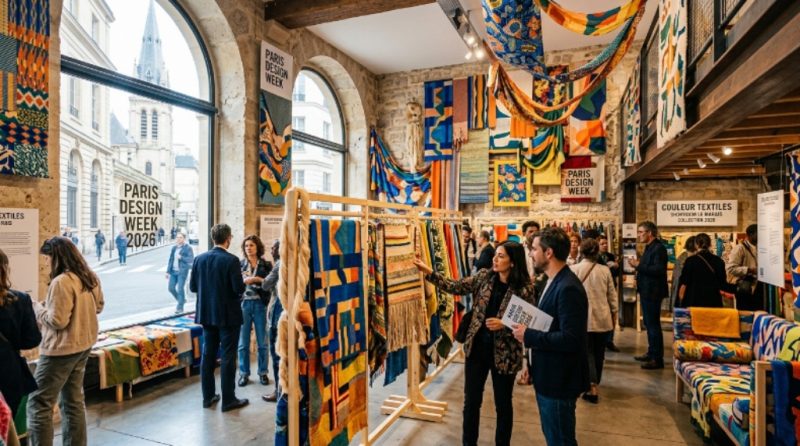
Paris has always known how to set the tone for the world of design. This year was no different. From January 15 to 19, 2026, the city came alive with creativity, color, and craftsmanship. Paris Design Week 2026 brought together thousands of designers, industry professionals, and curious visitors from across the globe. Running alongside the renowned Maison & Objet trade fair at Paris Nord Villepinte, the event filled galleries, showrooms, and public spaces with ideas that felt both timeless and refreshingly new.
The theme for this edition was “Past Reveals Future.” It was a fitting choice. Everywhere you looked, designers were drawing from history while pushing boldly forward. Heritage and innovation were not in conflict. Instead, they were in conversation. This tension made for one of the most compelling design weeks in recent memory.
A City Transformed
One of the most exciting things about Paris Design Week is what happens beyond the fairground. Key neighborhoods across the city became destinations in their own right. Le Marais, Bastille, République, Saint-Germain-des-Prés, and the Opéra district were all transformed. Showrooms threw open their doors. Pop-up installations appeared on side streets. Window displays turned ordinary façades into small works of art.
The Paris Design Week Factory took over the 3rd arrondissement with particular energy. This showcase focused on emerging talent and was divided into four thematic sections: Collectible, Publishing (Editions), Craft, and a Special Focus on China. It was exactly the kind of platform that helps new voices break through. Designers with fewer than five years of professional experience had a genuine stage on which to present their work to the people who matter most in the global design world.
Additionally, cultural institutes from Sweden, Finland, and China presented their own national visions of contemporary design. This international mix added richness and depth to an already busy program.
The Overarching Theme: Past Reveals Future
The “Past Reveals Future” theme shaped how almost every exhibitor approached their work. It was not simply about nostalgia. It was about using the past as raw material for something genuinely new.
Four distinct design directions emerged from this theme. The first was Metamorphosis, which explored transformation at a material level. The second was Mutation, which looked at how objects and forms evolve over time. The third direction, Recomposed Baroque, revisited the extravagance of a historic style with a modern eye. The fourth was Neo-Folklore, which drew on craft traditions and regional identity to create work that felt rooted but contemporary.
Together, these four directions gave the week a clear intellectual framework. They also gave designers permission to experiment freely within it. The result was a show that felt coherent without being uniform.
Harry Nuriev: Designer of the Year
No conversation about Paris Design Week 2026 would be complete without mentioning Harry Nuriev. This edition of Maison & Objet named the founder of Crosby Studios Designer of the Year. He built his installation for the show around the concept he calls “Transformism,” and his work sits at the intersection of art, design, and performance.
The installation resisted simple interpretation. It favored emotional engagement over formal clarity. Nuriev built his work around the idea that we are moving from an industrial economy to a feeling-based one, where beauty is immediate, shared, and instinctive. Silver and mirrored surfaces played a central role, amplifying ideas of reflection as both a physical and cultural act.
It was provocative and poetic at the same time. For many visitors, it was the defining moment of the week.
Standout Collections and Spaces
Lelièvre Paris at La Pagoda
One of the most talked-about presentations took place at La Pagoda, a historic Parisian landmark. Lelièvre Paris staged three new collections there, all directed by designer Edgar Jayet. The first, “Escales Lointaines,” explored travel through materials, blending basketry-inspired textures, maritime geometries, and botanical references. The second collection, “Îles du Vent,” marked the brand’s first foray into indoor/outdoor textiles, drawing inspiration from Caribbean light and lush tropical landscapes. The third, “Festivités 2026 – Quenin,” revisited the heritage of the historical Quenin brand with bold, theatrical patterns and opulent materials.
The venue itself added meaning to the collections. La Pagoda is a space with its own storied past, and placing these forward-thinking textiles within it created a dialogue between old and new that was hard to forget.
Rubelli’s “Luce” Collection
The Venetian textile house Rubelli presented a collection inspired by light. “Luce,” which means “light” in Italian, explored how light interacts with shape, color, and space. The results were quietly spectacular. Fabrics shifted in tone depending on how they caught the light, creating pieces that seemed to breathe and move even when still.
L’Objet’s “Grand Tour” Collection
L’Objet brought a sense of travel and discovery to Paris Design Week with its “Grand Tour” collection. The name references the historic European journeys of young aristocrats seeking culture and education. The objects were rich in craft and allusion, offering a worldly sensibility that felt fitting for a global design event.
In Materia at Maison & Objet
Conceived by trend forecaster Elizabeth Leriche, the “In Materia” exhibition was one of the fair’s standout installations. It offered a sensory journey through raw materials: wood, fibre, glass, clay, and stone. The works on display were unique or limited-edition pieces, chosen to celebrate material honesty and the beauty of making things by hand. For visitors who wanted to slow down and look closely, this was where the week really came alive.
The Biggest Trends of 2026
The Return of Craft
If one theme ran through practically every hall and showroom, it was a renewed respect for handmade work. This was not craft as a novelty or a niche concern. It was craft as a core design value. Intricate embroidery, hand-applied lacquer, bespoke joinery, and artisan-blown glass all appeared across dozens of stands. Some pieces required more than 50 hours of work by master craftspeople. That kind of commitment sends a message: in a world of mass production, slow making matters.
Bold Color and Pattern in Textiles
Rich, saturated colors were everywhere. So were boldly scaled patterns. From unapologetic prints to hand-stitched embroidery, textiles took on a new confidence. This was not about subtle accent colors. Color was treated as a central element of a piece’s identity. Neutrals were still present, but they played a supporting role, framing more vivid moments rather than dominating the palette.
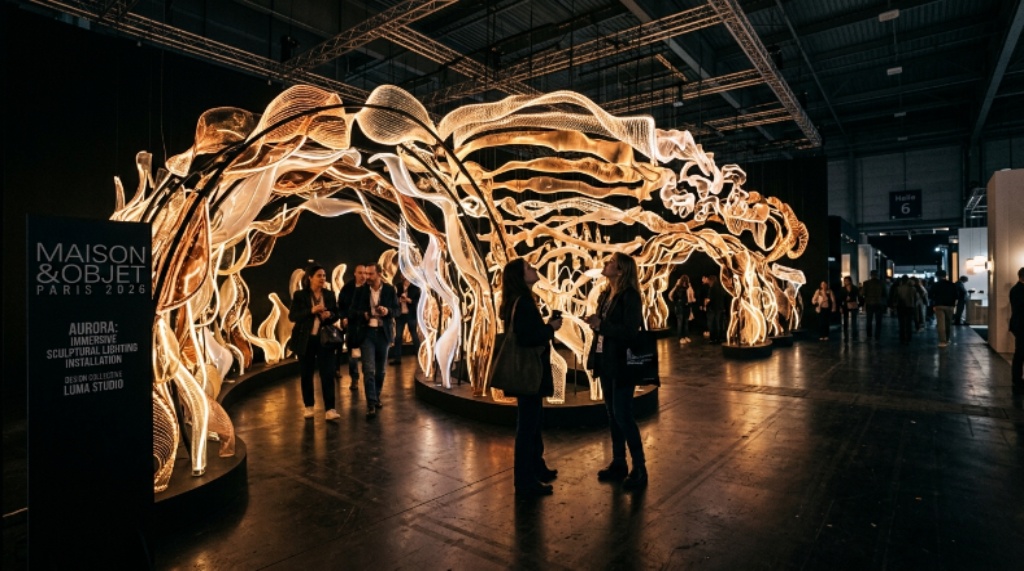
Lighting as Sculpture
Lighting stepped fully out of the background at Paris Design Week 2026. Across showrooms and galleries, fixtures were treated less as functional necessities and more as sculptural objects. Color, form, and material were used to make lights that anchored a room and transformed its mood. This shift felt significant. Designers and their clients are ready to invest more thought and feeling into how a space is illuminated.
Sustainability Through Materials
Sustainability was woven into the fabric of the event, though not always loudly. Several exhibitors were finding ways to use recycled or agricultural byproducts as design materials. Solar-powered elements, upcycled glass, and natural fibres all made appearances. The message was that good design and responsible making do not have to be in conflict.
Emerging Talent at the Forefront
Paris Design Week has always made room for new voices, and 2026 was no exception. The Factory program gave early-career designers direct access to an international audience. The Design District, driven by the Hall Haus collective, served as what organizers described as an incubator of creative energy. A dedicated springboard platform spotlighted three companies under three years old, each selected by a panel of experts.
A prestigious jury also nominated seven emerging designers for individual recognition. These were designers with prototypes in hand, fresh projects ready for market, and a clear point of view. For many of them, Paris Design Week was the moment their careers shifted gear.
International Perspectives
Paris Design Week has never been a purely French affair, and this year reinforced that quality beautifully. The China Design Awards brought cross-cultural conversation to the fore. Cultural institutes from several countries offered their own takes on contemporary living and making. This convergence of perspectives is part of what makes the event so valuable. Paris provides the setting, but the ideas come from everywhere.
Conclusion
Paris Design Week 2026 delivered on its “Past Reveals Future” promise in every sense. The week celebrated craftsmanship, pushed boundaries with color and light, and gave emerging designers a meaningful platform. Craft was taken seriously again. Textiles were bolder and more expressive than they had been in years. Lighting became sculpture. Sustainability found its way into materials and methods without ever feeling forced.
However, what stayed with most visitors was something harder to quantify. It was the feeling of a design community that is confident, curious, and ready to build on what came before. Paris Design Week 2026 did not just show us beautiful objects. It showed us a direction. And that, in the end, is exactly what a great design event should do.
Frequently Asked Questions
When did Paris Design Week 2026 take place?
The January 2026 edition ran from January 15 to 19, 2026, at Paris Nord Villepinte Exhibition Centre, alongside the Maison & Objet trade fair. The September edition is scheduled for September 10 to 19, 2026, across Paris.
What was the theme of Paris Design Week 2026?
The central theme was “Past Reveals Future.” It explored how designers can draw inspiration from history, craft traditions, and heritage to create contemporary work that is both innovative and deeply rooted.
Who was named Designer of the Year at Maison & Objet 2026?
Harry Nuriev, the founder of New York-based Crosby Studios, was named Designer of the Year. He created a large-scale immersive installation for the event built around his concept of “Transformism.”
What were the key design trends that emerged from the 2026 edition?
The major trends included a revival of handcraft and artisanal making, bold color and pattern in textiles, lighting as sculptural art, and a thoughtful approach to sustainable materials. Archival revivals and the blending of heritage with modern design language were also strongly present.
How can I attend Paris Design Week?
Paris Design Week is open to both trade professionals and the general public. The September edition runs across multiple Parisian neighborhoods and is free to explore in the city. Maison & Objet, held inside the fairground, primarily targets industry professionals, though tickets can be purchased in advance through the official Maison & Objet website.
