

Waking up with a stiff neck is one of the most common and frustrating ways to start your day. For millions of people, neck pain is not caused by injury or illness. It is caused by the wrong pillow. The pillow you sleep on every night plays a much bigger role in your health than most people realize. It supports your head, neck, and spine for six to nine hours straight. Therefore, choosing the right one is not a minor decision.
This guide walks you through everything you need to know. You will learn what causes sleep-related neck pain, what to look for in a pillow, and how different sleeping positions change your needs. By the end, you will have the knowledge to make a confident and informed choice.
Why Your Pillow May Be Causing Neck Pain
Most people replace their mattress when they experience back or neck pain. However, the pillow is often the real culprit. A pillow that is too flat, too firm, or simply worn out forces your neck into an unnatural position for hours. Over time, that strain builds up and turns into chronic pain.
The muscles along the back and sides of your neck are sensitive to misalignment. When your head is pushed too far forward or tilted to one side during sleep, those muscles stay tense all night. They never fully relax. As a result, you wake up feeling like you never truly rested.
Additionally, an old pillow loses its ability to support your neck properly. Most standard pillows should be replaced every one to two years. If you cannot remember when you last replaced yours, that is a strong sign it is time for a change.
Understanding What Your Neck Needs During Sleep
Your neck has a natural curve. It is called the cervical curve, and it runs from the base of your skull down to your upper back. A good pillow keeps this curve in its natural position while you sleep. A bad pillow flattens it, exaggerates it, or shifts it sideways.
The goal is neutral alignment. This means your ears, shoulders, and hips should form a straight line when viewed from the side. Achieving this alignment consistently is the foundation of healthy sleep posture. When your spine stays aligned through the night, your muscles can relax fully. That is when real recovery and rest happen.
Therefore, the best pillow is not necessarily the softest or the most expensive. It is the one that keeps your neck in its natural position for your specific body type and sleeping style.
How Sleeping Position Affects Your Pillow Choice
Not every pillow works for every sleeper. Your sleeping position is one of the most important factors in choosing the right pillow. Here is how each position changes what you need.
Back Sleepers
Back sleeping is generally considered the healthiest position for spinal alignment. However, it requires a pillow with medium height and gentle contouring. The pillow should fill the space between your head and the mattress without pushing your chin toward your chest. A pillow that is too thick throws your neck forward and creates tension.
Side Sleepers
Side sleepers need a firmer, higher pillow to fill the gap between their shoulder and their head. Without enough height, the head drops toward the mattress and the neck bends sideways all night. This is one of the most common causes of morning neck stiffness. Additionally, side sleepers benefit from a pillow with consistent support across its full width.
Stomach Sleepers
Stomach sleeping is the hardest position on the neck. It forces the head to turn sharply to one side for extended periods. If you sleep on your stomach, the first recommendation is to try transitioning to a different position. However, if that is not possible, use the thinnest pillow available or no pillow at all to reduce neck strain.
Key Features to Look for in a Neck Pain Pillow
When shopping for a pillow, the options can feel overwhelming. However, a few key features will help you narrow down your choices quickly.
- Fill material: Memory foam conforms to the shape of your head and neck. Latex offers firm, responsive support. Down and down-alternative pillows are soft but may not provide enough structure for people with neck pain.
- Loft height: Loft refers to the thickness of the pillow. Your ideal loft depends on your sleeping position and shoulder width. Side sleepers generally need higher loft, while back sleepers do better with medium loft.
- Firmness: A pillow that is too soft collapses under the weight of your head. One that is too firm pushes the head out of alignment. Look for medium to medium-firm options as a starting point.
- Breathability: Heat retention can disrupt sleep. Pillows with cooling covers or ventilated foam help regulate temperature through the night.
- Washability: A pillow cover you can remove and wash keeps your sleep environment clean and extends the life of the pillow.
The Role of an Ergonomic Pillow in Pain Relief
An ergonomic pillow is designed with the shape and needs of the human body in mind. Unlike standard pillows, which are simply rectangular blocks of fill material, an ergonomic pillow often features contoured zones. These zones provide different levels of support for the head and neck.
Many people find that switching to an ergonomic pillow reduces or eliminates morning neck pain within just a few nights. The design keeps the head and neck aligned without requiring you to constantly adjust your position during sleep. Therefore, your muscles stay relaxed for longer stretches through the night.
However, an ergonomic pillow takes some adjustment. If you have used a standard pillow your entire life, the contoured shape may feel unfamiliar at first. Give it at least one to two weeks before deciding if it is the right fit for you.
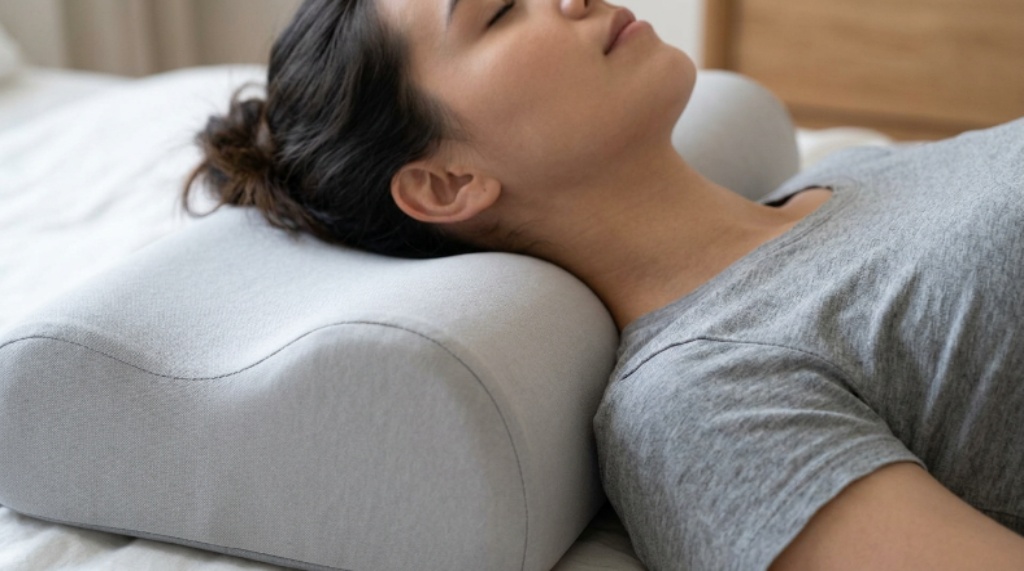
What Makes a Cervical Support Pillow Different
A cervical support pillow is specifically designed to support the cervical spine, which is the upper portion of your spinal column that runs through your neck. These pillows are commonly recommended by physical therapists and chiropractors for people dealing with ongoing neck pain, stiffness, or tension headaches.
The design typically features a raised edge along the bottom of the pillow to cradle the neck and a slightly lower center to support the head. This shape encourages the natural curve of the cervical spine to stay in place through the night.
Cervical support pillows are available in memory foam, water-filled, and buckwheat fill varieties. Each material offers a different feel. Memory foam is the most popular because it shapes itself to your unique neck curve and holds that position consistently.
How to Test a Pillow Before You Commit
Buying a pillow without testing it first is a common mistake. Many companies now offer trial periods of thirty to sixty days. This gives your body enough time to adjust and for you to evaluate whether the pillow is genuinely improving your sleep posture and reducing pain.
When testing a pillow, pay attention to how you feel in the morning. Ask yourself these questions:
- Is your neck stiff when you wake up?
- Do you feel rested or do you feel like you were tense all night?
- Did you wake up frequently to adjust your position?
- Does your neck feel better or worse than it did with your old pillow?
Additionally, check how the pillow holds up over time. A good pillow should maintain its shape and support after several weeks of regular use. If it starts to flatten or bunch up quickly, it is not built to last.
Pillow Care Tips to Extend Its Life and Effectiveness
Even the best pillow loses its effectiveness if you do not care for it properly. A few simple habits can extend the life of your pillow significantly.
First, use a pillow protector beneath your pillowcase. This keeps oils, sweat, and dust mites from reaching the fill material. Second, wash your pillowcase at least once a week. Third, follow the manufacturer’s instructions for washing the pillow itself. Memory foam should never be put in a washing machine, but many other types can be laundered regularly.
Furthermore, fluff your pillow daily to restore its shape. This is especially important for down and down-alternative options. Finally, replace your pillow when it no longer springs back after being folded in half. That simple test tells you whether it still has enough support to do its job.
Conclusion
Neck pain caused by poor sleep does not have to be a permanent problem. The right pillow makes a real and measurable difference. Start by understanding your sleeping position and what level of support your neck needs. Then look for a pillow with appropriate loft, firmness, and fill material for your body type.
An ergonomic pillow or a cervical support pillow can offer targeted relief that standard pillows simply cannot provide. Additionally, healthy sleep posture depends on keeping your spine aligned from head to hip throughout the night. That alignment starts with the pillow beneath your head.
Take your time making this choice. Use trial periods when available and pay attention to how your body responds. With the right pillow and consistent care, restful, pain-free sleep is absolutely achievable.
Frequently Asked Questions
How do I know if my pillow is causing my neck pain?
If your neck feels stiff or sore when you wake up but the pain eases as the day goes on, your pillow is likely the cause. Pain that starts in the morning and fades by midday is a classic sign of sleep-related neck strain.
What type of pillow is best for neck pain?
Memory foam and latex pillows tend to work best for neck pain because they offer consistent, contouring support. An ergonomic or cervical design adds an extra layer of targeted relief for the neck and upper spine.
How often should I replace my pillow?
Most pillows should be replaced every one to two years. High-quality memory foam and latex pillows may last up to three years. If your pillow has lost its shape or feels flat, replace it sooner regardless of age.
Can the wrong pillow cause headaches?
Yes. Tension headaches that begin at the base of the skull are commonly linked to neck strain from poor sleep alignment. Switching to a more supportive pillow often reduces the frequency of these headaches.
Is a firm or soft pillow better for neck pain?
A medium to medium-firm pillow is generally best. A pillow that is too soft collapses and lets the head sink too far. One that is too firm holds the head too high. The right balance keeps the neck in a neutral, relaxed position throughout the night.
