
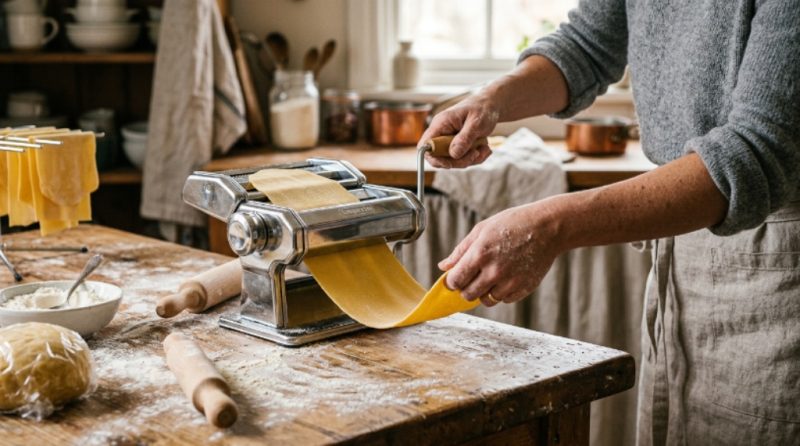
There is something magical about a plate of perfectly made fresh pasta. It has a soft, silky texture that store-bought dried pasta simply cannot match. The good news is that you do not need a fancy restaurant kitchen to achieve it. With the right fresh pasta tools and a little patience, you can make beautiful pasta at home. A manual pasta machine is one of the most rewarding investments any home cook can make.
This guide will walk you through everything you need to know. From choosing your ingredients to rolling the perfect sheet of dough, you will gain the confidence to serve restaurant-quality pasta at your own dining table.
Why Fresh Pasta Is Worth the Effort
Many home cooks hesitate to make pasta from scratch. They assume it is too time-consuming or too technical. However, once you try it, you will realize the process is simpler than it looks.
Fresh pasta cooks in just two to three minutes. It absorbs sauces more readily than dried pasta. Additionally, the flavor is richer and the texture is far more tender. When you make it yourself, you also control every ingredient that goes into your food.
Therefore, the effort you put in is absolutely worth the result on your plate.
The Ingredients You Need
Fresh pasta requires very few ingredients. Simplicity is one of its greatest strengths.
For a classic egg pasta dough, you will need:
- 2 cups of all-purpose flour or 00 flour (finely milled Italian flour works best)
- 3 large eggs, at room temperature
- A pinch of salt
- A small drizzle of olive oil (optional but helpful)
Some recipes use semolina flour for a firmer, more textured bite. Others use only water for a vegan-friendly version. However, the egg-based dough is the most forgiving for beginners. It is also the most traditional for northern Italian-style pasta.
Understanding Your Manual Pasta Machine
Before you start rolling, it helps to understand how your machine works. A manual pasta machine has two main parts. The first is a smooth rolling attachment. The second is a cutting attachment that creates noodle shapes like tagliatelle or fettuccine.
Most machines have a dial or knob that controls the thickness of the dough. The settings usually range from 1 (thickest) to 9 (thinnest). You start thick and work your way down gradually. This process stretches and strengthens the gluten in the dough, giving your pasta that smooth, elastic texture.
Additionally, many machines come with attachments for different pasta shapes. You can find cutters for spaghetti, linguine, and even lasagna sheets. These machines are often called a DIY pasta maker because they give you full control over shape, thickness, and texture.
Clamp your machine securely to the edge of a clean countertop before you begin. A stable machine makes rolling much easier and safer.
How to Make the Dough
Making pasta dough is a hands-on experience. Here is how to do it step by step.
First, pour your flour onto a clean work surface and shape it into a mound. Create a well in the center, like a small crater. Crack the eggs directly into the well. Add your salt and olive oil if using.
Next, use a fork to gently beat the eggs. Slowly begin incorporating the flour from the inner walls of the well. Work carefully so the eggs do not spill out. Once the mixture becomes thick and paste-like, switch to using your hands.
Knead the dough firmly for about eight to ten minutes. Push it away from you with the heel of your hand, fold it back, and rotate. Repeat this motion until the dough is smooth and elastic. It should not stick to your hands or to the surface. If it is sticky, add a small dusting of flour.
Finally, wrap the dough tightly in plastic wrap. Let it rest at room temperature for at least thirty minutes. This rest period is essential. It relaxes the gluten and makes the dough much easier to roll out.
Rolling and Cutting the Pasta
After the dough has rested, cut it into four equal portions. Keep the portions you are not working with wrapped so they do not dry out.
Flatten one portion with your palm into a rough oval shape. Set your pasta machine to the widest setting. Feed the dough through the rollers. Fold the sheet in thirds, like a letter, and feed it through again. Repeat this two or three times on the same setting.
Then, gradually reduce the thickness setting, feeding the dough through once on each level. Work your way down to your desired thinness. For fettuccine or tagliatelle, setting 6 or 7 works well. For lasagna sheets, setting 5 gives good body.
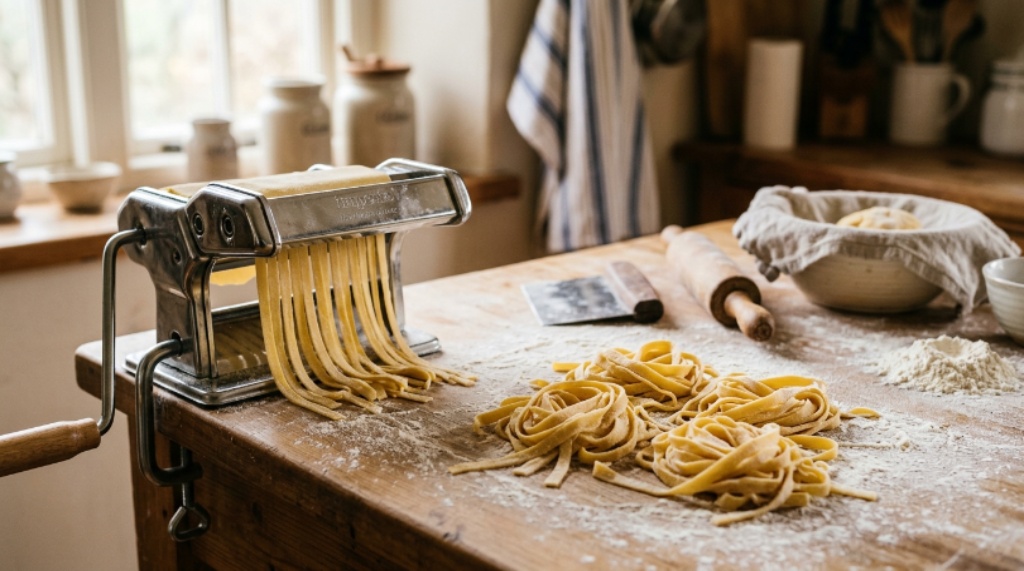
Lightly dust the sheet with flour as you go. This prevents sticking. Once you reach your desired thickness, attach the cutting rollers. Feed the sheet through to create your noodles. Toss the cut pasta in a little flour and lay it in loose nests on a floured tray or hang it to dry slightly.
Cooking Fresh Pasta the Right Way
Bring a large pot of water to a rolling boil. Season it generously with salt. The water should taste like the sea. This is not an exaggeration. Properly salted water is one of the most important steps in pasta cooking.
Add your fresh pasta to the boiling water. Stir gently to prevent sticking. Fresh pasta cooks very quickly. Depending on thickness, it may be ready in just two to three minutes. Taste it often to check. It should be tender but still have a very slight bite in the center.
Reserve a cup of the starchy pasta water before draining. This water is liquid gold. It helps bind your sauce to the pasta and adds depth to the final dish. Additionally, always toss your pasta directly into the sauce rather than serving the sauce on top. This technique, used in every good Italian kitchen, coats every strand evenly.
Sauces That Pair Beautifully With Fresh Pasta
Fresh pasta pairs best with sauces that are light and clean. Heavy, jarred sauces can overwhelm its delicate flavor.
Some excellent options include:
- A simple brown butter and sage sauce with a handful of parmesan
- A classic carbonara made with eggs, guanciale, and black pepper
- A light lemon and cream sauce with fresh herbs
- A slow-roasted tomato sauce with garlic and basil
However, you should avoid very heavy meat ragus for thinner pastas. Thicker pasta shapes like pappardelle or lasagna sheets handle heartier sauces far better. Therefore, matching your pasta shape to your sauce is just as important as the cooking itself.
Tips for Better Results Every Time
A few small habits will dramatically improve your pasta-making experience.
Always use room-temperature eggs. Cold eggs make the dough harder to bring together. Additionally, do not rush the kneading. Proper kneading creates the gluten structure that gives pasta its pleasant chew.
If your dough tears as you roll it, it may not have rested long enough. Wrap it back up and give it another fifteen minutes. Furthermore, flour is your best friend during rolling. Do not be shy about using it on the machine and on the dough itself.
Clean your machine by hand with a dry brush or cloth. Never submerge it in water. Moisture will cause the metal parts to rust and damage the machine.
Conclusion
Making fresh pasta at home with a manual pasta machine is one of the most satisfying skills a home cook can develop. You only need a few simple ingredients, a reliable set of fresh pasta tools, and the patience to practice. The process itself is meditative and rewarding. Additionally, the results are genuinely impressive.
Start with a basic egg dough and a simple butter sauce. As your confidence grows, experiment with different flours, shapes, and sauces. Every batch will teach you something new. Before long, you will be producing pasta that rivals anything you could order at a restaurant. All it takes is a little flour, a few eggs, and the will to get your hands in the dough.
Frequently Asked Questions
What is the best flour to use for homemade pasta?
00 flour is widely considered the best choice for fresh pasta. It is very finely milled, which creates a smooth, silky texture. All-purpose flour is a good substitute and easier to find in most grocery stores.
How long can I store fresh pasta before cooking it?
You can store fresh pasta in the refrigerator for up to two days. Lay it flat on a floured tray and cover it loosely with plastic wrap. For longer storage, freeze it in nests for up to one month.
Do I need a pasta machine, or can I roll dough by hand?
You can roll pasta dough by hand using a rolling pin. However, a manual pasta machine produces more consistent thickness and saves significant time and effort. It is a worthwhile tool for anyone who makes pasta regularly.
Why does my pasta dough keep tearing when I roll it?
Tearing usually means the dough needs more rest time. The gluten is too tight. Wrap the dough and let it rest for another fifteen to twenty minutes, then try again. Rolling too quickly through the thickness settings can also cause tearing.
Can I make pasta dough without eggs?
Yes. A simple dough made from semolina flour and water works well for shapes like orecchiette or cavatelli. This dough has a firmer, chewier texture. It is also a great option for those with egg allergies or a vegan diet.
